
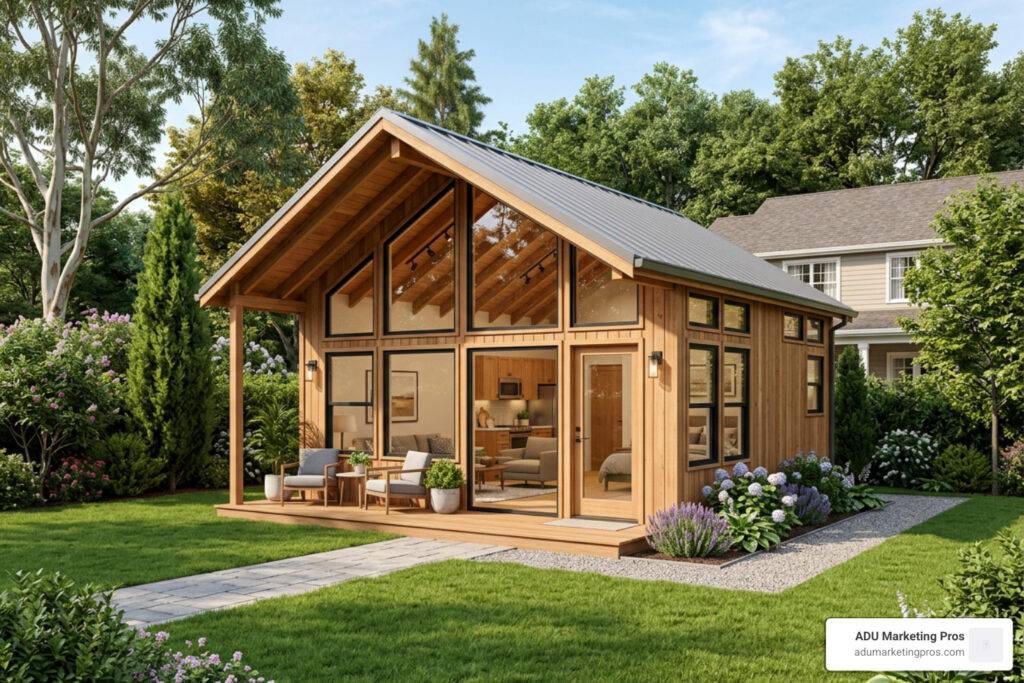
The Best Granny Flat Designs That Are Transforming Backyards Right Now
In the midst of a global housing crisis and a shifting cultural landscape that prioritizes multigenerational living, the humble backyard cottage has undergone a radical transformation. The best granny flat designs today are no longer just secondary thoughts or simple sheds; they are sophisticated, architecturally significant homes that combine smart layouts, abundant natural light, and flexible living spaces—all within a compact footprint. This guide explores how modern design is redefining the potential of the backyard, offering homeowners a way to increase property value while providing high-quality housing for family or tenants.
Here’s a quick look at the top options covered in this comprehensive guide:
- The Meadow View – A classic 1-bedroom detached kit featuring soaring vaulted ceilings (~600–800 sq ft).
- LaneFab’s Funky Eclectic – A 750 sq ft modern 1.5-story masterpiece with reclaimed wood and clerestory windows.
- The Bodega – A spacious 2-bedroom, 2-bathroom luxury unit at 1,196 sq ft with a full front porch.
- The Maywood – A 600 sq ft aging-in-place design specifically engineered with step-less entry and wide doorways.
- Vancouver Lane House – An 850 sq ft indoor-outdoor design utilizing cork flooring and polished concrete.
- SnapADU 749 Square – A pre-approved 750 sq ft plan designed to bypass lengthy California permitting and impact fees.
- The Sonoma – A 682 sq ft storage-focused rental income unit with vaulted ceilings and expansive laundry facilities.
A granny flat used to mean a simple room tacked onto the back of a house, often lacking the amenities of a true home. Not anymore. Today’s granny flats—officially called accessory dwelling units (ADUs)—are fully self-contained homes. They sit on the same lot as a primary residence but function completely independently, featuring their own kitchen, bathroom, bedroom, and laundry facilities. This independence is what makes them so valuable in today’s market.
Homeowners are building them at an unprecedented rate. In California alone, demand has surged thanks to changing zoning laws and a housing shortage that shows no signs of easing. Whether the goal is housing an aging parent, earning passive rental income, or creating a private home office, the right design makes all the difference. The challenge, however, is that granny flats are often harder to design than full-size homes. You’re working within tight square footage—often 600 to 1,200 sq ft—without the luxury of starting from an empty lot. Every design decision, from the placement of a window to the swing of a door, counts toward the final livability of the space.
The good news is that smart, beautiful design is absolutely achievable at this scale. Currently, less than 5% of granny flats in Australia and the US are designed by architects, which means most people are leaving serious design quality on the table. The examples in this guide show what’s possible when great design thinking is applied to small spaces, turning a backyard into a sanctuary.
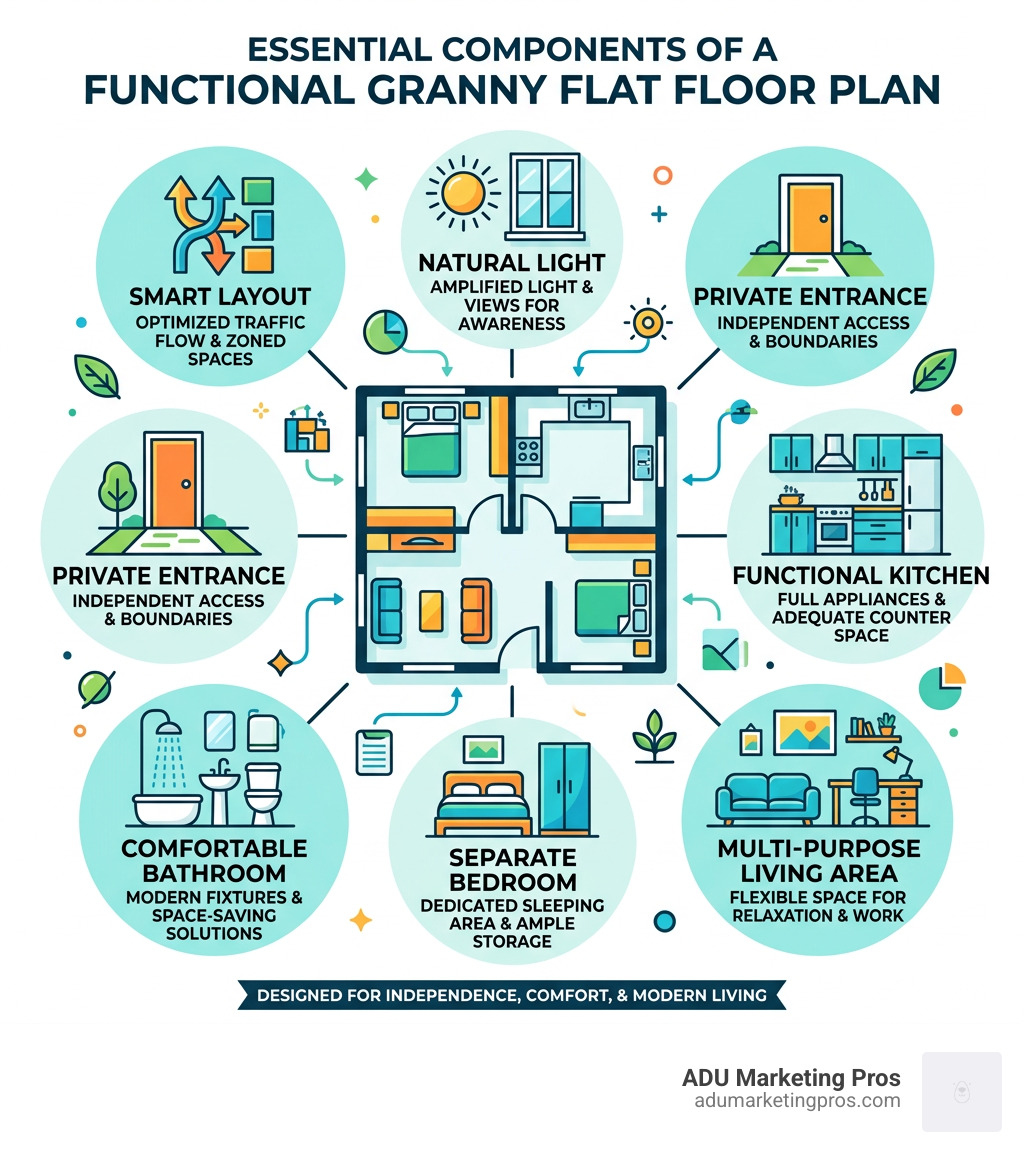
Easy best granny flat designs word list:
Understanding the Granny Flat: More Than Just a Backyard Shed
Before we dive into the aesthetics of the best granny flat designs, we need to define what we are actually building. While many people still use the term “granny flat,” the professional industry in California and across North America refers to these as an accessory dwelling unit (ADU). This shift in terminology reflects a shift in function: these are no longer just for “grannies,” but for anyone seeking a high-quality, independent living space.
An ADU is a secondary dwelling on the same lot as a primary home. Unlike a guest room or a “man cave,” these units are legally required to be self-contained. This means they must have their own entrance, kitchen facilities, and a full bathroom. In our experience working with builders across San Jose, San Francisco, and Los Angeles, we see four main types of Granny Flat Designs:
Detached ADUs
These are standalone structures located in the backyard. They offer the most privacy and design flexibility because they do not have to conform to the existing structure of the main house. They are the most popular choice for homeowners looking to create a completely separate rental unit or a private retreat for family members.
Attached ADUs
These units share at least one wall with the primary residence. They are often built as additions to the side or back of the house. It is critical to note that these require fire-rated walls between the two dwellings to ensure the safety of all occupants. Attached units can be more cost-effective in terms of utility hookups but offer slightly less privacy than detached models.
Garage Conversions
Transforming an existing garage into a living space is often the most cost-effective route since the “bones” of the structure already exist. However, they come with unique challenges, such as ensuring the slab is moisture-proof and the walls are properly insulated. In many California cities, garage conversions are the fastest way to add value to a property.
Junior ADUs (JADUs)
These are smaller units (max 500 sq ft) contained entirely within the existing walls of the primary home, such as a converted bedroom or basement. They often feature an efficiency kitchen and may share a bathroom with the main house, though most modern designs include a private bath to maximize rental potential.
Why Homeowners are Investing in the Best Granny Flat Designs
Why are so many homeowners in Los Angeles, San Diego, and the Bay Area flocking to these small-scale builds? The reasons go far beyond just housing a relative; they are rooted in financial strategy and lifestyle optimization.
1. Property Appreciation and Passive Income
Building a high-quality ADU is one of the most reliable ways to increase property value. In high-demand markets, adding a self-contained unit can increase a property’s resale value by 20% to 30%. Beyond equity, many homeowners use these units as long-term rentals to offset mortgage payments. In California, if your unit is under 750 sq ft, many impact fees are waived, making the return on investment even more attractive. A well-designed unit can often pay for itself in rental income within 7 to 10 years.
2. Multigenerational Living and Aging in Place
With the rising cost of assisted living facilities, many families are choosing Modern Prefab Granny Flats to keep aging parents close while maintaining everyone’s privacy. These designs allow seniors to “age in place” in a home specifically tailored to their mobility needs, featuring walk-in showers, wide hallways, and no-step entries. This proximity provides peace of mind for the family while allowing the senior to maintain their independence.
3. Flexible Lifestyle Spaces
We’ve seen a massive shift toward using Prefab Granny Flats in California as high-end home offices, teenager retreats, or creative studios. When remote work is the norm, having a separate, quiet structure just steps from the back door is a game-changer. It provides a physical and psychological boundary between work and home life that a spare bedroom simply cannot match. Additionally, as children grow into young adults, these units provide a “launchpad” that allows them to stay local in expensive housing markets.
Top 7 Best Granny Flat Designs and Floor Plans to Inspire Your Build
Choosing a design is the most exciting part of the process. While you can hire an architect for a bespoke build, many homeowners find that choosing from a range of architecturally designed granny flat designs is the most cost-effective path. These plans have been refined over dozens of builds to maximize efficiency and comfort.
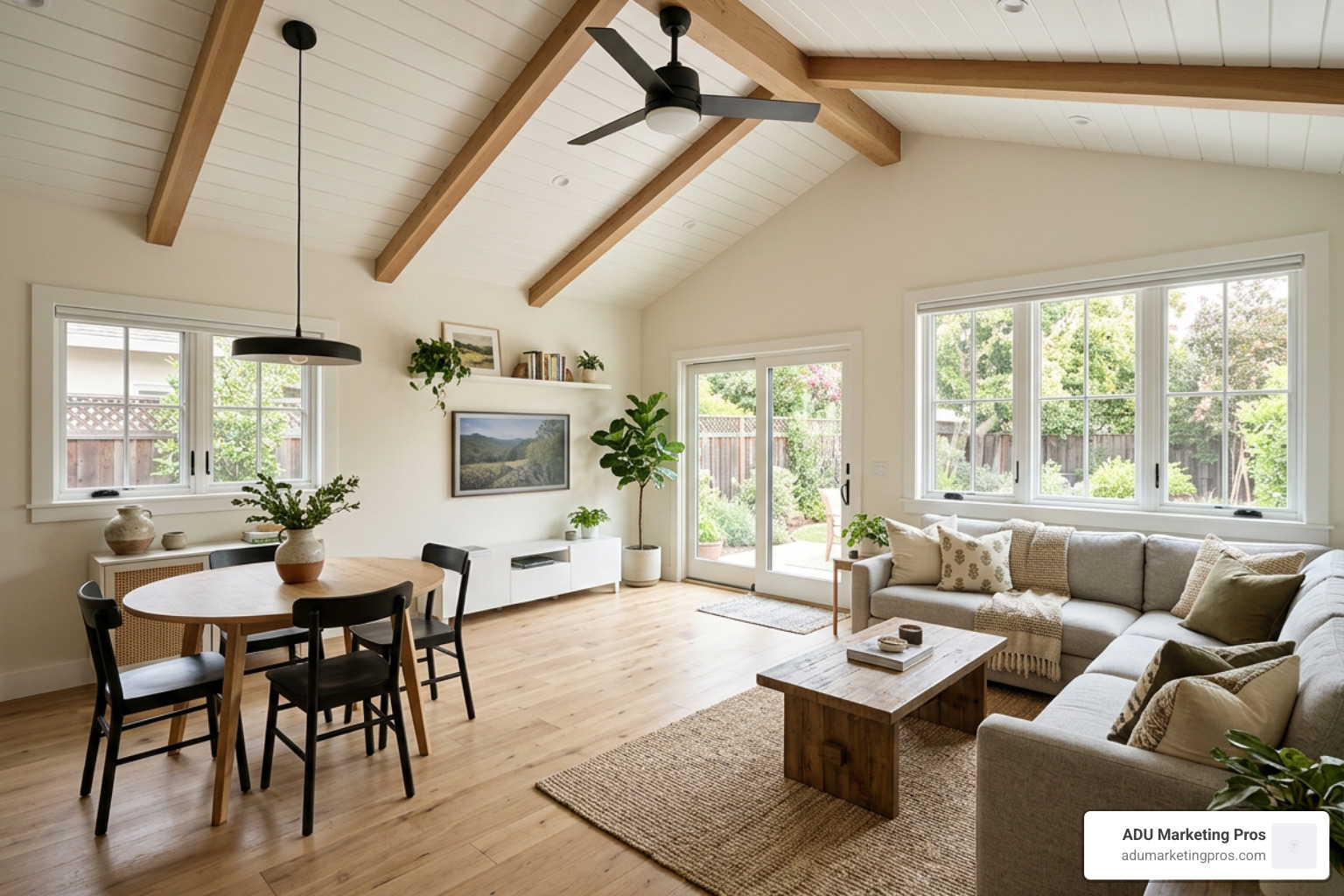
The Meadow View: A Classic Detached In-Law Suite
The Meadow View by Pacific Modern Homes is the quintessential “backyard cottage.” It is designed to be a basic yet comfortable 1-bedroom unit. What makes this one of the best granny flat designs is the use of vaulted living and dining rooms. This architectural trick makes a small footprint feel significantly larger by drawing the eye upward. It even manages to squeeze in a dedicated space for a full-sized washer and dryer, proving you don’t have to sacrifice modern conveniences in a small home. The exterior is classic and fits seamlessly into most suburban neighborhoods.
LaneFab’s Funky Eclectic: One of the Best Granny Flat Designs for Modern Living
For those who want to push the envelope, LaneFab’s designs are a masterclass in personality and urban density. Their 750 sq ft funky eclectic model uses a 1.5-story layout that includes an office loft, perfect for the modern professional. The exterior features galvanized metal siding and bright yellow windows, while the interior boasts reclaimed wood and clerestory windows. These high-set windows are a brilliant design choice—they let in floods of natural light while maintaining total privacy from neighbors, which is essential in dense urban environments.
The Bodega: Spacious Two-Bedroom Luxury
If you have a larger lot, The Bodega offers a staggering 1,196 sq ft of living space. This is a true two-bedroom, two-bathroom home that feels like a primary residence. It features a master suite with a walk-in shower and double sinks, providing a level of luxury rarely seen in ADUs. The standout feature here is the full front porch, which encourages outdoor living—a must for the California climate. It is fully compliant with the California Building Code (CBC), ensuring a smooth permit process for such a large secondary structure.
The Maywood: Smart Design for Aging in Place
The Maywood is a 600 sq ft panelized kit that prioritizes accessibility without sacrificing style. It features a step-less entry and 36-inch wide doorways and hallways, making it perfect for seniors or those with mobility challenges. Despite its smaller size, it includes a computer desk nook and a full-size kitchen. It’s a “smart” design that proves accessibility doesn’t have to look clinical; it can be integrated into a beautiful, modern aesthetic that appeals to all ages.
Vancouver Lane House: Maximizing Small Footprints
Designed by Birmingham & Wood Architects, this 850 sq ft unit is all about material and flow. It uses a combination of cork flooring and polished concrete to create a modern, durable aesthetic that is both sustainable and visually striking. The design emphasizes a seamless indoor-outdoor flow with wide wood doors that open onto a patio, effectively doubling the living area during the warmer months. This connection to the outdoors is a key principle in making small spaces feel expansive and connected to the landscape.
SnapADU 749 Square: The Best Granny Flat Designs for Fast Permitting
In cities like Chula Vista and San Diego, SnapADU’s 749 Square plan is a top choice for homeowners who want to start building yesterday. Why? Because it is a pre-approved plan. This means the city has already vetted the structural details, which can slash weeks or even months off your permitting timeline. At 749 sq ft, it also hits the “sweet spot” where many California impact fees are waived, potentially saving you $10,000 to $20,000 in upfront costs. The layout is a perfect square, which is the most cost-effective shape to build.
The Sonoma: The Ultimate Rental Income Unit
The Sonoma is a 682 sq ft model designed with the long-term renter in mind. It features an expansive laundry room with a wash tub (a rare luxury in ADUs) and vaulted ceilings in the dining area. The layout is focused on storage, with ample closet space and a utility closet, making it highly attractive to tenants who need room for their belongings. By focusing on these practical needs, The Sonoma ensures high occupancy rates and satisfied tenants.
| Model Name | Sq Ft | Bedrooms | Key Feature |
|---|---|---|---|
| The Maywood | 600 | 1 | Aging-in-place (36″ doors) |
| The Sonoma | 682 | 1 | Rental-ready laundry/storage |
| SnapADU 749 | 749 | 1 | Pre-approved for fast permits |
| LaneFab Funky | 750 | 1.5 | Office loft & eclectic style |
| Meadow View | 800 | 1 | Classic vaulted kit home |
| Vancouver Lane | 850 | 2 | Architect-designed / Cork floors |
| The Bodega | 1,196 | 2 | Luxury master suite & porch |
Essential Design Principles for Small Space Living
When you are working with limited square footage, you have to play “tricks” on the eye to prevent the space from feeling cramped. The best granny flat designs follow a few core principles that maximize every square inch of the floor plan.
Go Vertical to Create Volume
Most building codes allow for ceiling heights up to 15 or 16 feet without impacting your square footage limits. Vaulted ceilings or “double-height” spaces immediately make a 600 sq ft room feel like 1,000 sq ft. By utilizing the vertical volume, you create a sense of airiness that prevents the “tiny house” claustrophobia. This also allows for high-set windows that can bring in light without sacrificing wall space for furniture.
Prioritize Natural Light and Privacy
Use as many windows as possible, but place them strategically. LaneFab often uses accordion doors that fold away completely, erasing the barrier between the living room and the garden. If privacy is a concern, use skylights or clerestory windows. These allow you to capture the sun’s movement throughout the day while keeping the interior hidden from the main house or neighbors.
Create Long Sightlines
Design the floor plan so that when you stand at one end of the unit, you can see all the way to the other, or even through a window to the outside. These “long views” create a sense of scale and prevent the eye from feeling trapped by walls. Open-concept living, dining, and kitchen areas are standard in the best granny flat designs for this very reason.
Smart Storage and Multi-Functional Furniture
Small homes fail when they become cluttered. Use built-in storage under stairs, sliding barn doors (which don’t require “swing” space), and furniture that doubles as storage. Every wall should be evaluated for its storage potential. For example, a kitchen island can serve as a dining table, a workspace, and a storage unit all at once.
The 24-Inch Rule for Movement
Ensure there is at least 24 to 30 inches of clear passageway between pieces of furniture. This allows for comfortable movement and prevents the “obstacle course” feeling common in poorly designed tiny homes. If a space feels tight, consider smaller-scale furniture or built-ins that are flush with the walls.
Navigating Costs, Regulations, and Financing for Your ADU
Building a granny flat is a significant investment, often comparable to the cost of a luxury vehicle or a major home renovation. While costs vary wildly based on your location (Palo Alto will be more expensive than Sunnyvale), here is what you need to know to plan your budget.
Understanding the Cost
A high-quality ADU in the San Francisco Bay Area or San Diego typically starts around $200,000 to $350,000 for a “vertical build” (the structure itself), plus site work and permits. Site work—which includes utility trenching, foundation work, and landscaping—can add another $30,000 to $70,000 to the total. Using a Prefab Granny Flat California or Modular Granny Flats California approach can often save time and provide more predictable pricing, as much of the construction happens in a controlled factory environment.
The Regulatory Landscape
Thanks to recent state legislation, California has made it much easier to build. Key highlights include:
- The 750 Sq Ft Rule: Units under this size are generally exempt from impact fees, which can save homeowners thousands.
- Parking: In many cases, if you are within a half-mile of public transit, you are not required to provide a new parking space for the ADU, and you don’t have to replace parking lost by a garage conversion.
- Approval Timelines: Cities are now required to act on ADU applications within 60 days. If they don’t, the application is often deemed approved by default.
Financing Your Build
Most homeowners don’t pay cash for an ADU. Popular options include:
- HELOC (Home Equity Line of Credit): Borrowing against the equity in your primary home. This is often the most flexible and lowest-interest option.
- Construction Loans: Specific loans designed for building projects that convert to a mortgage once the unit is complete. These are ideal if you don’t have enough equity in your home yet.
- Renovation Refinance: Refinancing your primary mortgage to include the cost of the ADU construction. This allows you to have one single monthly payment.
If you are looking to build a Granny Flat San Francisco, we always recommend starting with a professional feasibility study to understand your specific lot’s constraints, such as setbacks, utility locations, and easement issues.
Frequently Asked Questions about Granny Flats
What is the difference between a granny flat and an ADU?
In common conversation, there is no difference. “Granny flat” is the traditional term often used to describe a space for an elderly relative. “Accessory Dwelling Unit” (ADU) is the legal, regulatory term used by city planners, architects, and lenders. Both refer to a self-contained, permanent residential unit on the same lot as a single-family home.
How much does it cost to build a high-quality granny flat?
While you might see “kits” advertised for $40,000, the “all-in” cost for a high-quality, permitted build in California usually ranges from $300 to $500 per square foot. This includes site preparation, utility hookups, permits, and interior finishes. To get a realistic idea for your specific property, it’s best to get a free quote from a local builder who understands your local soil and utility conditions.
Do I need council or city approval for a granny flat?
Yes. You must obtain building permits from your local building department. However, the process is much faster if you use pre-approved construction documents. Many cities now provide “standard plans” that have been pre-vetted for safety and code compliance, significantly reducing the back-and-forth with city engineers.
Will an ADU increase my property taxes?
Yes, but only for the value of the new structure. In California, building an ADU triggers a “blended assessment.” Your primary home’s tax basis remains the same, and only the new ADU is assessed at current market value. This is much more favorable than a full property reassessment.
Can I sell my granny flat separately from the main house?
Generally, no. In most jurisdictions, the ADU and the primary home must be sold together as a single property. However, new laws like California’s AB 1033 are beginning to allow cities to opt-in to a program that lets ADUs be sold as condos. Check with your local planning department for the latest updates.
Conclusion
The best granny flat designs are about more than just adding square footage; they are about adding quality of life and long-term financial security. Whether you are creating a sanctuary for a parent, a productive home office, or a steady stream of rental income, the design you choose today will define your property for decades to come. By prioritizing natural light, vertical space, and smart storage, you can create a small home that feels anything but small.
At ADU Marketing Pros, we understand the complexities of the ADU market. While we don’t swing the hammers, we specialize in helping ADU construction and architecture firms connect with homeowners who are ready to build. By focusing on expertise and data-driven ADU Marketing Solutions, we help the best builders in the industry stand out in a crowded market.
If you are a builder or architect in Los Angeles, San Diego, or the Bay Area looking to grow your revenue and attract high-quality leads, let’s chat about how we can elevate your brand. In the booming California ADU sector, having the best designs is only half the battle—making sure the right homeowners see them is the other. Together, we can transform backyards and solve the housing crisis one beautifully designed unit at a time.