
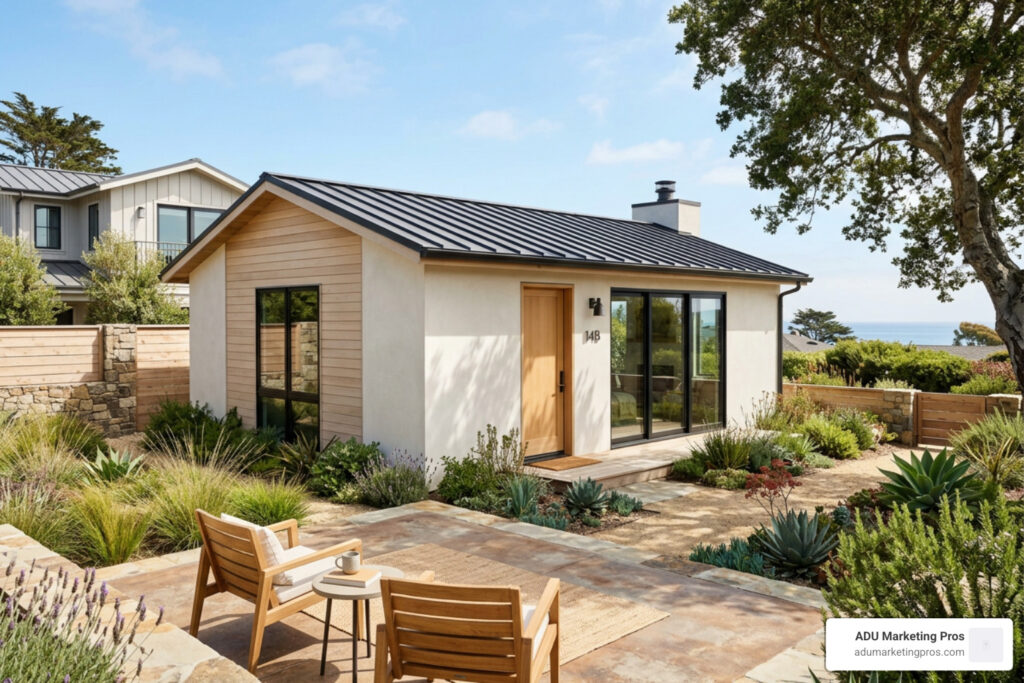
Why a 1 Bedroom Granny Flat on the Central Coast Is Worth Serious Attention
A 1 bedroom granny flat on the Central Coast of California (commonly referred to as an Accessory Dwelling Unit or ADU) can earn you substantial rental income—often ranging from $1,800 to $2,800 per month depending on your exact location in counties like Santa Cruz, Monterey, or San Luis Obispo.
For homeowners looking for global inspiration, similar high-demand markets like the Central Coast of Australia (in suburbs like East Gosford and Berkeley Vale) also show incredible yields, proving that compact secondary dwellings are a winning asset class worldwide.
Here’s a quick snapshot for California Central Coast homeowners researching their options:
| What You Want to Know | Quick Answer |
|---|---|
| Typical monthly rent | $1,800–$2,800/month |
| Minimum lot size | None (California state law overrides local minimums) |
| Maximum floor area | 850 sq ft (standard for 1-bedroom ADUs) |
| Build cost range | $200,000–$350,000 |
| Fastest approval pathway | Ministerial Review (must be approved within 60 days) |
| Typical construction time | 4–6 months total |
The California Central Coast rental market is incredibly tight. Affordable, well-built secondary dwellings are in high demand—especially in commuter-friendly areas near the San Francisco Bay Area and Silicon Valley. Singles, couples, and downsizers are all competing for compact, modern rentals in these scenic coastal communities. The shift toward remote work has further accelerated this trend, as professionals seek the relaxed lifestyle of coastal towns while requiring dedicated, private living spaces.
For homeowners, that demand translates directly into passive income potential from a backyard that’s currently underutilized. Instead of maintaining a large, empty lawn, you can convert that space into a high-yield asset that helps pay off your primary mortgage, funds your retirement, or provides a secure home for a loved one.
But before you start sketching floor plans, there’s a lot to understand—site requirements, California state ADU laws, utility connections, construction costs, and design choices all play a role in whether your project succeeds or stalls. Navigating these elements requires a clear strategy and an understanding of both local conditions and state-level opportunities.
This guide walks you through everything, clearly and without the jargon.
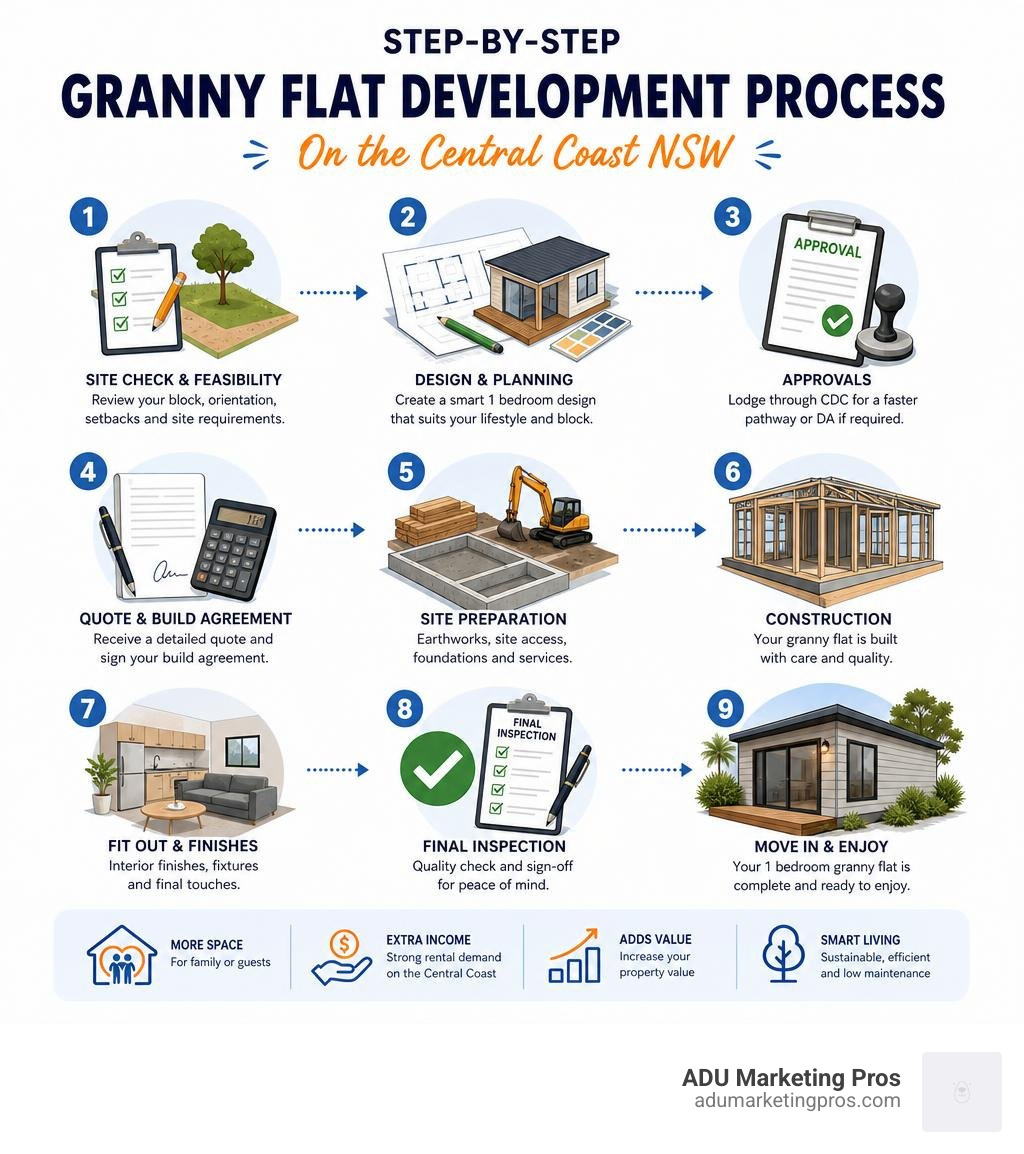
1 bedroom granny flat central coast word list:
Planning Your Secondary Dwelling: Council Rules and Site Requirements
Planning a secondary dwelling on the California Central Coast requires looking closely at state and local regulations. Fortunately, California has passed sweeping statewide ADU laws that make it easier than ever to build a 1 bedroom granny flat central coast homeowners can use for rental income or family.
The primary framework for fast-tracking these projects is California’s state ADU legislation, which overrides restrictive local municipal zoning codes. Under these state rules, if your property meets basic criteria, local cities (whether in Santa Cruz, Monterey, or San Luis Obispo) must approve your application through a streamlined, ministerial process without public hearings or discretionary reviews. This legislative shift was designed specifically to combat the housing crisis by encouraging low-density infill development.
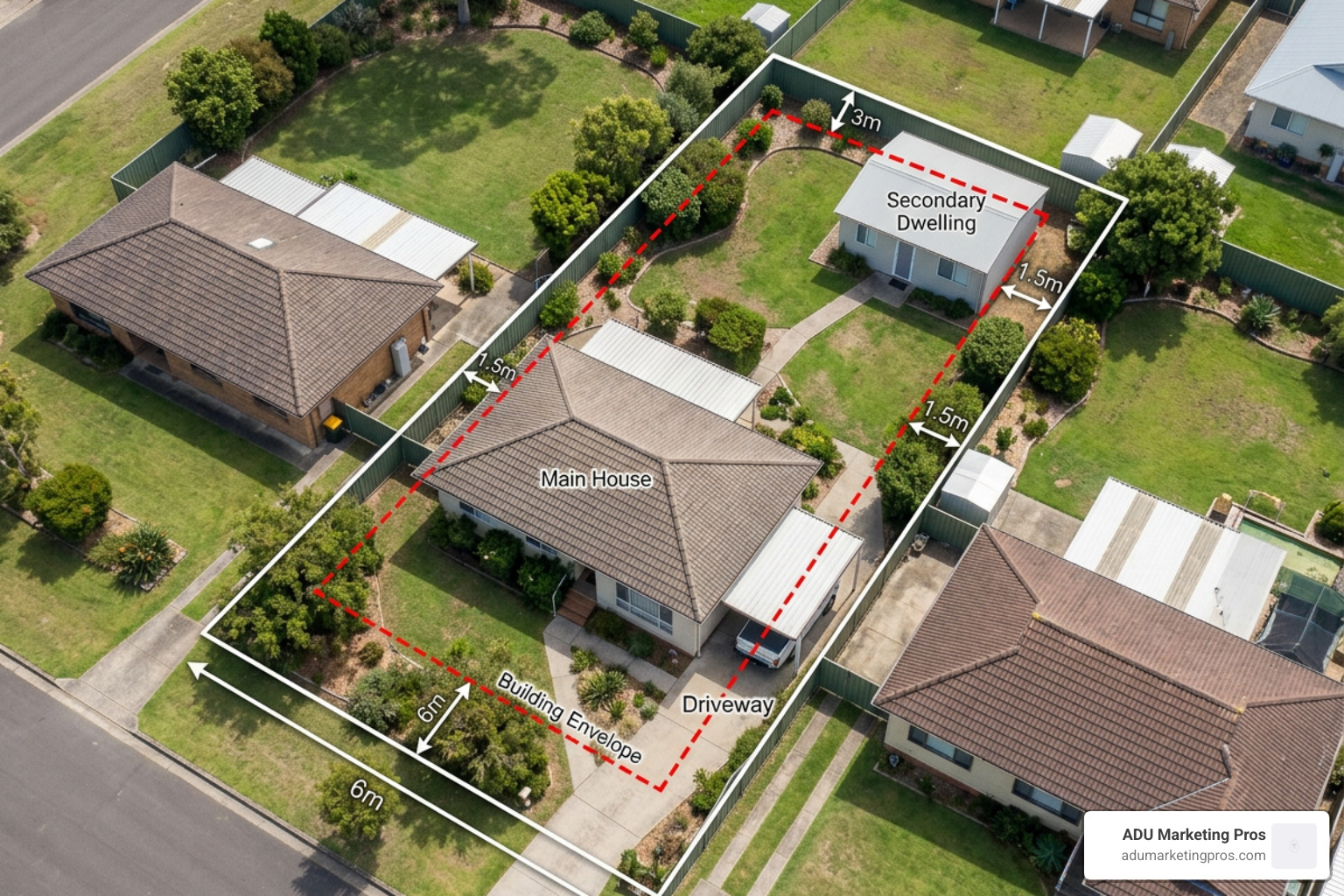
Minimum Lot Sizes and Regulations for California Central Coast Properties
To build a 1 bedroom granny flat central coast residents will find comfortable and legally compliant, your property must meet several physical criteria under California state law:
- No Minimum Lot Size: Unlike traditional zoning, California state law prohibits local councils from requiring a minimum lot size to build an ADU. Even if your lot is under 4,000 square feet, you are legally permitted to build, provided you meet basic safety and setback requirements.
- Setbacks: Side and rear setbacks have been reduced to a maximum of 4 feet. This allows you to maximize your backyard space and position the unit in a way that preserves privacy for both the primary home and the new dwelling.
- Maximum Floor Area: For a 1-bedroom detached ADU, state law allows a maximum floor area of up to 850 square feet (well above the standard 60 square meters or 645 square feet often seen in international markets). This extra space allows for a much more comfortable living area, larger closets, and full-sized appliances.
- Height Limits: Detached ADUs are generally allowed a height of at least 16 to 18 feet, depending on proximity to transit and primary dwelling height. This height allowance is crucial for creating vaulted ceilings that make small spaces feel much larger.
- Parking Exemptions: If your property is located within a half-mile of public transit (which applies to many coastal neighborhoods), you are completely exempt from providing additional off-street parking for the granny flat. This saves significant space and reduces concrete paving costs.
Navigating the Approval Pathway: Ministerial Review vs. Discretionary Permits
When seeking approval for a 1 bedroom granny flat central coast build, California’s streamlined process offers a massive advantage over traditional development pathways.
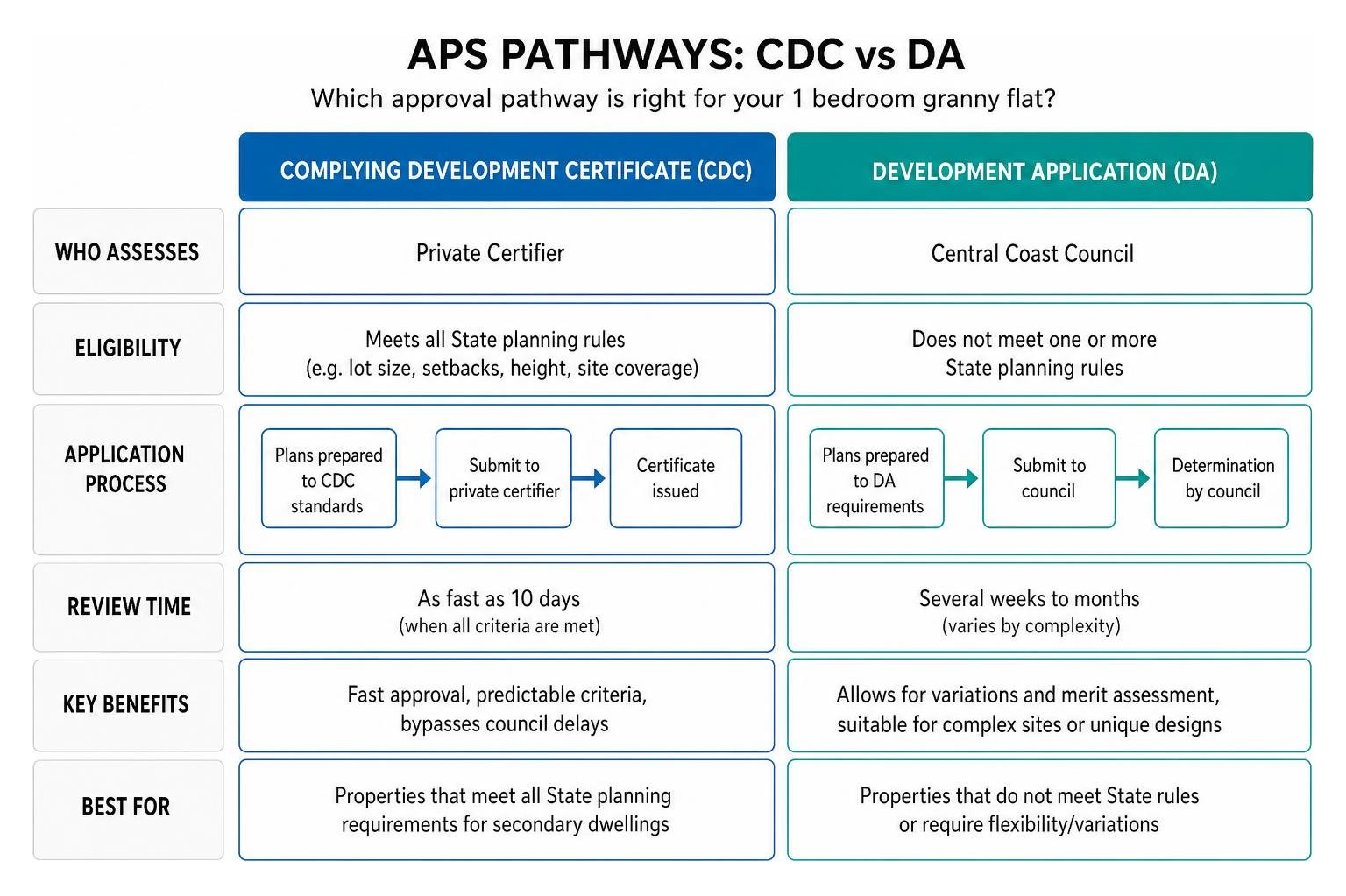
Ministerial Review (The 60-Day Rule)
Under California state law, ADU applications must be approved or denied ministerially within 60 days of submitting a complete application. This means the local planning department cannot subject your project to subjective design reviews, neighbor notifications, or public hearings. If your plans meet the objective state and local building codes, they must be approved. This eliminates the uncertainty and long delays that historically plagued backyard building projects.
Discretionary Permits (For Custom Variations)
If your build requires special variances—such as building in a designated coastal zone that requires a Coastal Development Permit (CDP), or if you are building on a highly sensitive environmental overlay—your project may require a discretionary review. While this pathway allows for more architectural flexibility on tricky sites, it takes longer and involves a more comprehensive assessment by local county planners. It is highly recommended to design within the ministerial guidelines to avoid these costly delays whenever possible.
Design and Customization: Creating a Space People Want to Live In
Designing a 1-bedroom secondary dwelling is an exercise in space optimization. Whether you are building a 600-square-foot unit or maximizing the space up to 850 square feet, every centimeter counts. The goal is to create an open, light-filled environment that feels like a premium home rather than a cramped backyard cabin. Smart storage solutions, strategic window placement, and high-quality finishes are essential to achieving this premium feel.
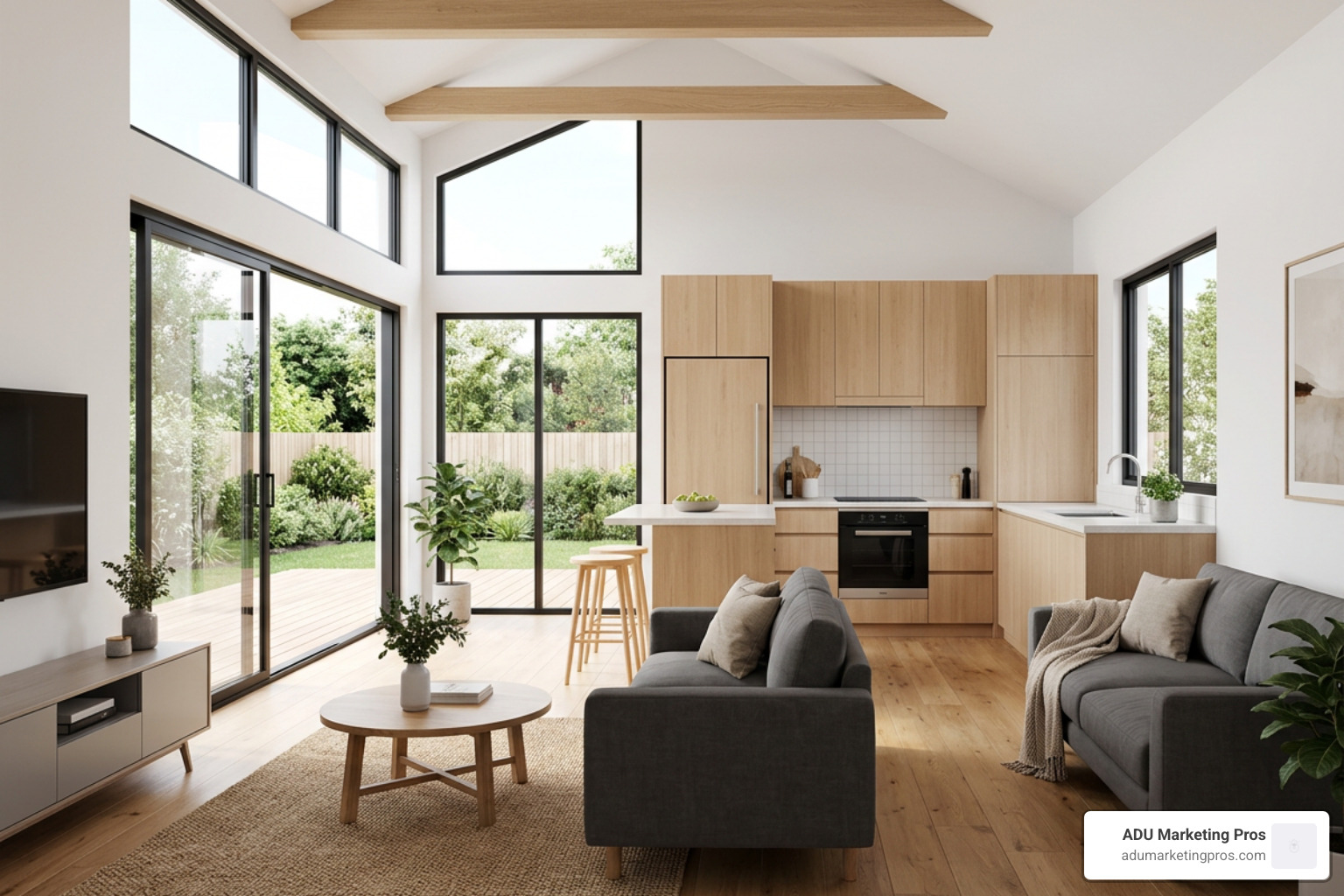
Modern renters and family members expect high-end amenities. To make your granny flat highly desirable, focus on an open-plan living layout, high ceilings, and a seamless indoor-outdoor flow. Adding a dedicated deck or patio area effectively doubles the usable living space during the warm California summers, allowing occupants to enjoy the beautiful coastal climate.
Popular Layouts and Global Design Inspiration
While local California builders offer incredible custom designs, we can look to international leaders in compact living for inspiration. One of the most successful floor plans is The Elite 1 Bedroom Granny Flat Design from Australia, which perfectly demonstrates how to maximize a 60-square-meter (approx. 645 sq ft) footprint by prioritizing communal and hosting spaces.
Key features of this design include:
- Spacious L-Shaped Kitchen: Rather than a cramped kitchenette, this layout features a full-sized kitchen with ample counter space, making it perfect for preparing meals and hosting guests. It accommodates standard-sized appliances, which is a major selling point for long-term tenants.
- Open-Plan Living and Dining: The kitchen flows directly into a generous living area, which can be extended visually through the use of large sliding glass doors leading to an outdoor deck. This eliminates dark, narrow hallways and maximizes usable floor space.
- Private Master Suite: The bedroom is physically separated from the living zone and features large built-in wardrobes for storage, ensuring that personal space remains private even when guests are visiting.
- Integrated Wet Areas: A combined bathroom and laundry area saves space while providing all the conveniences of a larger home, including space for a full-sized washer and dryer.
Customizing Your Build for Sloping Blocks and Coastal Weather
The California Central Coast topography is beautiful, but it presents unique challenges for builders. Many backyards in areas like Santa Cruz or Monterey feature significant slopes, difficult access, and exposure to harsh coastal elements.
Managing Steep Slopes
If your backyard has a significant slope, a standard flat concrete slab won’t work. Experienced builders manage this by engineering concrete deep-edge beams and reinforced waffle pod slabs, or utilizing pier-and-beam foundations. This ensures structural integrity without requiring massive, expensive excavation work that could destabilize the rest of your property or damage existing mature trees.
Coastal Weather and Durability
Properties near the Pacific Ocean are exposed to salt spray, high winds, and intense moisture. To prevent premature wear, your granny flat should be constructed with highly durable, low-maintenance materials. Fiber-cement cladding (like James Hardie), metal roofing, and treated timber framing are excellent choices that withstand coastal conditions while maintaining their aesthetic appeal over decades.
Tricky Site Access
Many Central Coast homes are built on narrow lots or have limited side-access paths. If heavy machinery cannot easily reach your backyard, your builder must plan for manual material handling or crane hire. Choosing a builder with specific experience in tight-access construction prevents unexpected logistical costs from blowing your budget and ensures the construction process runs smoothly without damaging your primary home.
The Financial and Lifestyle Benefits of a 1 bedroom granny flat central coast Owners Build
Adding a secondary dwelling to your property is a dual-purpose investment. Whether you are looking to generate passive income or accommodate family, the financial and lifestyle returns on the California Central Coast are substantial. It provides a unique opportunity to build wealth while solving immediate housing needs for your family or community.
| Investment Goal | Key Lifestyle Benefits | Financial Advantages |
|---|---|---|
| Rental Income | Tenant lives independently; minimal daily interaction if designed with separate access. | High rental yield ($1,800–$2,800/month); offsets primary mortgage; tax depreciation benefits. |
| Family / Downsizing | Keep aging parents close while maintaining privacy; house adult children saving for a home deposit. | Saves thousands in senior living fees or external rent; keeps capital within the family. |
Real-World Construction Costs on the Central Coast
How much does it actually cost to build a 1-bedroom granny flat? In the current 2026 market, construction costs for a high-quality, fully finished 1-bedroom ADU on the California Central Coast typically range between $200,000 and $350,000, depending on site complexity and finishes. While this may seem like a significant upfront investment, the long-term return on investment far outpaces traditional financial markets.
To understand how site constraints affect costs, we can look at case studies like the Tuggerah Granny Flat Project, which required specialized engineering to handle a sloping site and proximity to local utility infrastructure. When budgeting, always ensure your builder’s quote is transparent and includes site preparation, utility connections, and local permit fees. Landscaping, driveways, and separate metering are often excluded from base building contracts and must be budgeted for separately to avoid surprise expenses at the end of the project.
Rental Income Potential and ROI in Booming Coastal Suburbs
The California Central Coast is a booming residential hub, driven by remote workers and those seeking a coastal lifestyle close to major employment centers like Silicon Valley and San Jose. Communities from Santa Cruz down to Monterey have incredibly tight rental markets, driving yields upward.
Let’s look at the numbers:
- Santa Cruz County: A standard 1-bedroom secondary dwelling can comfortably command around $2,200 to $2,800 per month, especially if located near the university or within walking distance of the beach.
- Monterey County: Premium builds in highly desirable pockets, similar to the high-end finishes seen in the East Gosford Rental Case Study, fetch top-tier rental rates. Renters are willing to pay a premium for quality amenities like high ceilings, air conditioning, and private outdoor spaces.
- San Luis Obispo: This vibrant college and coastal town sees immense demand, with well-presented 1-bedroom flats securing high-paying tenants within days of listing, providing homeowners with reliable, year-round cash flow.
With a construction cost of $250,000 and a conservative rental income of $2,200 per month ($26,400 annually), your gross rental yield sits at an impressive 10.5%. Compare that to the standard yields of traditional single-family home purchases, and it is easy to see why backyard developments are so popular among California homeowners looking to maximize their financial security.
Frequently Asked Questions about Central Coast Granny Flats
Building a secondary dwelling is a major undertaking, and it is natural to have questions about the process, regulations, and ongoing management. Understanding these details upfront helps ensure a smooth project from start to finish.
How long does it take to build a granny flat?
The entire journey, from your first meeting with a builder to handing over the keys, typically takes between 4 and 6 months.
The timeline is divided into two distinct phases:
- Approval Phase (4 to 8 weeks): Thanks to California’s ministerial review laws, local jurisdictions must approve complete ADU plans within 60 days. This phase includes drafting architectural plans, engineering, and submitting the package to the local building department.
- Construction Phase (12 to 16 weeks): Once permits are issued and site prep begins, a professional builder will typically complete the physical construction of a standard 1-bedroom flat in approximately 4 months. This includes framing, roofing, rough-in plumbing and electrical, insulation, drywall, and final interior finishes.
What are the wildfire (WUI) and Title 24 energy requirements?
Because the California Central Coast features beautiful state parks, forested areas, and coastal scrub, many residential blocks are subject to environmental and safety regulations.
Wildland-Urban Interface (WUI) Regulations
If your property is located in a designated High Fire Hazard Severity Zone, your build must comply with California’s strict WUI building codes. This requires specialized materials, such as non-combustible external siding, ignition-resistant decking, tempered double-glazed windows, and ember-resistant vents. These safety measures protect the occupants and the structure from wildfire threats but will add to your overall construction costs.
Title 24 Energy Standards
In California, all new residential builds must comply with Title 24 energy efficiency standards. To pass Title 24, your granny flat design must incorporate sustainable features, such as:
- High-efficiency insulation in the walls, floors, and ceilings to minimize heating and cooling needs.
- Energy-efficient LED lighting and high-efficiency heat pumps for heating and cooling.
- Solar panels (required for newly constructed detached ADUs in California, though exemptions exist for shaded properties or small units under specific local rules).
- Tankless water heaters or hybrid heat pump water heaters to reduce energy consumption.
What are the ongoing costs of running a granny flat?
Once your granny flat is built, you must budget for ongoing operational costs to ensure the property remains profitable and well-maintained:
- Utility Connections: To avoid disputes with tenants, it is highly recommended to install separate electricity and gas meters. Water is often shared on a single main meter, with usage charges either bundled into the rent or calculated via a private sub-meter.
- Landlord Insurance: Standard home insurance will not cover a tenanted secondary dwelling. You will need a dedicated landlord insurance policy to protect against property damage, loss of rent, and liability issues.
- Maintenance and Shared Services: You will need to manage shared services, such as waste bins and mailboxes. Regular maintenance, such as gutter cleaning, HVAC servicing, and garden upkeep, should be clearly outlined in your tenancy agreement to prevent misunderstandings.
Conclusion
Building a 1 bedroom granny flat on the Central Coast is one of the smartest ways to unlock the hidden value of your property. Whether you want to pocket extra passive rental income, downsize into a low-maintenance home, or keep your family close, a well-designed secondary dwelling delivers massive lifestyle and financial rewards. The combination of strong rental demand, favorable state laws, and high yields makes this one of the most secure real estate strategies available today.
The key to a stress-free project is working with local experts who understand the unique geographical and regulatory landscape of the region. We highly recommend visiting local display homes and reviewing successful regional projects, such as the Granny Flat Solutions Central Coast Services portfolio, to inspect build quality and gather design inspiration firsthand. Seeing completed projects in person can help you visualize layouts and choose the right finishes for your own build.
At ADU Marketing Pros, we specialize in helping ADU construction and architecture firms stand out in competitive markets. Based in San Jose, California, and serving clients across Los Angeles, San Diego, and the San Francisco Bay Area, we understand how to connect builders with homeowners looking to build high-quality secondary dwellings. If you are a builder looking to attract high-quality leads and grow your business, discover how our targeted ADU Marketing Solutions can help you showcase your expertise and dominate your local area. Contact us today to learn more!