
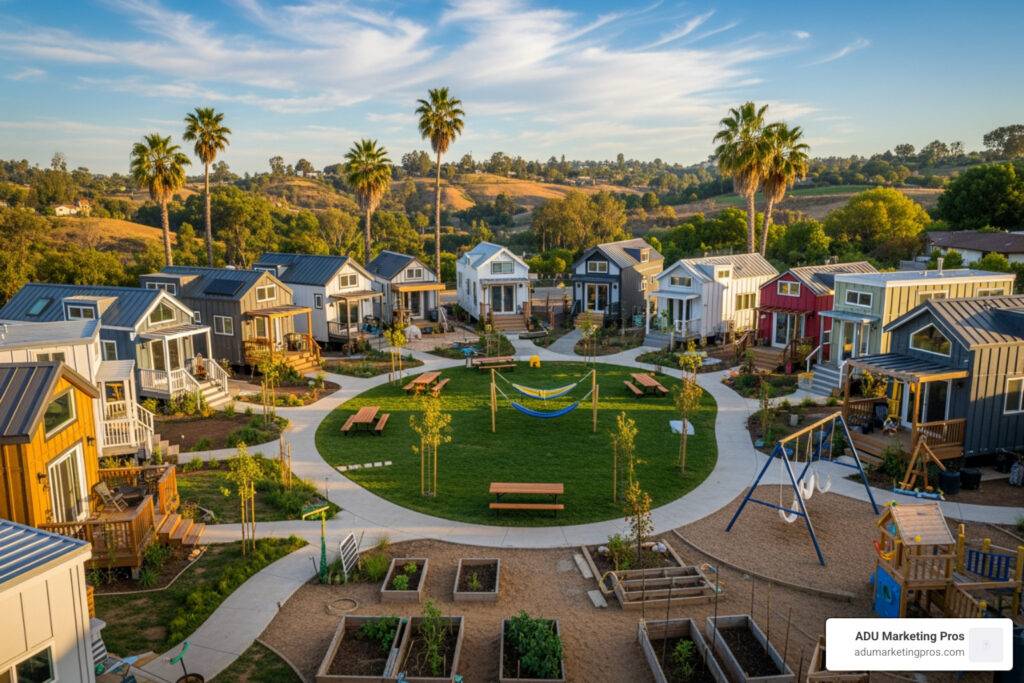
Why Tiny Home Communities Are Changing Southern California Living
Tiny home communities southern california offer an accessible path to affordable, sustainable living in one of the nation’s most expensive and desirable housing markets. For countless individuals priced out of the conventional real estate game, these communities represent more than just a housing trend; they are a viable solution. If you’re searching for a place to park your tiny house or purchase a small home in a supportive community setting, here are your primary options:
Quick Answer: Top Types of Tiny Home Communities in Southern California
- Purchase Communities – Buy a new tiny home (often starting in the low $100,000s) and pay a monthly lot rent ($700-$900+) for the land and amenities.
- Bring Your Own (BYO) – Lease a lot in a designated community for your pre-owned, certified tiny house on wheels (THOW).
- RV Parks with Tiny Homes – Find parks that welcome tiny homes alongside traditional RVs, offering park models and tiny homes for rent or rent-to-own.
- Transitional Housing – Discover supportive communities designed to address homelessness by providing shelter and comprehensive services to help residents get back on their feet.
Southern California living doesn’t have to mean a hefty price tag and decades of mortgage debt. The tiny home movement has firmly taken root across the region, from sun-drenched desert communities near Palm Springs to serene mountain retreats in the Cleveland National Forest. This surge is a direct response to a housing crisis where the median price for a single-family home in counties like Los Angeles and Orange regularly exceeds $900,000. The tiny home offers a radical alternative.
These aren’t just parking lots for small houses. They are vibrant intentional communities built on shared values. Residents don’t just live next to each other; they actively create a neighborhood. They gather around fire pits for evening conversations, tend to community gardens, share tools and skills in communal workshops, and swap stories about the liberating journey of downsizing from 2,000 square feet to under 400. This fosters a sense of belonging that is often missing in traditional suburban life.
The numbers tell a compelling story: with 82 tiny homes with land currently for sale across Southern California and an average listing price of $313,810, the market is active and growing. Communities like Paradise Tiny Home Community in Desert Hot Springs are developing 90 new spaces to meet demand, while established villages like Hermosa Orchards offer lot rents between $700 and $875 per month—a fraction of the median rent of $2,286 in nearby metro areas.
This guide walks you through everything you need to know to navigate this exciting landscape. We’ll cover the financial realities (purchase prices, lot rents, utility costs, and insurance), the legal requirements (size limits, crucial certifications, and zoning nuances), and the specific communities where you can start your tiny living journey today. Whether you’re a retiree seeking a fun place in the sun, a professional embracing minimalism, a young family looking for an affordable start, or someone simply priced out of traditional housing, there’s a community waiting for you.
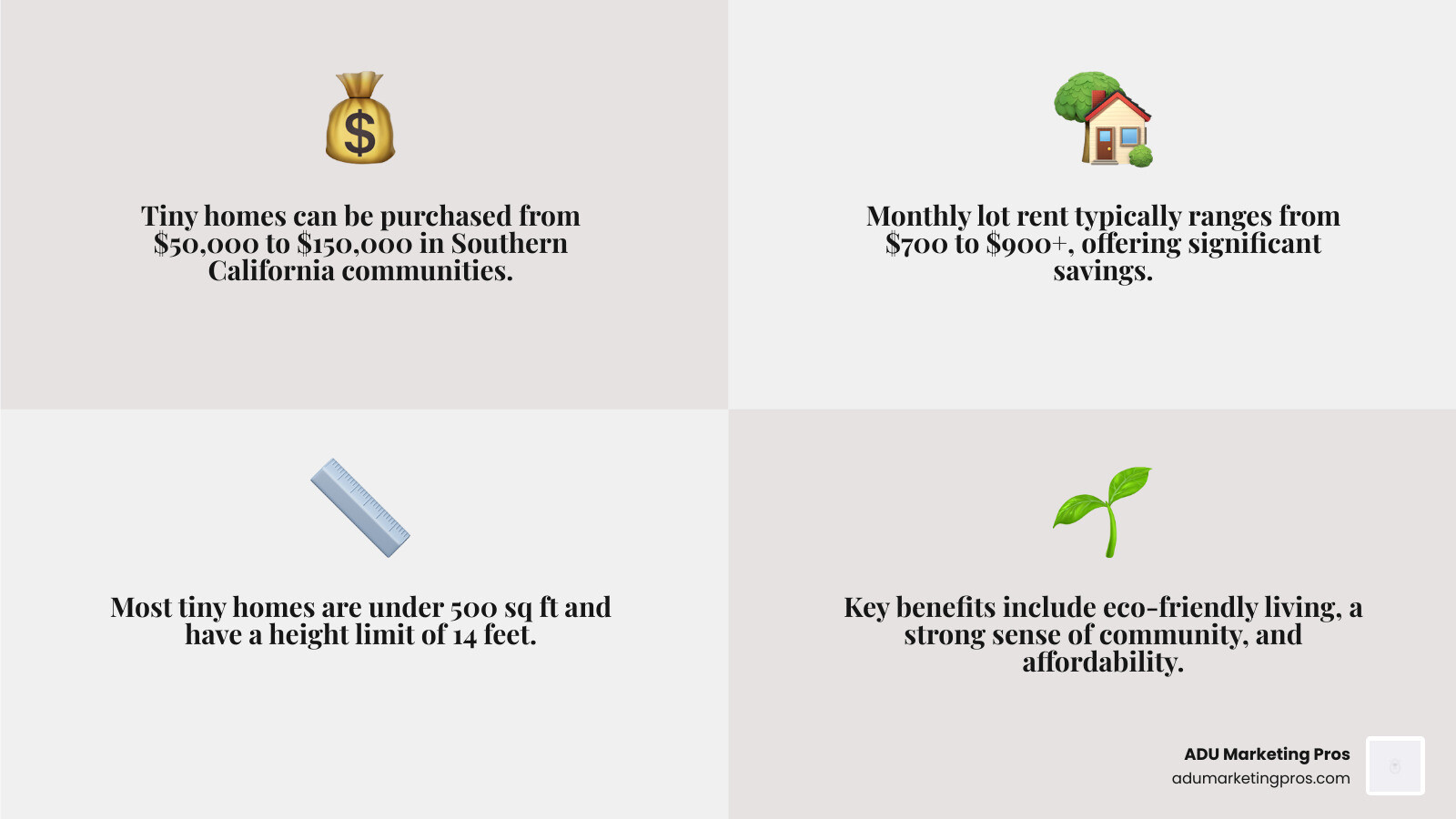
Basic tiny home communities southern california terms:
Why Choose a Tiny Home Community in Southern California?
Choosing to live in a tiny home community in Southern California offers a compelling blend of benefits that appeal to a diverse range of individuals and families. It’s more than just a place to live; it’s a conscious lifestyle choice that can lead to greater financial freedom, a simpler and more meaningful way of life, and a strong sense of belonging that many crave.
One of the most significant and immediate advantages is the potential for financial freedom. The cost of entry is dramatically lower. Tiny homes in communities generally cost a fraction of traditional homes, and monthly lot rents (ranging from $700-$875) are often significantly lower than conventional apartment rents in Southern California. The average listing price for tiny homes with land in Southern California is currently $313,810, a stark contrast to the region’s multi-million dollar housing market. Consider the impact: if your monthly housing costs drop from a typical $3,500 (mortgage or rent) to $1,300 (lot rent and tiny home payment), you free up $2,200 per month. That’s over $26,000 a year that can be redirected toward paying off debt, traveling, investing, or simply reducing work hours to pursue passions.
Beyond the financial aspect, many are drawn to the minimalist lifestyle and intentional living that tiny homes promote. Downsizing forces you to prioritize what truly matters, shifting the focus from accumulating possessions to collecting experiences. Our Southern California climate, with its abundant sunshine, is perfectly suited for this philosophy. It encourages year-round outdoor living, effectively extending your living space to a communal patio, a nearby hiking trail, or the beach. This means less time spent cleaning and maintaining a large house and more time enjoying the natural beauty the region is famous for. This approach also inherently leads to a smaller carbon footprint, aligning with the growing desire for an eco-friendly small home.
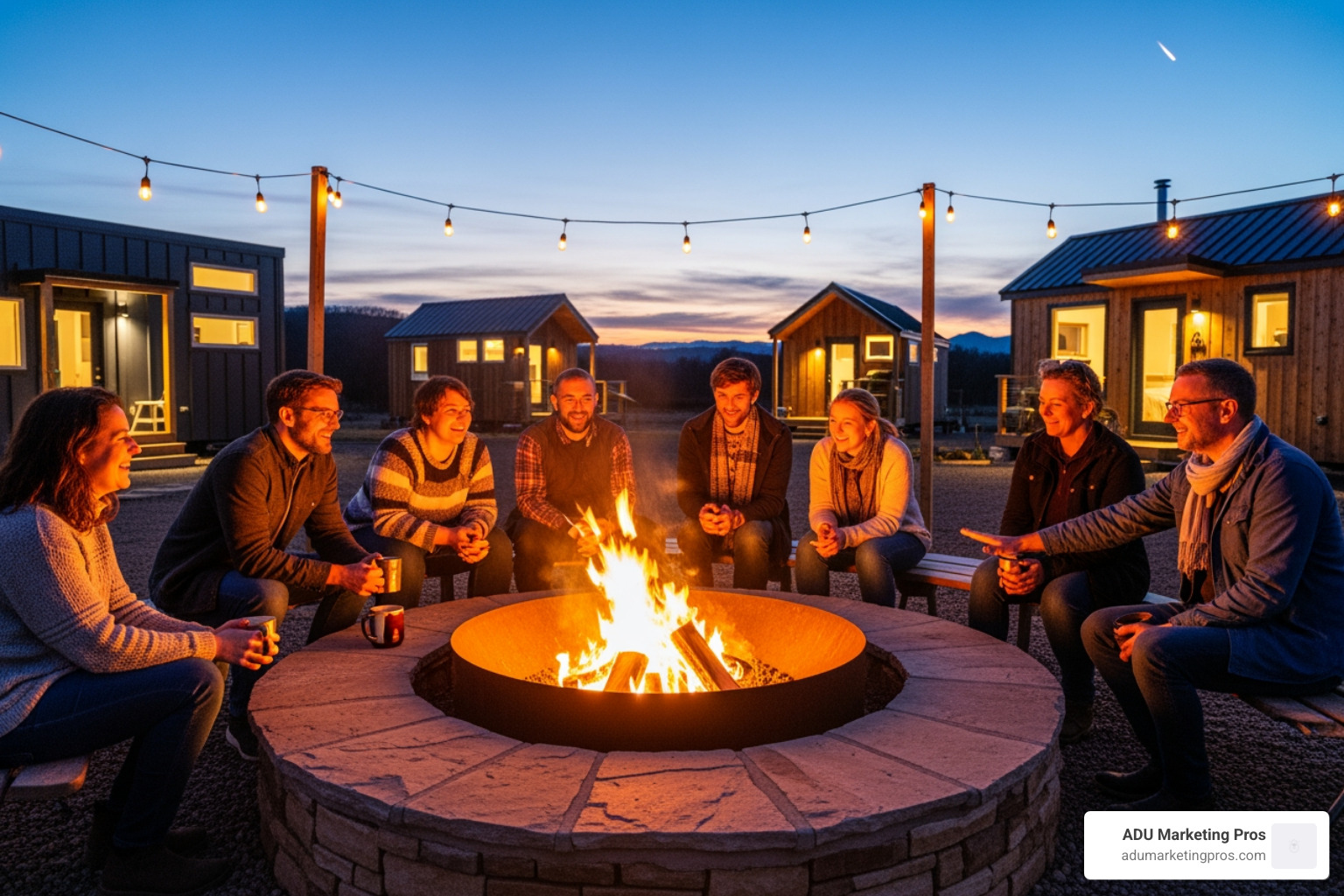
Finally, a strong sense of community is a cornerstone of these villages, combating the isolation often felt in sprawling suburbs. Imagine gathering around communal fire pits, sharing stories with neighbors who have become friends, or enjoying shared amenities like pools, clubhouses, and BBQ areas. These communities foster a supportive network of like-minded individuals from all walks of life—retirees, digital nomads, young professionals, and families—all united by a shared desire for a different way of living. This built-in social fabric provides not only camaraderie but also an informal safety net, creating a unique blend of private, independent living and neighborly connection.
If you’re considering building your own, there are many skilled tiny house builders in southern california who can help bring your vision to life.
Navigating the Costs and Regulations of Tiny Living
This section breaks down the essential financial and legal details you need to know before joining a tiny home community in Southern California. A clear understanding of these factors is crucial for a smooth transition.
Understanding the Financials: Purchase vs. Rent
When exploring tiny home communities southern california, understanding the complete financial picture is paramount. The costs can vary significantly depending on whether you’re purchasing a tiny home within a community or renting a lot for your existing tiny house.
For those looking to buy, new tiny homes in communities like Paradise Tiny Home Community in Desert Hot Springs can be priced from the low $100,000s, with some models ranging from $50,000 to $150,000 depending on the floor plan and finishes. This is a far cry from the average listing price for tiny homes with land in Southern California, which sits at $313,810, or the average cost to buy raw land at $37,885 per acre. These community prices make tiny home ownership a much more accessible reality.
Beyond the initial purchase, lot rent is a crucial ongoing cost. For instance, Paradise Tiny Home Community estimates monthly space rent to start from $795 to $895 per month. This rent covers the use of the land and often includes some services like water, sewer, trash, and recycling, though specific inclusions can vary. You’ll also need to budget for utility costs. This includes electricity (which can vary based on your usage and whether the park sub-meters), internet (options may range from park-provided Wi-Fi to high-speed services like Starlink), and sometimes propane for heating or cooking. Don’t forget tiny home insurance, which is a specialized product, often a type of RV or mobile home policy, that protects your investment.
One of the biggest financing challenges for tiny homes is that traditional mortgages are rarely an option. Since you typically own the home (chattel) but rent the land, lenders usually offer chattel loans or personal loans. These often come with higher interest rates (potentially 6-12%) and shorter loan terms (5-15 years) compared to conventional 30-year mortgages. It’s wise to shop around, and many people find success with local credit unions that are more flexible. Always get pre-approved to understand your budget. You can find a list of potential lender options to consider for tiny home financing here.
For those interested in owning land for a tiny home, we’ve compiled resources on land for sale in southern california for tiny houses.
The Legal Landscape: Zoning and Certifications
The legality of tiny homes in Southern California can be a complex maze, but communities often simplify this by ensuring their park and homes meet all relevant codes. Generally, regulations distinguish between movable tiny homes (THOWs), which are legally considered recreational vehicles (RVs), and those on permanent foundations, which might be classified as Accessory Dwelling Units (ADUs) or small houses.
Southern California regulations usually limit tiny homes to under 500 square feet, with many communities and local ordinances restricting them further, often to under 400 square feet to align with RV park standards. There are also strict height limits, typically under 14 feet, to ensure safe transport and fit within park parameters. These regulations can vary significantly by city and county, so always check local ordinances for the specific area you’re interested in.
For THOWs, RV certifications are the most critical legal requirement for community placement. Communities almost universally require homes to be certified by a recognized third-party agency such as RVIA (RV Industry Association), NOAH (National Organization of Alternative Housing), or Pacific West. This certification is not just a sticker; it’s proof that the home underwent inspections and was built to established safety standards for electrical, plumbing, structural, and fire safety. Without it, you will not be allowed into most parks.
While tiny homes offer an alternative housing solution, they still fall under various legal frameworks. For those looking to understand the broader context of homeownership and related education, consider a HUD-certified pre-purchase homebuyer education workshop. This can provide a solid foundation for understanding housing regulations and financial planning.
Featured Tiny Home Communities in Southern California
From desert oases to mountain retreats, Southern California offers a variety of communities to match your dream lifestyle. Here are some of the top destinations to begin your search.
For Purchase & Community Living: Paradise Tiny Home Community (Desert Hot Springs)
Nestled in the picturesque Coachella Valley near Palm Springs, Paradise Tiny Home Community in Desert Hot Springs presents a compelling option for those seeking a vibrant, all-ages community. This community is rapidly expanding, with plans to fill approximately 90 new tiny home spaces. Here, you can purchase a new tiny home, with prices starting from the low $100,000s, or bring your own certified tiny home if it meets their guidelines. The location in Desert Hot Springs is known for its natural mineral hot springs and stunning desert landscapes, offering a unique wellness-focused backdrop just 25 minutes from the chic restaurants, art galleries, and mid-century modern architecture of Palm Springs.
Paradise Tiny Home Community prides itself on offering upscale amenities and a resort-style living experience. Residents can enjoy a heated resort-style pool, a relaxing spa, a welcoming clubhouse with a gym and activity room, and even a newly created pickleball court. It’s a pet-friendly community, ensuring your furry friends can enjoy the sunshine too. The focus here is on sustainable and eco-conscious design, providing an affordable and stylish escape. To learn more about this exciting development, you can Discover Paradise Tiny Home Community or explore their RV park at Discover Paradise RV Park.
For RV Park & Budget-Friendly Options: Casa Del Sol RV Park (Hemet)
For those looking for an even more budget-friendly approach or a blend of RV and tiny home living, Casa Del Sol RV Park in Hemet offers a practical solution. Located in the Inland Empire, this community primarily operates as an RV park but also features park model homes and tiny homes available for sale or rent-to-own. It’s an all-age resort open year-round, making it a stable environment for long-term residents. Hemet provides a lower cost of living compared to coastal cities while still offering access to shopping, healthcare, and outdoor recreation at nearby Diamond Valley Lake.
Casa Del Sol provides spacious RV parking spots with full hook-ups, catering to big rigs and offering special discounted rates for caravans and groups. The community boasts a range of amenities designed to improve daily life, including a heated pool and spa, a fitness center, shuffleboard courts, a clubhouse with kitchen facilities, and a crafts room. With a focus on affordability and a welcoming community vibe, Casa Del Sol offers a scenic and active lifestyle. You can Explore Casa Del Sol RV Park to see if it’s the right fit for your needs.
For a Unique Mountain Retreat: Tiny House Block (Mount Laguna)
If your ideal Southern California lifestyle involves cooler temperatures, pine-scented air, and breathtaking natural beauty, Tiny House Block in Mount Laguna offers a unique mountain retreat. Located within the Cleveland National Forest at an elevation of 6,000 feet, this community is a haven for those seeking a connection to nature and a simpler way of life. It’s a true four-season destination, with warm summers perfect for hiking and snowy winters that transform the landscape into a winter wonderland—a rare experience in Southern California.
Tiny House Block provides options for both leasing tiny homes if you’re looking to experience the lifestyle without committing to ownership, and parking your own tiny home if you’re already a proud owner. They even offer “try before you buy” short-term stays, allowing you to immerse yourself in the mountain lifestyle before making a long-term decision. The community emphasizes simplicity and fosters a strong sense of connection among residents and visitors. It’s an ideal spot for nature enthusiasts, hikers, and anyone looking to escape the urban hustle. To experience this unique mountain community, you can Book a stay at Tiny House Block or visit their main site at Tiny House Block.
For Transitional & Supportive Housing: Esperanza Villa (Baldwin Park)
Addressing a critical need, Esperanza Villa in Baldwin Park provides a powerful example of how tiny home communities southern california can serve as a vital transitional housing solution. Opened in November 2021, this community features 25 tiny home units specifically designed to help individuals experiencing homelessness, with a local preference for Baldwin Park residents. This model is gaining traction throughout LA County as a rapid and dignified way to provide interim shelter.
Esperanza Villa isn’t just about providing shelter; it’s about offering a comprehensive support system to break the cycle of homelessness. The community, operated by the San Gabriel Valley Regional Housing Trust, includes robust supportive services such as on-site case management to connect residents to permanent housing, three daily meals, laundry facilities, restrooms, showers, and 24/7 security with secured entry. This holistic approach creates a safe and stable environment, serving as a crucial pathway to permanent housing. Success stories, like that of a 76-year-old woman who transitioned out of homelessness after just three months, highlight the profound impact of this model. You can Learn about Esperanza Villa’s mission and the impactful work they do.
Other Notable Mentions and Regions
While the featured communities offer excellent starting points, Southern California’s tiny living landscape is vast. Keep an eye on long-term RV parks that are increasingly tiny-home-friendly. Valencia Travel Village in Castaic, for example, is a well-established park with resort-like amenities that accommodates tiny homes meeting RV standards. Further afield, areas like the Central Coast (around San Luis Obispo) and mountain towns near the Sequoia National Forest are also becoming hotspots, offering a different pace of life. Always call parks directly to inquire about their specific policies for tiny homes on wheels.
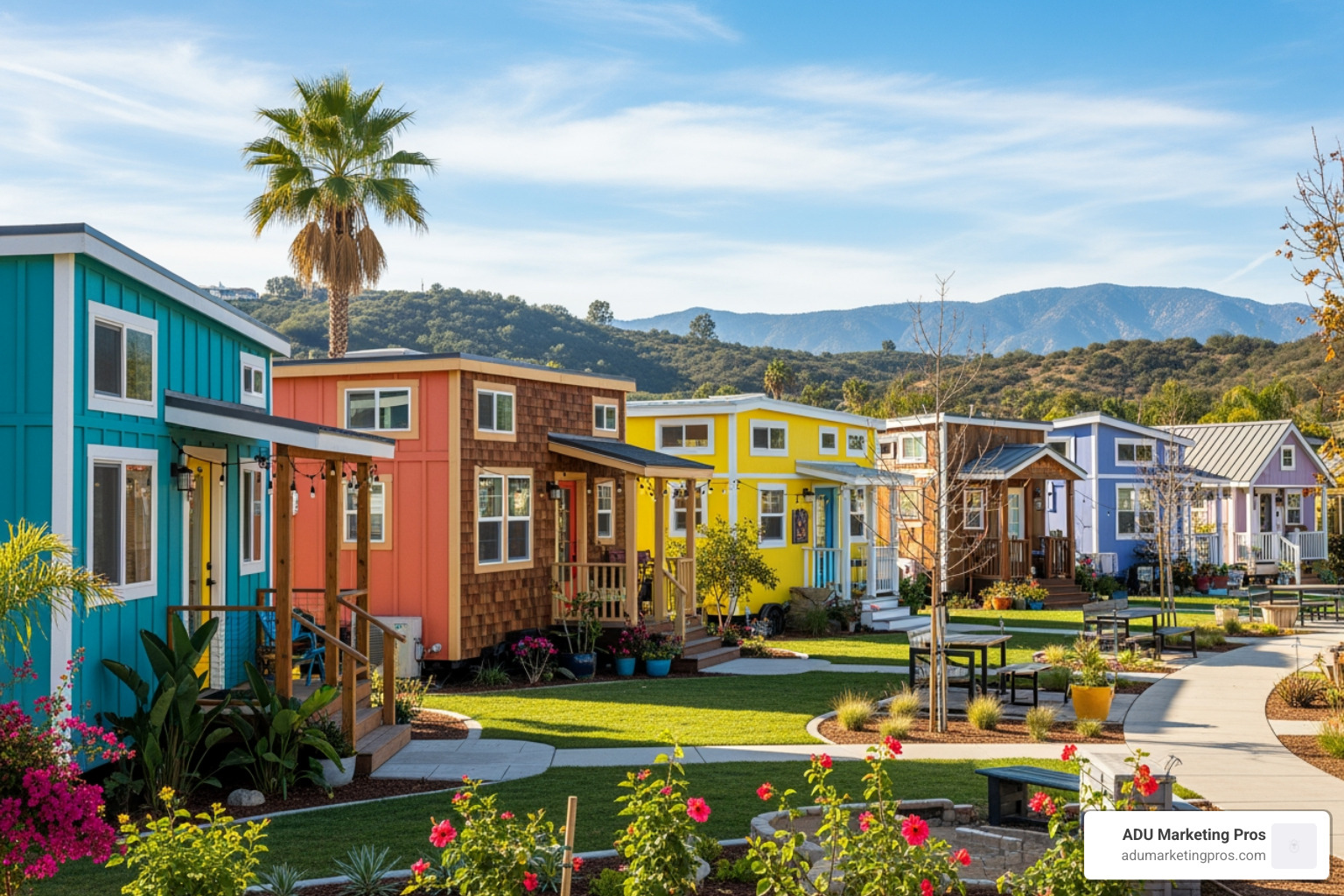
Key Considerations Before Making the Move
Making the leap to a tiny home community requires careful planning and self-reflection. Here’s how to ensure you find the perfect fit and navigate the transition smoothly.
Choosing the Right Community for Your Lifestyle
The beauty of tiny home communities southern california is their diversity. To find the perfect fit, you must first define your non-negotiables. Ask yourself a series of clarifying questions:
- Social Scene: Are you seeking an active social life with planned events and resort-style amenities, or a quiet, private retreat immersed in nature?
- Demographics: Do you prefer a community with a specific focus, such as a 55+ retiree community, or a more diverse, all-ages, family-friendly setting?
- Location & Lifestyle: How important is proximity to a major city for work or entertainment? Or would you rather be closer to hiking, beaches, or other natural attractions?
- Personal Space: What is your tolerance for shared spaces? Do you need a private yard or patio, or are you comfortable with mostly communal outdoor areas?
Once you have a clearer picture, we strongly recommend visiting your top choices in person. The vibe of a community is something you can only feel on the ground. While there, take the opportunity to talk to current residents. They can offer invaluable, unfiltered insights into daily life, management responsiveness, community dynamics, and any unadvertised pros or cons. Finally, review all park rules and regulations meticulously before signing anything. These documents are the constitution of the community and will outline everything from pet policies and quiet hours to rules on home modifications and guest stays. Understanding these nuances early on will prevent future conflicts and ensure a harmonious living situation. If you’re looking to customize or build your own tiny home, there are many talented architects in southern california who design tiny houses who can help.
Bringing Your Own Tiny Home: The Process for tiny home communities southern california
For those who already own a tiny house on wheels (THOW) or plan to purchase one independently, bringing it to a community is a multi-step process. Each community has its own specific requirements, but here is a general roadmap:
- Certification is Key: Before anything else, confirm your THOW has the right certification (RVIA, NOAH, or Pacific West). If it doesn’t, you will need to undergo a third-party inspection and certification process, which can be costly and time-consuming. Most communities will not even consider an uncertified home.
- Research and Contact: Create a list of communities that accept BYO homes. Contact their management directly to get a copy of their specific requirements, including size restrictions (length, width, height), aesthetic guidelines (siding, colors, age of home), and utility hookup specs (30 or 50 amp).
- The Application Process: Be prepared for a formal application similar to renting an apartment. This typically includes an application fee, a comprehensive background check, a credit history review, and proof of income. This process is in place to ensure a safe and financially stable environment for all residents.
- Transportation and Logistics: Moving a tiny home is a specialized task. You will need to hire a professional tiny home transport company. Costs can range from $3 to $7 per mile, plus additional fees for permits and setup. Ensure the company is licensed and insured.
- Setup and Skirting: Once your home arrives, it will need to be professionally leveled and securely placed on the lot. You will then connect to the park’s utilities. Most communities also require “skirting” to be installed around the base of the home to hide the wheels and undercarriage, giving it a more permanent and sightly appearance.
Frequently Asked Questions about Tiny Home Communities Southern California
We often encounter common questions about the practicalities of tiny home living in Southern California. Here, we address some of the most pressing concerns to help you navigate this exciting housing option.
How much does it cost to live in a tiny home community in Southern California?
The costs can be broken down into two main parts: the home itself and the monthly lot rent. New tiny home purchase prices in a community can range from the low $100,000s (e.g., Paradise Tiny Home Community offers homes from $50,000 to $150,000). Monthly lot rents typically fall between $700 and $900+, plus utilities (electricity, propane, internet). While the average listing price for a tiny home with land in Southern California is higher at $313,810, community living remains significantly more affordable than the median price of traditional homes in the region, offering a tangible path to homeownership or drastically reduced living expenses.
Are tiny homes on wheels (THOWs) legal in Southern California communities?
Yes, many communities, especially those that are also RV parks, are specifically designed for THOWs. However, legality is contingent on certification. They almost always require the home to be certified by an agency like the RV Industry Association (RVIA), NOAH, or Pacific West. This certification ensures the home meets national safety and construction standards for things like electrical, plumbing, and structural integrity. These certifications are crucial for compliance with community rules and local regulations, which often limit tiny homes to under 500 square feet and a specific height (often under 14ft). Always confirm requirements with the specific community and local city planning department.
Can I get a traditional mortgage for a tiny home in a community?
It is very difficult, and in most cases, impossible. Since you are buying the structure (personal property) but renting the land, traditional mortgages—which are secured by real estate—don’t apply. Financing for tiny homes is commonly done through chattel loans (loans for movable property like RVs or vehicles) or personal loans. These loan types may have higher interest rates and shorter terms (e.g., 10-15 years) compared to conventional mortgages. The seller or community developer often does not offer financing directly. We recommend checking with various lenders, especially local credit unions, to understand your options and verify if you qualify. See a list of potential lender options.
What about property taxes for a tiny home?
This is a key financial advantage. If you are renting a lot in a community, you do not pay property tax on the land. For the home itself, a THOW is typically registered with the DMV like an RV. You will pay an annual vehicle registration fee instead of property taxes. This results in significant yearly savings compared to a traditional homeowner who pays property tax based on the assessed value of their land and structure.
Are tiny home communities safe?
Safety is a high priority for these communities. Most are private property and feature security measures such as gated entries, on-site management, and sometimes security patrols. Furthermore, the inherent nature of an intentional community, where neighbors know and look out for each other, creates a strong informal security network. The mandatory background checks during the application process also help to ensure a safe environment for all residents.
Can I customize my lot or have a garden?
This varies widely from one community to another. Some parks with a strong community focus encourage residents to plant gardens, set up patios, and personalize their space within certain guidelines. Others, particularly those with a more uniform, resort-style aesthetic, may have very strict rules about landscaping and exterior decorations. It is essential to read the park’s rules and regulations thoroughly to understand what is and isn’t allowed before you commit.
Conclusion
The dream of living in Southern California—with its sunshine, innovation, and vibrant culture—is more accessible than ever, thanks to the growing number of diverse and welcoming tiny home communities southern california. These communities are no longer a niche alternative; they are a mainstream solution to the region’s housing affordability crisis, offering a path to a simpler, more financially free, and community-oriented life.
Whether you seek a luxurious desert resort with a bustling social calendar, a peaceful mountain escape to reconnect with nature, or a budget-friendly park with all the essential amenities, there is a community to fit your vision. By performing due diligence—understanding the costs, navigating the regulations, and carefully choosing a community that aligns with your lifestyle—you can confidently take the next step toward your tiny living journey. As the demand for innovative housing grows, we expect to see even more of these forward-thinking communities emerge, further reshaping the future of California living. As experts in the alternative housing market, we at ADU Marketing Pros recognize the vital role these communities play. For a deeper dive into where you can legally place a tiny home, explore our comprehensive guide on places in Southern California that allow tiny houses.