
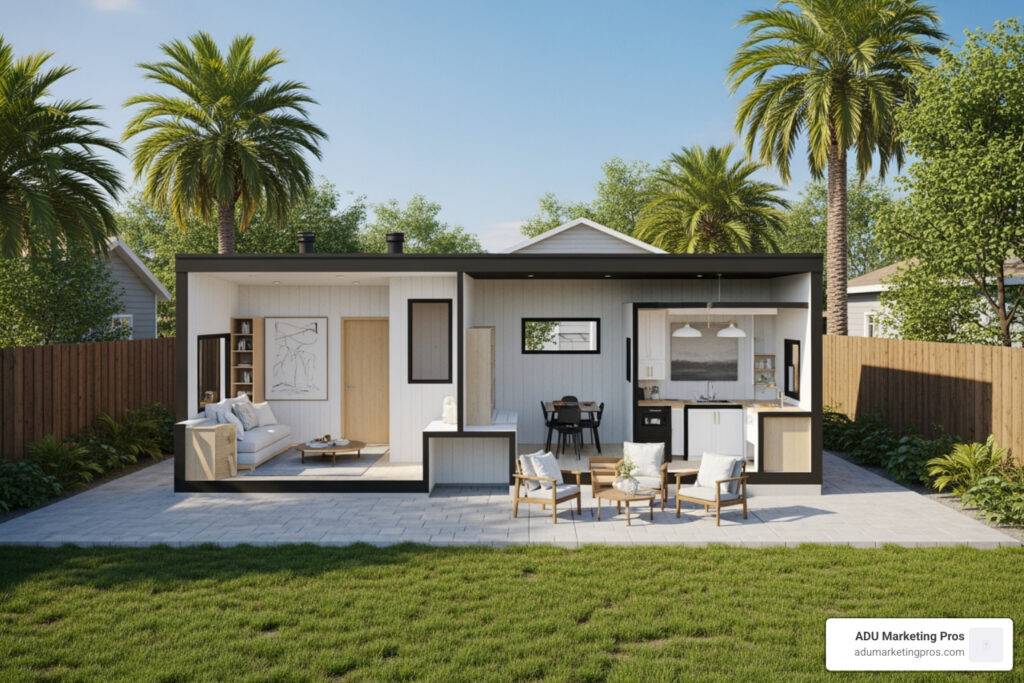
Why Prefab ADU Floor Plans Are Transforming Backyards Across California
Prefab ADU floor plans are the fastest-growing solution for homeowners who want to add livable space to their property — without the cost and chaos of traditional construction. In a state like California, where the housing crisis has reached a fever pitch, these secondary dwellings represent more than just extra square footage; they represent a shift in how we think about urban density and multi-generational wealth.
Whether you need housing for aging parents, a rental unit to offset your mortgage, or a private home office, prefab ADUs deliver a faster, more predictable path to getting there. The “California Dream” is evolving. No longer is it just about the single-family home on a quarter-acre; it’s about maximizing that land to support a modern, flexible lifestyle. With the rise of remote work and the increasing cost of assisted living, the backyard has become the most valuable asset a homeowner possesses.
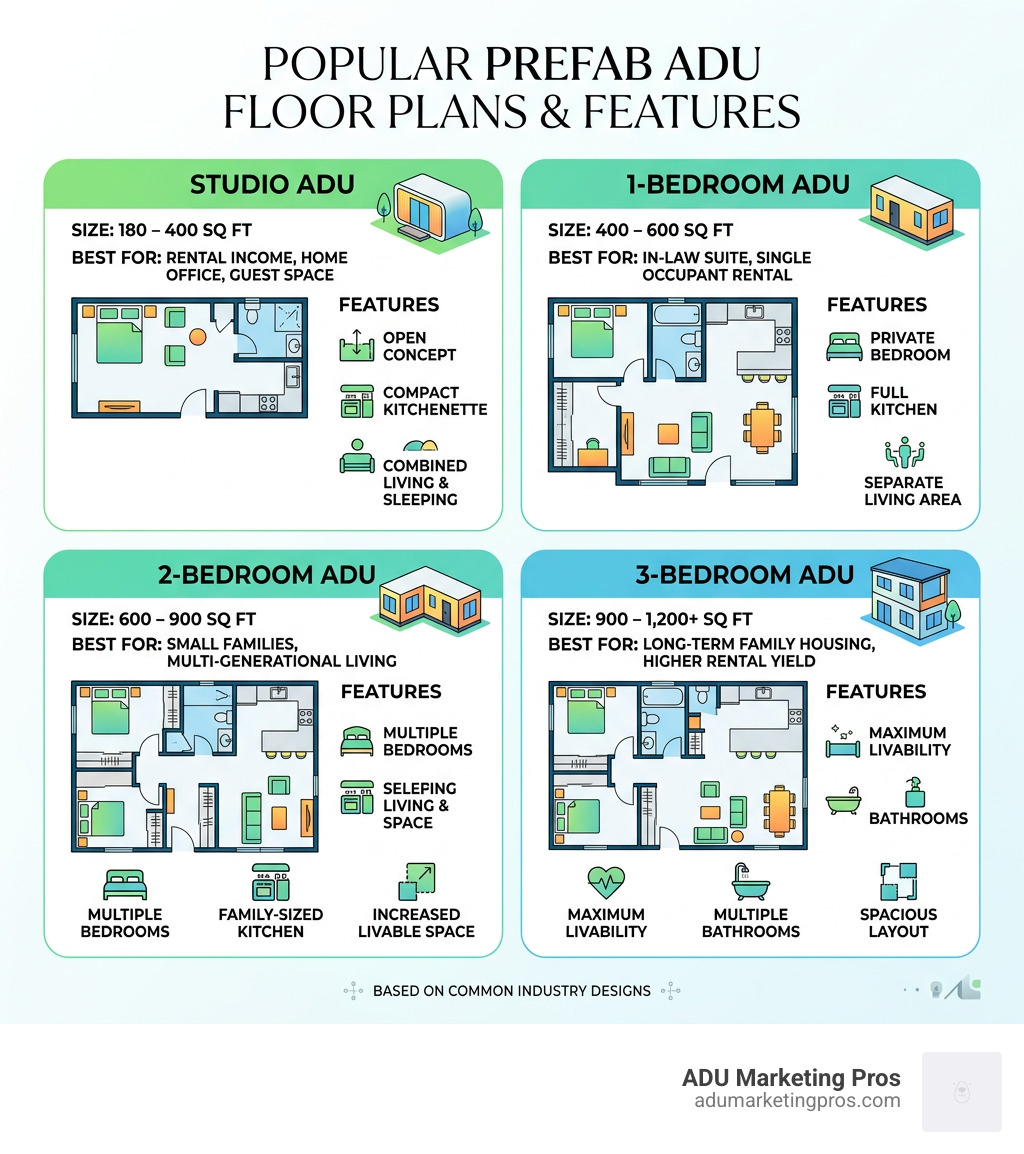
Here is a quick overview of the most common prefab ADU floor plan options available today:
| Layout Type | Typical Size | Best For |
|---|---|---|
| Studio | 180 – 400 sq ft | Rental income, home office, guest space |
| 1-Bedroom | 400 – 600 sq ft | In-law suite, single occupant rental |
| 2-Bedroom | 600 – 900 sq ft | Small families, multi-generational living |
| 3-Bedroom | 900 – 1,200+ sq ft | Long-term family housing, higher rental yield |
Prefab ADUs come in a wide range of styles — from compact studios under 200 square feet to full three-bedroom units over 1,000 square feet. Providers across the US offer dozens of pre-designed layouts, many of which can be customized with lofts, porches, extra bathrooms, and modern finishes. The beauty of the prefab model is the elimination of the “blank page” problem. Instead of hiring an architect for $20,000 to start from scratch, you choose a proven, engineered layout that has already been optimized for flow and efficiency.
California’s housing shortage has made ADUs especially popular. The state has seen a dramatic rise in ADU permit applications over the past five years, driven by regulatory changes that make it easier than ever for homeowners to build a secondary dwelling on their lot. Laws like AB 68 and SB 13 have stripped away many of the barriers that local cities used to block these projects, such as minimum lot sizes and excessive parking requirements.
The appeal is simple: prefab construction is faster, less disruptive, and often more cost-effective than building from scratch. Some prefab shells can even be installed to a weathertight state in as little as three days. This guide walks you through the best prefab ADU floor plan options — from cozy studios to spacious family units — and everything you need to know to choose the right layout for your property.
Prefab ADU floor plans further reading:
The Benefits of Choosing Prefab ADU Floor Plans
When we talk to homeowners in San Jose or Los Angeles about adding a secondary unit, the first question is usually about the “mess.” Traditional “stick-built” construction can turn your backyard into a dusty, noisy construction zone for six months or more. This is where Prefab ADU floor plans shine. By shifting the bulk of the work to a controlled factory environment, we see a massive reduction in onsite disruption. Imagine having a full construction crew in your yard for only two weeks instead of twenty-four.
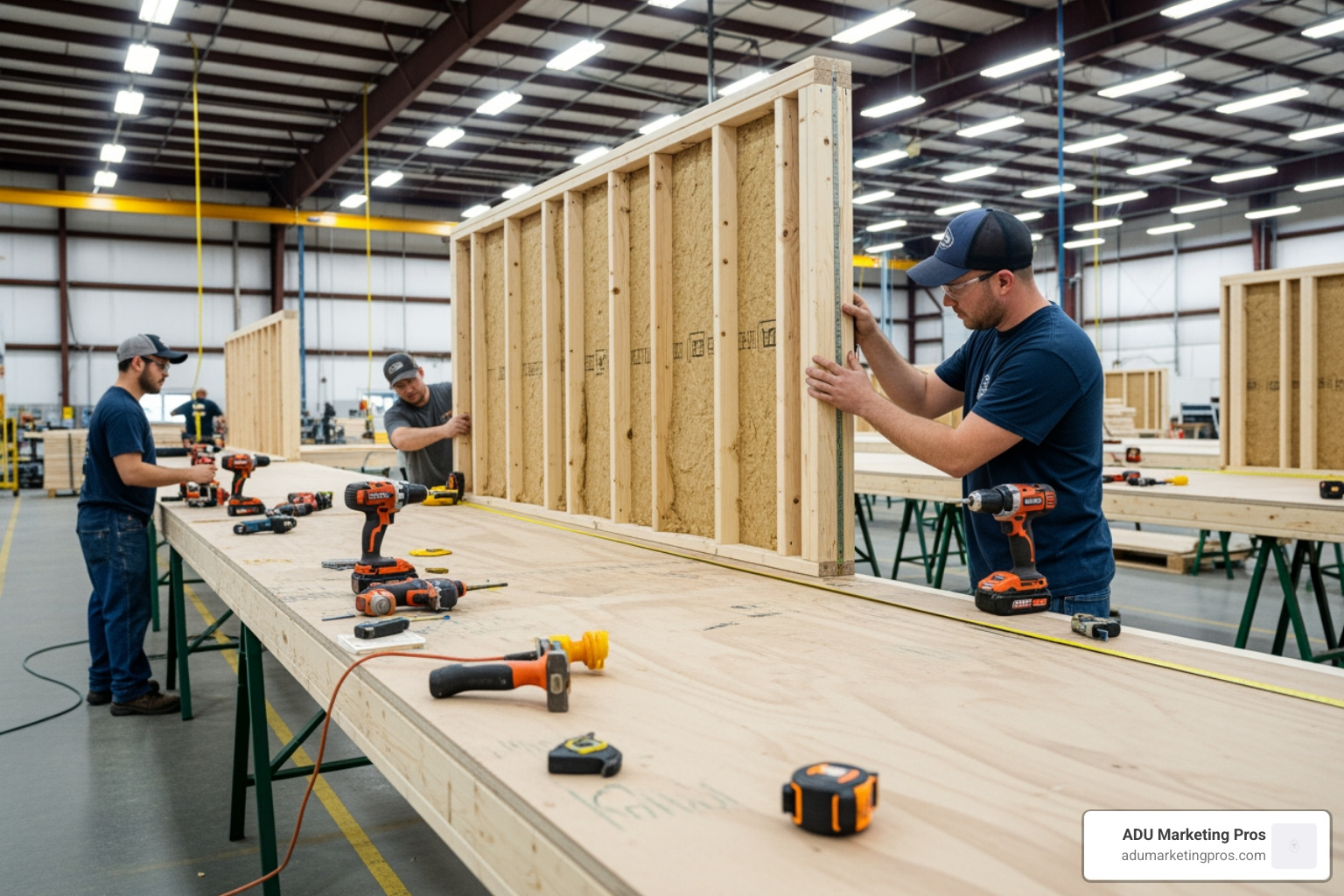
The benefits go far beyond just keeping your backyard clean. Here’s why prefab is winning the housing revolution:
- Construction Speed: Because the site preparation (like the foundation and utility trenching) happens at the same time the house is being built in the factory, the total project timeline is slashed by 50% or more. Some units can reach a weathertight status in as little as three days once they arrive on your lot. You can see this efficiency in action in this three-minute video of the passive prefab building process.
- Cost Predictability: One of the biggest fears in California real estate is the “budget creep.” Traditional contractors often provide estimates that balloon by 20-30% due to material waste or weather delays. Prefab models often come with fixed pricing for the unit itself. While site work varies based on your specific lot, the core cost of your Modern ADU Floor Plans is much easier to nail down from day one.
- Quality Control: Building indoors means no rain-soaked lumber, no warped studs, and no weather delays. The precision of factory tools ensures that every corner is perfectly square and every seal is airtight. This often results in higher energy efficiency, with some units saving up to 60% on energy costs compared to traditional builds. In a factory, inspections happen at every stage of the assembly line, not just when a city inspector can make it out to a job site.
- Environmental Impact: Factory building produces significantly less waste. Materials are measured and cut with computer precision (CNC machines), and any leftovers are easily recycled within the facility. Furthermore, the reduced number of truck trips to your home significantly lowers the carbon footprint of the project.
Customizing Prefab ADU Floor Plans for Multi-Generational Living
In high-cost areas like the San Francisco Bay Area and San Diego, we are seeing a huge surge in “Granny Flats.” Families are looking for ways to keep aging parents close while still giving everyone their own front door. This “together but separate” living arrangement is the gold standard for modern multi-generational housing.
When choosing Modern Prefab Granny Flats, look for “Universal Design” features. This means wider doorways (36 inches) for walkers or wheelchairs, curbless showers that eliminate trip hazards, and grab-bar reinforcement in the walls. The beauty of a prefab layout is that these accessibility features can be integrated into the design from day one, rather than being awkward, expensive afterthoughts.
An ADU allows parents to maintain their independence and dignity. They have their own kitchen, their own living room, and their own porch, but they are just twenty feet away if they need help with a heavy jar or a quick ride to the doctor. It’s a win-win that keeps the family unit strong while respecting personal space and privacy.
How to Evaluate Different Prefab ADU Floor Plans
Choosing a layout isn’t just about picking a pretty picture from a catalog. We recommend looking at your specific lot and lifestyle needs before falling in love with a design. A plan that looks great on a flat lot in the Central Valley might not work on a sloped lot in the Hollywood Hills.
- Site Orientation: Where does the sun hit your yard? If you pick a plan with massive floor-to-ceiling windows on the south side, you might get a lot of unwanted heat in the summer. Look for Detached ADU Plans that allow for flexible window placement or offer shading solutions like deep eaves.
- Setback Requirements: California laws are friendly, but you still usually need 4-foot setbacks from side and rear property lines. Measure your “buildable envelope” first. Don’t forget to account for existing trees or easements that might restrict where the unit can sit.
- Utility Connections: Your ADU needs water, sewer, and power. A floor plan that places the kitchen and bathroom on the side of the unit closest to your main house’s utility lines can save you thousands in trenching and plumbing costs. Every foot of trenching through concrete or hard soil adds to your bottom line.
- Privacy and Sightlines: Consider where the doors and windows are located in relation to your main house. You don’t necessarily want your tenant (or your teenager) looking directly into your kitchen window while you’re eating breakfast. Look for plans that utilize clerestory windows (high on the wall) to let in light while maintaining privacy.
Popular Layouts: From Studios to Multi-Bedroom Units
The “perfect” size for an ADU depends entirely on your goals. Are you looking for a high-yield rental in Palo Alto, or a permanent home for a growing family in Sunnyvale? The market has expanded to include everything from “tiny homes” on wheels to full-sized modular cottages that are indistinguishable from a standard house.
Let’s look at the numbers. Some providers offer over 75 different floor plans, ranging from tiny 180-square-foot pods to massive 1,200-square-foot cottages. Here is how they generally break down in terms of functionality and market demand:
| Size Range | Bedroom Count | Common Features |
|---|---|---|
| 180 – 300 sq ft | Studio | Murphy beds, wet bars, high ceilings, compact bath |
| 400 – 600 sq ft | 1 Bedroom | Full kitchen, laundry closet, separate bedroom, porch |
| 750 – 1,000 sq ft | 2 Bedrooms | Dual bathrooms, dining area, larger closets, pantry |
| 1,000 – 1,200 sq ft | 3 Bedrooms | Family-sized kitchen, multiple entries, wrap-around porch |
Compact Studio and One-Bedroom Designs
For many homeowners, the Studio ADU Floor Plans are the “sweet spot” for ROI. A 180 to 400-square-foot unit is often the easiest to permit and the least expensive to build. These are perfect for:
- Short-term rentals: Think Airbnb (where allowed by local ordinance). These units function like a high-end hotel suite.
- Home Offices: A quiet, professional space away from the main house, essential for the modern remote worker.
- Guest Suites: A private place for friends to stay for the weekend without everyone sharing a single bathroom.
If you step up to a Prefab Granny Flat California in the 400–600 square foot range, you get a “real” home. These units, like the popular 414-square-foot “Woody” model, feature a separate bedroom, allowing one person to sleep while another watches TV in the living room. This separation of space is a game-changer for long-term comfort and mental well-being. It allows for a full-sized refrigerator and a four-burner stove, making it a viable long-term residence for a single professional or a retired couple.
Spacious Two and Three-Bedroom Family Units
If you have the space in your backyard, a two or three-bedroom ADU can act as a primary residence. In cities like Los Angeles and San Jose, where the “missing middle” housing is scarce, these ADU Modular Homes California provide essential housing for small families who have been priced out of the traditional market.
A 1,200-square-foot plan can feel surprisingly large if it uses an open-concept layout. By combining the kitchen, dining, and living areas into one “great room,” you eliminate wasted hallway space. Models like the 1,194-square-foot “Napa” offer three bedrooms and two bathrooms, making them suitable for a family of four. This size is often the legal limit for ADUs in many California jurisdictions, so it maximizes the potential of your land. These larger units often command rents that can exceed $4,500 in prime coastal markets, making them a powerful engine for wealth generation.
Design Strategies to Maximize Space and Comfort
Living in a smaller footprint doesn’t have to feel cramped. In fact, many people find that a well-designed ADU feels more “luxurious” than a larger, poorly planned home. The secret lies in the architecture and the clever use of every cubic inch, not just square inch. When you have less space, every design choice carries more weight.
To truly master Luxury in Small Spaces: How to Build a High-End ADU Without the High-End Footprint, we focus on three key areas:
- Vertical Space: Use vaulted or cathedral ceilings. By drawing the eye upward, a 400-square-foot room feels significantly larger. Many prefab models offer 9-foot or even 13-foot ceilings as standard or upgrade options. This extra height also allows for high-level storage or decorative shelving that doesn’t clutter the floor.
- Light: Large, strategically placed windows and glass doors are essential. Natural light blurs the line between inside and outside, making the walls feel like they’ve “pushed back.” Skylights and solar tubes are also excellent ways to bring light into the center of a unit without sacrificing wall space for furniture.
- Multifunctional Furniture and Built-ins: In smaller Prefab ADU floor plans, every inch must work. Think about built-in benches with storage underneath, or kitchen islands that double as dining tables and workspaces. Pocket doors are another great space-saver, as they eliminate the “swing zone” required by traditional doors.
Architectural Styles and Customization
Just because it’s “prefab” doesn’t mean it has to look like a generic box. Today’s market offers an incredible variety of Modern ADU Floor Plans that can match almost any main house, from a 1920s Craftsman to a 1960s Mid-Century Modern.
- Modern/Contemporary: Characterized by flat roofs, large glass spans, and minimalist siding like Shou Sugi Ban or fiber cement panels.
- Farmhouse: Features board and batten siding, pitched roofs, and classic front porches that provide a sense of Americana.
- Cottage: Cozy, traditional details like shingle siding and divided-lite windows that blend into older neighborhoods in Menlo Park or Palo Alto.
- A-Frame: A unique, stylish option that works great as a creative studio or vacation rental, offering a dramatic interior volume.
Most builders allow you to customize the “shell.” You can choose your siding color, window trim, and roofing material. Some even offer “panelized kits” where you can adjust the interior walls to create the exact layout you want. This level of customization ensures that your ADU adds to your property’s curb appeal rather than looking like an afterthought.
Integrating Indoor-Outdoor Living
In California, our weather is our best amenity. We can effectively double the living space of a small ADU by integrating the outdoors. This is the most cost-effective way to make a 500-square-foot unit feel like 800 square feet.
- Panoramic Folding Doors: These allow you to open an entire wall of the living room to a backyard patio, creating a seamless transition.
- Decks and Porches: A 100-square-foot deck is a much cheaper way to add “living space” than adding 100 square feet of interior room. It provides a place for morning coffee or evening dining.
- Rooftop Decks: If your lot is tight and you don’t have room for a large patio, go up! Some Pre-Approved ADU Plans include stairs to a flat roof, providing a private sun deck with a view.
- Mezzanines and Lofts: These are perfect for “bonus” space—use them for a reading nook, a yoga spot, or extra storage without increasing the footprint of the building. In many jurisdictions, lofts with low head height don’t even count toward your total square footage limit.
Navigating the Process, Costs, and Regulations
Building an ADU is a journey, and while prefab makes it easier, you still need a map. The process generally looks like this:
- Feasibility & Design: We look at your lot, check the zoning, and pick your [Prefab ADU floor plans]. This stage involves checking for utility easements and ensuring a crane can access your backyard.
- Permitting: You submit your plans to the city. Using “pre-approved” plans can significantly speed this up, sometimes cutting months off the wait time.
- Site Prep: While the factory builds your home in a controlled environment, a local crew prepares the foundation (slab or pier) and runs the utility lines (water, sewer, electric).
- Delivery & Install: The unit arrives via truck and is craned or rolled onto the foundation. This is the most exciting day, as your backyard is transformed in hours.
- Finishing: The last connections are made, appliances are installed, and the final inspections are signed off by the city.
Understanding Prefab ADU Costs and Financing
Let’s talk numbers. While a tiny DIY kit might cost $50,000, a fully finished, high-end prefab ADU in California typically ranges from $250,000 to $400,000+ once you include site work, permits, and utility hookups. It is important to distinguish between the “sticker price” of the unit and the “all-in” project cost.
For example, a premium 2-bedroom, 1-bath unit (about 610 sq ft) might start around $312,000. However, after you add upgrades, sales tax, and city fees (which can range from $5,000 to $20,000), the average “all-in” price might be closer to $350,000. For more details, check out our guide on Prefab ADU California Cost.
How do you pay for it? Most homeowners use one of the following:
- HELOC: Home Equity Lines of Credit are the most popular choice, allowing you to borrow against the value of your primary home.
- Construction Loans: These are specifically designed for building projects and often convert to a standard mortgage once the project is complete.
- Cash: If you have the savings, this avoids interest rates and simplifies the process.
- Renovation Financing: Some products like the Fannie Mae HomeStyle loan allow you to wrap the ADU cost into a new or existing mortgage.
While the upfront cost seems high, remember the ROI. In many California markets, a 2-bedroom ADU can rent for $3,000 to $4,500 a month, easily covering the loan payment and adding significant equity to your property. See more on Modular Granny Flats California.
California Specific Regulations and Zoning
California has passed several “pro-ADU” laws (like SB 9 and SB 10) that make it very difficult for cities to say “no” to your project. These laws were designed to bypass local NIMBYism and create more housing density. However, every city has its own flavor of the rules.
- San Jose: Known for being very ADU-friendly, the city offers a “pre-approved” plan program to fast-track your permit. Check the Preapproved ADUs | City of San José website for details.
- Los Angeles: LA has its own set of standards for Prefab ADU Los Angeles, especially regarding parking and hillside construction. The city’s ADU Accelerator Program is also a great resource for seniors.
- Parking: In most cases, if you are within a half-mile of public transit, you are not required to add a parking space for your ADU. This is a huge win for homeowners with small lots.
- Size: Most cities must allow at least an 800-square-foot detached ADU, regardless of your lot size or “Floor Area Ratio” (FAR). Some cities allow up to 1,200 square feet.
Frequently Asked Questions about Prefab ADU Floor Plans
How long does it take to build and install a prefab ADU?
The factory build usually takes 8–12 weeks. However, the total project (including permits and site prep) usually takes 6–9 months. The actual “install” on your property is very fast—often just a few days to get the unit weathertight. This is a huge advantage of ADU Modular Homes compared to the 12+ months often required for stick-built homes.
Can I customize a pre-designed prefab floor plan?
Yes! Most companies allow for “finish” customizations (flooring, cabinets, paint, hardware). Structural changes (moving a wall or adding a window) are often possible but may require additional engineering fees and could slightly delay the factory timeline. If you are looking for specific ADU Floor Plans Los Angeles, many designers offer a “menu” of options to make the unit feel unique.
Are prefab ADUs as durable as traditional stick-built homes?
Actually, they are often more durable. Because they have to be transported on a highway at 60 mph and lifted by a crane, they are built with extra structural reinforcement and more fasteners than a standard home. Most use high-quality materials like SIP (Structural Insulated Panels) and must meet the same strict California building and seismic codes as any other home. You can see the build quality for yourself by checking out this YouTube channel for EkoBuilt home tours.
Will an ADU increase my property taxes?
Yes, but only for the value of the ADU itself. Your primary home will not be reassessed. This is known as a “blended assessment.” While your taxes will go up slightly, the increase is usually far outweighed by the rental income or the added property value.
Can I sell my ADU separately from my main house?
In most California cities, the answer is currently no. The ADU is tied to the property. However, new legislation like AB 1033 allows some cities to opt-in to a program that lets homeowners sell ADUs as condos. This is a developing area of law, so check with your local planning department.
Conclusion
Finding the right Prefab ADU floor plans is the first step toward unlocking the hidden potential of your property. Whether you are looking to house a family member, generate passive income, or simply create a beautiful workspace, there is a layout designed to fit your needs and your lot. The transition to prefab is not just a trend; it is a necessary evolution in how we build in high-density, high-cost environments.
At ADU Marketing Pros, we specialize in helping the people who build these incredible homes. We provide specialized digital marketing, SEO, and lead generation for ADU construction and architecture firms across California—from San Jose to San Diego. We understand this niche market inside and out, helping builders stand out by focusing on their unique expertise rather than just competing on price. We believe that by helping builders succeed, we are helping solve the housing crisis one backyard at a time.
If you’re a builder looking to grow your business in the booming California ADU sector, we’re here to help you reach homeowners who are ready to build. Our strategies are data-driven and tailored to the specific nuances of the accessory dwelling unit market.
Ready to explore more? Check out our comprehensive guide on ADU Floor Plans California to start your journey today!