
Small Modular Homes That Deliver Quality Without the Huge Price Tag
Small modular homes are one of the most practical and affordable ways to add livable space — whether you’re building a backyard ADU, a vacation cabin, or a full-time residence. In an era where traditional real estate prices have skyrocketed and the inventory of starter homes has dwindled, modular construction offers a realistic path to homeownership for first-time buyers, retirees, and investors alike. The “missing middle” of housing—those homes that sit between massive single-family estates and high-rise apartments—is finally being addressed through the efficiency of factory-built technology.
As urban density increases and the cost of land continues to climb, homeowners are looking for ways to maximize their existing property. Small modular homes provide a turnkey solution that bypasses the traditional headaches of site-built construction, such as weather delays, contractor shortages, and fluctuating material costs. By shifting the majority of the work to a controlled environment, the industry has managed to stabilize pricing in a way that traditional builders simply cannot match.
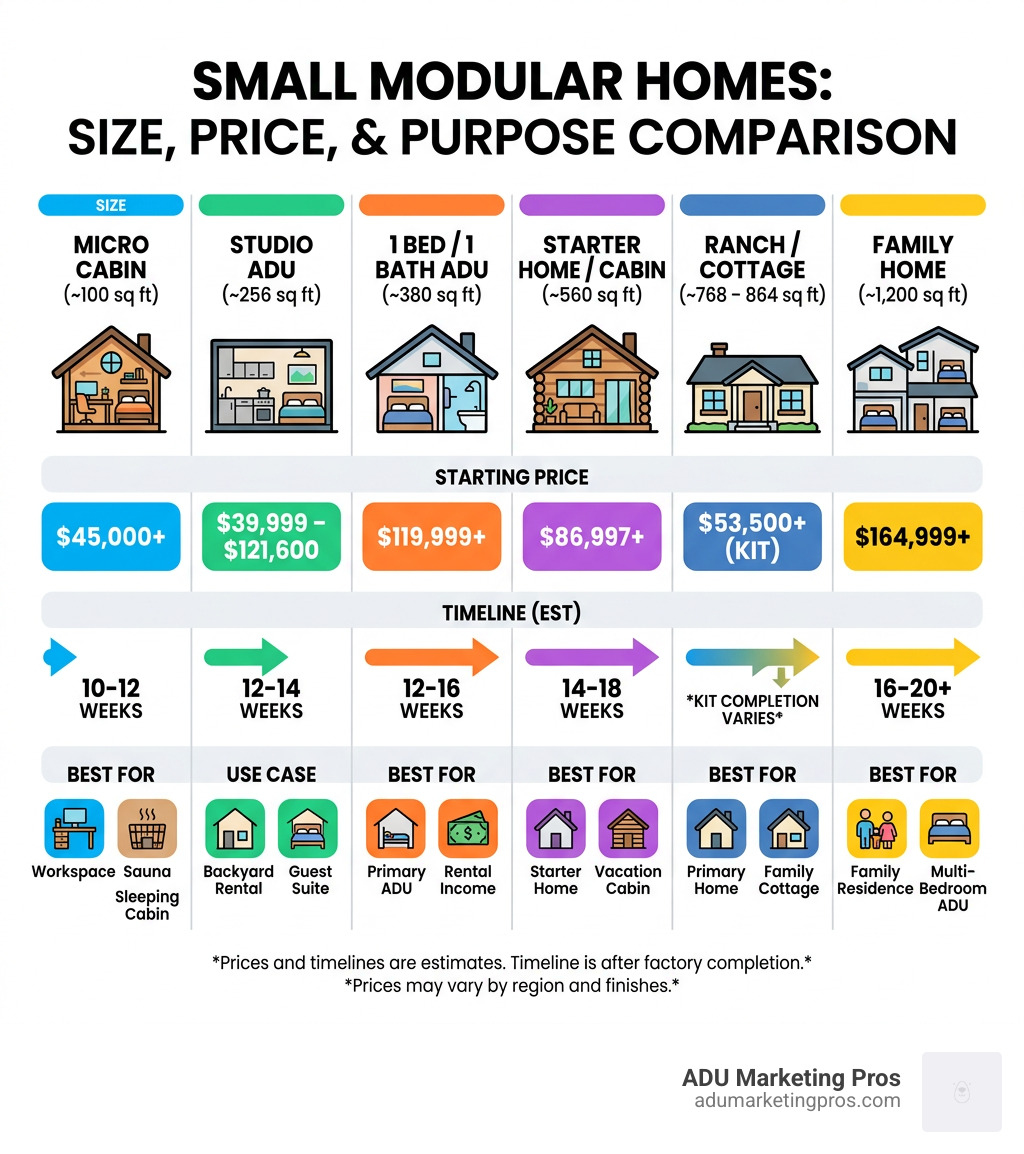
Here’s a quick look at what’s available right now in the modular market:
| Size | Starting Price | Best For |
|---|---|---|
| ~100 sq ft (micro cabin) | $45,000 | Workspace, sauna, sleeping cabin |
| 256 sq ft (studio ADU) | $39,999–$121,600 | Backyard rental, guest suite |
| 380 sq ft (1 bed/1 bath ADU) | $119,999 | Primary ADU, rental income |
| 560 sq ft | $86,997 | Starter home, cabin |
| 768–864 sq ft | $53,500 (kit) | Ranch or cottage primary home |
| 1,200 sq ft | $164,999 | Family home, multi-bedroom ADU |
The Evolution of Modular Housing
The appeal is straightforward: factory-built construction means faster timelines, lower costs, and more predictable quality than traditional site-built homes. Many small modular homes are delivered and set up in 12–16 weeks — a fraction of the time a stick-built home can take. This speed is not just a convenience; it is a financial strategy. For investors, a faster build means a faster path to rental income. For homeowners, it means less time paying for both a mortgage and temporary housing.
Historically, modular homes were often confused with mobile homes, but today’s modular builds are constructed to modern residential standards and are frequently indistinguishable from site-built homes once completed. They can include high-end finishes, energy-efficient building envelopes, and strong structural engineering. The shift toward minimalism and the “tiny house movement” has further propelled the popularity of these smaller footprints, proving that you don’t need 3,000 square feet to live a high-quality life.
And the demand is real. Housing costs keep climbing, lots are getting smaller, and zoning laws in states like California, Oregon, and Washington are increasingly friendly to compact, modular construction. These legislative shifts are opening doors for multi-generational living and affordable urban infill projects that were previously blocked by red tape.
In this roundup, we break down the best options on the market — by size, price, use case, and features — so you can find the right fit for your budget and goals.
Terms related to Small modular homes:
Understanding Small Modular Homes and How They Differ
When we talk about small modular homes, we’re referring to structures built in sections within a climate-controlled factory environment. Once the sections are complete, they are transported to your property and assembled on a permanent foundation. This process is fundamentally different from “stick-built” homes, which are constructed entirely on-site, exposed to the elements and potential labor delays. According to the Modular Home Builders Association, modular construction can reduce build times by up to 50% compared to traditional methods.

It is also important to distinguish these from manufactured homes and tiny homes. While they might look similar, the legal and structural differences are significant. For those looking for more permanent options, checking out small houses for sale can provide a baseline for what to expect in the current market. Understanding these nuances is critical for securing financing and ensuring your home complies with local zoning ordinances.
Defining the Modular Advantage
The “modular advantage” comes down to precision. Because these homes are built in a factory, manufacturers use precision engineering and specialized jigs to ensure every corner is perfectly square. This controlled environment eliminates weather-related warping of lumber and significantly reduces material waste. In a traditional build, lumber is often left out in the rain, leading to moisture trapped in the walls which can cause mold or structural issues later. In a modular factory, the wood stays dry from the moment it arrives until the home is sealed on-site.
Furthermore, the structural integrity of a modular unit is often superior to a stick-built home because it must be sturdy enough to withstand the stresses of highway transportation and being hoisted by a crane. Each module is essentially a self-contained box that is then bolted to other boxes, resulting in a double-walled structure at the seams that provides exceptional sound dampening and thermal insulation.
Modular vs. Manufactured vs. Tiny Homes
The primary difference lies in the building codes and how the property is treated by lenders and local governments:
- Modular Homes: Built to the same International Residential Code (IRC) as site-built homes. They sit on permanent foundations and generally appreciate in value like traditional real estate. They are eligible for standard mortgages and are governed by local building departments. They are considered “real property” from day one.
- Manufactured Homes: Often called “mobile homes,” these are built to the federal HUD code. They are constructed on a permanent steel chassis. While they are more affordable, they may face stricter zoning restrictions and different financing rules. They are often treated as personal property (like a vehicle) unless specific steps are taken to title them as real estate.
- Tiny Homes: These are often under 400 square feet. While some are modular and foundation-based, many are built on trailers (RV code). True small modular homes offer the longevity and financing options of traditional housing while embracing the minimalism trend. They provide a middle ground for those who want the tiny lifestyle without the legal ambiguity of living in an RV.
The Manufacturing Process
The process begins with a design phase where the home is broken down into “modules.” These modules are then built on an assembly line. While the floor is being framed in one station, the walls are being built in another. By the time the module reaches the end of the line, it often has plumbing, electrical, and even cabinetry installed. This parallel processing is what allows for such rapid delivery times. Quality control is also more rigorous; instead of one inspector visiting a site once a week, factory builds are monitored by internal quality assurance teams at every single station of the assembly line.
The Financial and Functional Benefits of Small Modular Homes
Why are so many people in Los Angeles, San Diego, and the San Francisco Bay Area choosing modular? It often comes down to the bottom line. By streamlining the labor process and buying materials in bulk, manufacturers can pass significant savings onto the homeowner. In high-cost labor markets, the ability to build the majority of a home in a region with lower labor costs and then ship it to the site is a massive financial win. This “labor arbitrage” is one of the primary reasons modular housing is becoming the go-to for affordable housing initiatives.
Beyond the initial price, there is a long-term financial benefit to choosing eco-friendly small homes. These structures are designed for efficiency from the ground up, reducing monthly utility bills for the life of the home. The U.S. Department of Energy notes that the tight construction of modular homes often makes them more energy-efficient than their site-built counterparts. When you combine lower mortgage payments with lower utility costs, the total cost of ownership becomes significantly more manageable.
Standard Energy-Saving Features in Small Modular Homes
Modern modular construction often utilizes Structural Insulated Panels (SIPs) or advanced framing techniques. For example, The Cottage 864 sq. ft. uses high-performance panels that can lead to an estimated 50-60% energy savings. Other standard features often include:
- Airtight building envelopes: Factory sealing prevents the drafts common in older stick-built homes, reducing the load on HVAC systems.
- High-performance windows and doors: Often included as standard to meet strict energy codes like California’s Title 24.
- Solar-ready roofing packages: Many manufacturers pre-wire for solar to make future installation seamless and less expensive.
- Net-zero readiness: For those looking to live completely off-grid, modular homes are the ideal starting point due to their low energy demand and precision-engineered insulation.
Construction Speed and Efficiency
Time is money, especially when you are paying for a construction loan or temporary housing. While a traditional home might take a year or more to complete, a modular structure can often be delivered in 12-16 weeks. Because site preparation (like foundation pouring and utility trenching) can happen at the same time the home is being built in the factory, the total project timeline is slashed. In some cases, the actual “set” of the home on the foundation takes just a single day, minimizing disruption to the neighborhood and reducing the risk of theft or vandalism on the job site. This efficiency also reduces the “soft costs” of construction, such as extended permit durations and site security.
Appreciation and Resale Value
Because small modular homes are built to the IRC code, they are appraised using the same criteria as traditional homes. This means that as the real estate market grows, your modular home grows with it. This is a stark contrast to manufactured homes, which can sometimes depreciate like a vehicle. For homeowners looking to build equity, modular is the clear choice. Furthermore, the high quality of modern modular finishes means that these homes often command a premium on the resale market, as buyers appreciate the modern aesthetics and energy efficiency that come standard with these builds.
Popular Floor Plans and Sizes for Small Modular Living
Whether you need a tiny workspace or a full-sized family residence, there is a modular floor plan designed to maximize every square inch. In California, these are frequently used as modular ADUs, providing a way to house aging parents or generate rental income. The versatility of these designs allows them to fit into narrow urban lots or sprawling rural acreages. Designers are now focusing on “flex spaces”—rooms that can transition from a home office during the day to a guest bedroom at night.
Maximizing Space in Small Modular Homes
Small doesn’t have to feel cramped. Designers use several architectural tricks to create an expansive feel in a limited footprint:
- Vaulted Ceilings: Models like The Creekside use vaulted ceilings to draw the eye upward, making a 560-square-foot space feel much larger than its actual dimensions.
- Open-Concept Layouts: Removing unnecessary interior walls allows natural light to flow through the entire unit, creating a sense of continuity and allowing for better air circulation.
- Smart Storage: Built-in cabinetry, bookcases, and laundry closets are integrated into the initial design to eliminate the need for bulky furniture. Every nook and cranny, including the space under stairs or above cabinets, is utilized.
- Large Windows: Floor-to-ceiling glass and large windows help blur the line between indoor and outdoor living, making the surrounding landscape feel like part of the home. This biophilic design approach has been shown to improve mood and productivity.
Versatile Use Cases for Small Footprints
The beauty of small modular homes is their versatility. We see them used as:
- Primary Residences: Ideal for minimalists, first-time buyers, or those looking to downsize without sacrificing quality. They offer a manageable lifestyle with lower maintenance requirements.
- Backyard ADUs: Perfect for “granny flats” or guest houses, providing privacy for family members while keeping them close. They are also excellent for providing a separate space for adult children returning home.
- Vacation Cabins: Durable, easy-to-maintain retreats for remote properties where bringing a full construction crew would be prohibitively expensive. Their rugged construction makes them ideal for snow-heavy or high-wind areas.
- Workspaces: 100-square-foot units make for the ultimate private home office, creative studio, or even a home gym, providing a necessary boundary between work and home life.
The Psychology of Small Space Design
Living in a small modular home requires a shift in mindset. Designers focus on “active” vs. “passive” spaces. By prioritizing the areas where you spend the most time—like the kitchen and living room—and minimizing the footprint of “passive” areas like hallways and utility rooms, a 600-square-foot home can offer the same functionality as a 1,000-square-foot traditional house. This intentionality in design leads to a more organized, clutter-free lifestyle that many modern homeowners find liberating. The focus shifts from accumulating “stuff” to curating a space that truly serves your daily needs.
Cost Factors and Price Ranges for Small Modular Homes
Budgeting for small modular homes requires looking at more than just the “sticker price.” You have to consider the level of completion you are purchasing. Some manufacturers sell “shells” or “kits,” while others offer “turnkey” solutions where they handle everything from the foundation to the final coat of paint. Understanding the difference between these options is the first step in avoiding budget overruns. For a better understanding of the total investment, especially in high-cost areas like San Jose or Palo Alto, it’s helpful to review prefab ADU costs in California.
Factors Influencing the Final Price Tag
While a base kit might start low, the “all-in” price includes several critical components that are often overlooked in the initial planning stages:
- Foundation: Whether you choose a standard concrete slab, a crawlspace, or a raised block-and-pier foundation. Costs can range from $10,000 to $30,000 depending on soil conditions and local seismic requirements.
- Utility Hookups: Connecting to water, sewer, and power. If you are building in a rural area, you may also need to factor in the cost of a well and septic system, which can add $20,000 or more.
- Permit Fees: These vary wildly by municipality. In some cities, impact fees for schools, parks, and transportation can add thousands to the project cost. However, many states are now capping these fees for smaller ADUs.
- Delivery and Logistics: The cost of transporting the unit from the factory to your site. This includes pilot cars for wide loads and the rental of a heavy-duty crane for the installation. If your site has difficult access, this cost can increase significantly.
- Finishes: Upgrades like quartz countertops, hardwood floors, or premium appliances will naturally increase the price. Many buyers choose to stick with standard finishes to keep costs down, then upgrade individual items later.
Detailed Cost Breakdown (Estimates)
| Item | Estimated Cost Range |
|---|---|
| Modular Unit (Base) | $60,000 – $150,000 |
| Site Prep & Foundation | $15,000 – $35,000 |
| Utility Connections | $5,000 – $15,000 |
| Permitting & Soft Costs | $5,000 – $20,000 |
| Delivery & Crane Set | $10,000 – $25,000 |
| Total Estimated Project | $95,000 – $245,000+ |
Budget-Friendly Entry Points
If you are looking for the most affordable way to get started, consider these options:
- Micro Cabins: A 100-square-foot unit, like those offered by Ukkei Cabins, can start as low as $45,000 and often requires no building permit in many municipalities if they lack permanent plumbing. These are perfect for those who need extra space but have a limited budget.
- Modular Kits: A “base kit” for a 768-sq-ft ranch can start around $53,500, though you will need to factor in the cost of finishing the interior and hiring local contractors for the assembly. This is a great option for DIY enthusiasts or those with access to affordable local labor.
- Compact ADUs: The Solo 2 Mini offers a full 1-bedroom layout in just 256 square feet, designed specifically to fit into tight backyard spaces where every inch of clearance matters. These units are engineered to maximize functionality without wasting a single square foot of land.
Customization, Permitting, and Site Considerations
One of the biggest myths about small modular homes is that they all look the same. In reality, modern manufacturers offer a high degree of customization. You can choose from rustic farmhouse aesthetics—like the Homestead Home Series—to sleek, contemporary designs with steel structures, floor-to-ceiling glass, and sustainable wood cladding. The ability to customize your home ensures that it not only meets your functional needs but also complements the existing architecture of your primary residence or the surrounding neighborhood.
Navigating Permits and Local Regulations
Permitting is often the most complex part of the process. In California, state laws have made it much easier to build prefab granny flats, but you still must adhere to local setbacks, height restrictions, and utility requirements. It is essential to work with a manufacturer or contractor who understands the specific nuances of your local building department.
For code and standards context, it can also help to review industry guidance from the Modular Home Builders Association, especially when you’re comparing what modular homes must meet versus other factory-built housing types.
- California ADU Laws (SB 9 & SB 10): Most residential properties are now allowed at least one ADU, with reduced fees and streamlined approval processes. Local jurisdictions are prohibited from imposing overly restrictive requirements that would make an ADU impossible to build. This has led to a massive surge in modular ADU applications across the state.
- No-Permit Thresholds: Many cities allow structures under 120 square feet to be placed without a full building permit, provided they are used for storage or as a “hobby room” and do not have permanent plumbing or sleeping quarters. This is a popular option for home offices.
- HCD Approval: In California, modular homes are often approved at the state level by the Department of Housing and Community Development (HCD). This means the local building inspector only checks the foundation and utility hookups, not the structure itself, which speeds up the inspection process and reduces the likelihood of subjective local interpretations of the building code.
Delivery and Installation Requirements
Before your home arrives, the site must be ready. This includes leveling the ground, pouring the foundation, and ensuring there is clear access for the delivery truck and crane. In cities like San Francisco or Menlo Park, narrow streets and low-hanging power lines can be a challenge, so a professional site assessment is a crucial first step. You may need to coordinate with local utility companies to temporarily drop power lines or obtain street closure permits.
Once the unit arrives, a professional crew will secure it to the foundation and “stitch” the sections together. This involves connecting the roof lines, finishing the exterior siding at the seams, and completing the interior drywall and flooring transitions. The home is typically weather-tight in a matter of hours, protecting the interior from the elements immediately. This rapid installation is one of the most exciting parts of the modular process, as a vacant lot can be transformed into a finished home in a single afternoon.
Frequently Asked Questions about Small Modular Homes
How long does the entire process take from design to move-in?
While the factory build takes 12-16 weeks, the entire journey—from the initial discovery phase and design customization to permitting and final site hookups—usually takes between 6 to 11 months. This is still significantly faster than the 18-24 months often required for custom site-built homes in California. The permitting phase is usually the most unpredictable variable, as it depends entirely on the workload of your local building department. However, because modular designs are often pre-approved at the state level, the review process can be much smoother than for a custom stick-built design.
Can small modular homes be used for off-grid living?
Yes! Many manufacturers offer off-grid packages. Because small modular homes are so energy-efficient, they are perfect candidates for solar power and battery storage. You can also opt for composting toilets, rainwater harvesting, and graywater systems if you are building in a remote area without access to city utilities. The tight building envelope of a modular home means you need less energy to heat and cool the space, making it much easier to run the entire home on a modest solar array.
Are modular homes a good investment for rental income?
Absolutely. Adding a modular ADU to your property is one of the fastest ways to increase your property value and generate passive income. In markets like Los Angeles and San Diego, the rental income from a 1-bedroom ADU can often cover the monthly financing for the build and still provide a healthy monthly profit. Additionally, having a separate, high-quality dwelling on your property makes it more attractive to a wider range of buyers if you ever decide to sell.
How do I finance a small modular home?
Financing a modular home is very similar to financing a traditional home. You can use a construction-to-permanent loan, which covers the cost of the land, the factory build, and the site work. Once the home is finished, the loan converts into a standard mortgage. Many lenders are now very familiar with the modular process and offer competitive rates. Some manufacturers also have preferred lenders who specialize in modular projects, which can make the approval process even faster.
Do modular homes hold up in extreme weather?
Yes, often better than stick-built homes. Because they are built in a controlled environment, the wood stays dry and straight, reducing the risk of warping or rot. Additionally, they are engineered to withstand the vibrations and wind loads of highway travel, which means they are incredibly rigid. They meet or exceed all local building codes for wind, snow, and seismic activity. In fact, modular homes have been shown to perform exceptionally well in hurricane and earthquake zones due to their robust structural connections.
What about property taxes and insurance?
Because modular homes are considered real property (just like a stick-built home), they are taxed at the same rate as any other residence on a permanent foundation. Similarly, you can obtain standard homeowners insurance for a modular home. In some cases, insurance premiums may even be lower because the home is built to modern safety and fire codes, and its precision construction reduces the risk of common issues like electrical fires or plumbing leaks.
Can I customize the floor plan?
Most manufacturers offer a set of base models that can be customized with different finishes, window placements, and interior layouts. While full custom designs are possible, they often come with a higher price tag and longer lead times. Most buyers find that a “semi-custom” approach offers the best balance of price and personalization, allowing them to choose the features that matter most without the expense of a ground-up architectural design.
Conclusion
The future of housing is modular. By choosing small modular homes, you are opting for a smarter, faster, and more sustainable way to build. Whether you are looking for a modern prefab granny flat to house a family member or a sleek backyard office to boost your productivity, the options available today are higher quality and more stylish than ever before. The industry has moved far beyond the “cookie-cutter” reputation of the past, offering architectural beauty and engineering excellence that rivals any traditional build.
At ADU Marketing Pros, we understand the unique landscape of the California housing market. Based in San Jose, we specialize in helping ADU construction and architecture firms stand out and grow their revenue by showcasing their expertise in this booming sector. As the demand for affordable, high-quality housing continues to rise, we are dedicated to providing the data-driven insights and marketing strategies that help our clients succeed in the modular revolution. We believe that modular construction is not just a trend, but a necessary evolution in how we create livable spaces in an increasingly crowded world.
If you’re ready to explore small-scale living, the modular path offers a way to get the home you want without the stress and unpredictability of traditional construction. From the precision of the factory floor to the speed of the final set, modular homes represent the pinnacle of modern building technology. It’s time to build smarter, live better, and embrace the efficiency of the modular movement. By choosing a small modular home, you are investing in a future that prioritizes quality, sustainability, and financial freedom.