
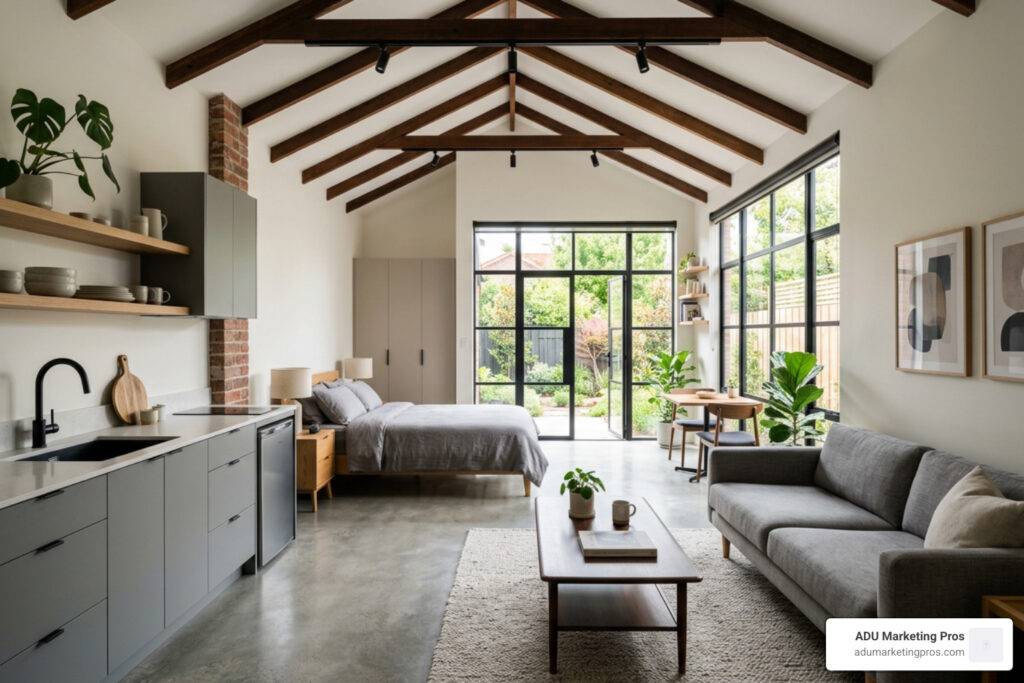
Why the Right Floorplan Makes or Breaks Your Garage Apartment Conversion
The best floorplan ideas for garage conversion to apartment projects come down to six core layout types — each suited to a different garage size and use case:
- Studio (open-concept) — best for single-car garages (~280–350 sq ft)
- Loft studio — adds a sleeping area above the main floor in narrow garages
- One-bedroom apartment — ideal for two-car garages (~500–700 sq ft)
- Two-bedroom apartment — works well in three-car garages (~700–1,000 sq ft)
- Carriage house (above-garage) — living space built over an existing garage
- Single-level in-law suite — ground-floor conversion with private entrance and patio
Since 2020, the number of people working from home has doubled. That shift turned garages — once just storage and parking — into some of the most valuable untapped square footage on a property.
The good news? A garage conversion doesn’t have to be complicated. Whether you’re working with a tight one-car footprint or a sprawling three-bay structure, the right floor plan unlocks the full potential of the space.
And the financial case is strong. A well-executed garage apartment can add 10% to 20% or more to a property’s value — and generate rental income on top of that.
But layout decisions made early in the process ripple through everything: plumbing costs, permit approvals, livability, and ROI. That’s why getting the floor plan right before breaking ground matters so much.
Below, we break down the smartest layout options for every garage size and situation.
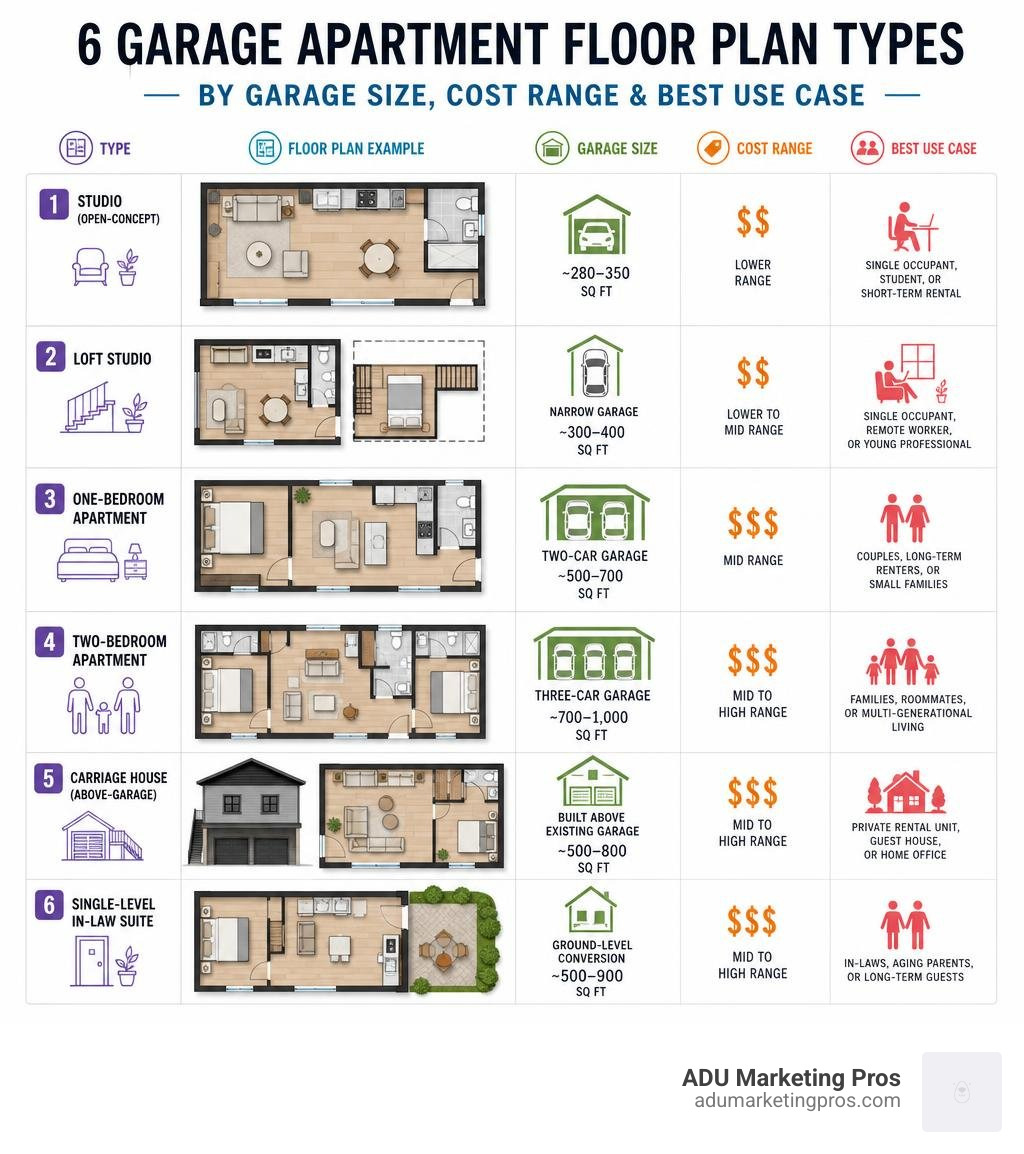
Here are some common terms and resources related to floorplan ideas for garage conversion to apartment projects:
Smart Floorplan Ideas for Garage Conversion to Apartment
Optimizing the layout of a garage conversion requires looking past the cold concrete floors and dark corners to visualize a warm, light-filled, functional home. Unlike standard home builds, garage conversions force you to work within a rigid, pre-existing perimeter. This constraint makes space-planning both a puzzle and an art form.
Whether you are aiming to create a cozy backyard rental or a multi-generational in-law suite, the goal is to establish distinct zones for living, sleeping, cooking, and bathing without making the unit feel like a cramped box. To help you visualize the possibilities, let’s explore how different footprints can be transformed.
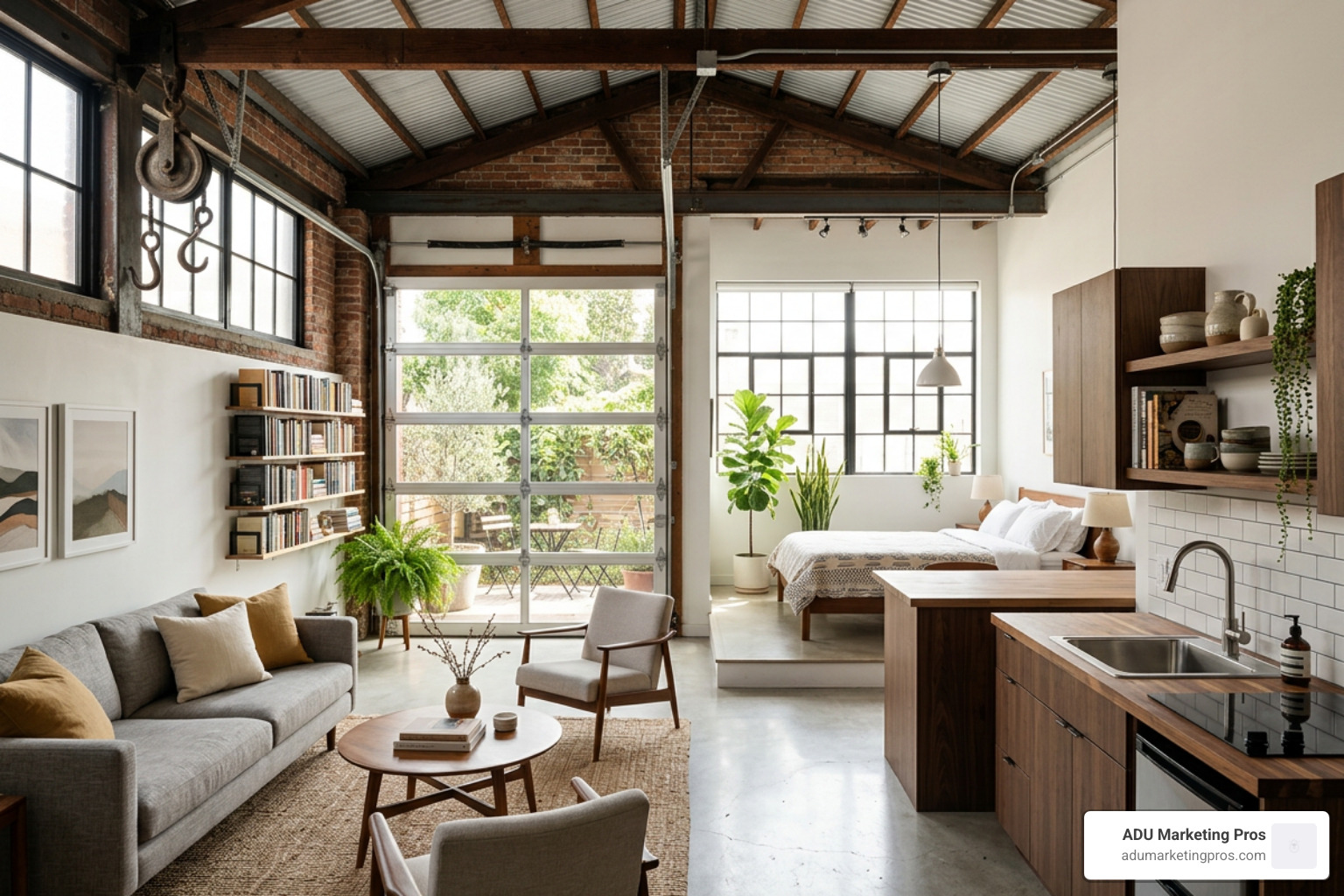
For a deeper dive into overall spatial design principles, check out The Ultimate Guide to Garage Apartment Floor Plans and Layouts.
Studio Floorplan Ideas for Garage Conversion to Apartment
When you are converting a standard single-car garage, you are typically working with a compact footprint of 280 to 350 square feet. In a space this size, walls are your enemy. Every partition wall you erect eats up precious inches and blocks natural light, making the apartment feel smaller and darker.
Instead, the most successful single-car conversions utilize an open-concept studio layout. By combining the living, dining, and sleeping areas into one fluid room, you maximize the sense of volume. To keep the space from feeling chaotic, you can define “zones” using smart furniture placement, varying ceiling heights, or strategic lighting.
For instance, a great reference point for small-space living is the Charming 484 Sq Ft Garage Apartment with Bright, Open Living Space design. Even at a slightly larger square footage, it demonstrates how keeping the kitchen and living areas unified creates a breezy, comfortable atmosphere.
To make a studio conversion work, you must embrace space-saving furniture:
- Murphy Beds: A wall bed can be folded away during the day to instantly transform a bedroom into a spacious living room.
- Pocket Doors: Replacing traditional swinging doors with pocket doors for the bathroom saves up to 10 square feet of usable floor space.
- Built-In Storage: Utilizing floor-to-ceiling millwork along one wall can hide clothes, pantry items, and even a fold-out desk without cluttering the room.
Multi-Bedroom Floorplan Ideas for Garage Conversion to Apartment
If you have a two-car (500–700 sq ft) or three-car (700–1,000 sq ft) garage, you have plenty of room to design a highly functional one- or two-bedroom apartment. These larger footprints allow you to transition from studio living to fully private quarters, which is ideal if you plan to use the space as a long-term rental or a multi-generational family home.
For a spacious one-bedroom layout, a two-car garage provides the perfect canvas. You can easily carve out a dedicated master bedroom with a walk-in closet, a full bathroom, a separate laundry closet, and an open-concept kitchen and living area. If you want to see how to stack this utility vertically, look at the Eddie | ADU House Plans Plan | 880 Sq Ft | 1 Beds / 1 Bath blueprint. This design places a spacious, light-filled one-bedroom suite directly above a garage, illustrating how to separate active living spaces from storage.
When working with a three-car garage, a two-bedroom, one-to-two-bathroom layout becomes highly feasible. This size is incredibly popular in high-cost California markets like San Jose and Los Angeles, where families often look to house adult children or aging parents on the same property. To maximize the footprint, place the bedrooms on opposite sides of the central living area to provide maximum privacy for the occupants.
For those looking to build a premium, spacious carriage-house style home, the 25004 Wimberly Garage Apartment | Barndominium Plan | 1450 S shows how a larger footprint can accommodate a highly luxurious layout. It features a sweeping open-concept living area, large bedrooms, and covered outdoor porch space that extends the living area to the outdoors.
Narrow Garage Layouts with a Loft
What if you are staring at a long, skinny garage? Many older homes in the San Francisco Bay Area and Los Angeles feature narrow garages that are only 11 or 12 feet wide. Trying to fit a bedroom, kitchen, and bathroom sequentially on a single level can result in a dark, hallway-like apartment.
This is where a loft design completely changes the game. By utilizing vertical space, you can move the sleeping area upstairs, leaving the entire ground floor open for a spacious kitchen, bathroom, and living room.
The most efficient floor plan for a narrow space is what we call the “galley core” layout. In this setup, you keep the bathroom and kitchen kitchenettes aligned along one single wall. This concentrates all the plumbing and drainage in one line, which can save you thousands of dollars in construction costs. You then build the loft directly above this wet wall and the bathroom, keeping the front half of the garage vaulted and open to the roofline to create a dramatic, airy living area.
To explore this specific layout in depth, read through the strategies outlined in Narrow Garage Conversion with Loft: Smart Floor Plans.
Keep in mind that a loft introduces the “staircase trade-off.” A standard straight staircase requires about 12 feet of horizontal run, which can eat up a massive portion of a narrow garage’s ground floor. While spiral stairs or alternating tread stairs save space, they can be difficult to navigate daily. A compact staircase with a 90-degree landing is often the best compromise, offering safe access while preserving ground-floor real estate.
Planning for Utilities, Structural Integrity, and Space Separation
Converting a cold, drafty garage into a cozy, energy-efficient apartment requires a lot more than just cosmetic updates. You must carefully plan how to bring essential utilities into the space, ensure the structure is safe and stable, and physically separate the living quarters from any remaining garage or storage areas.
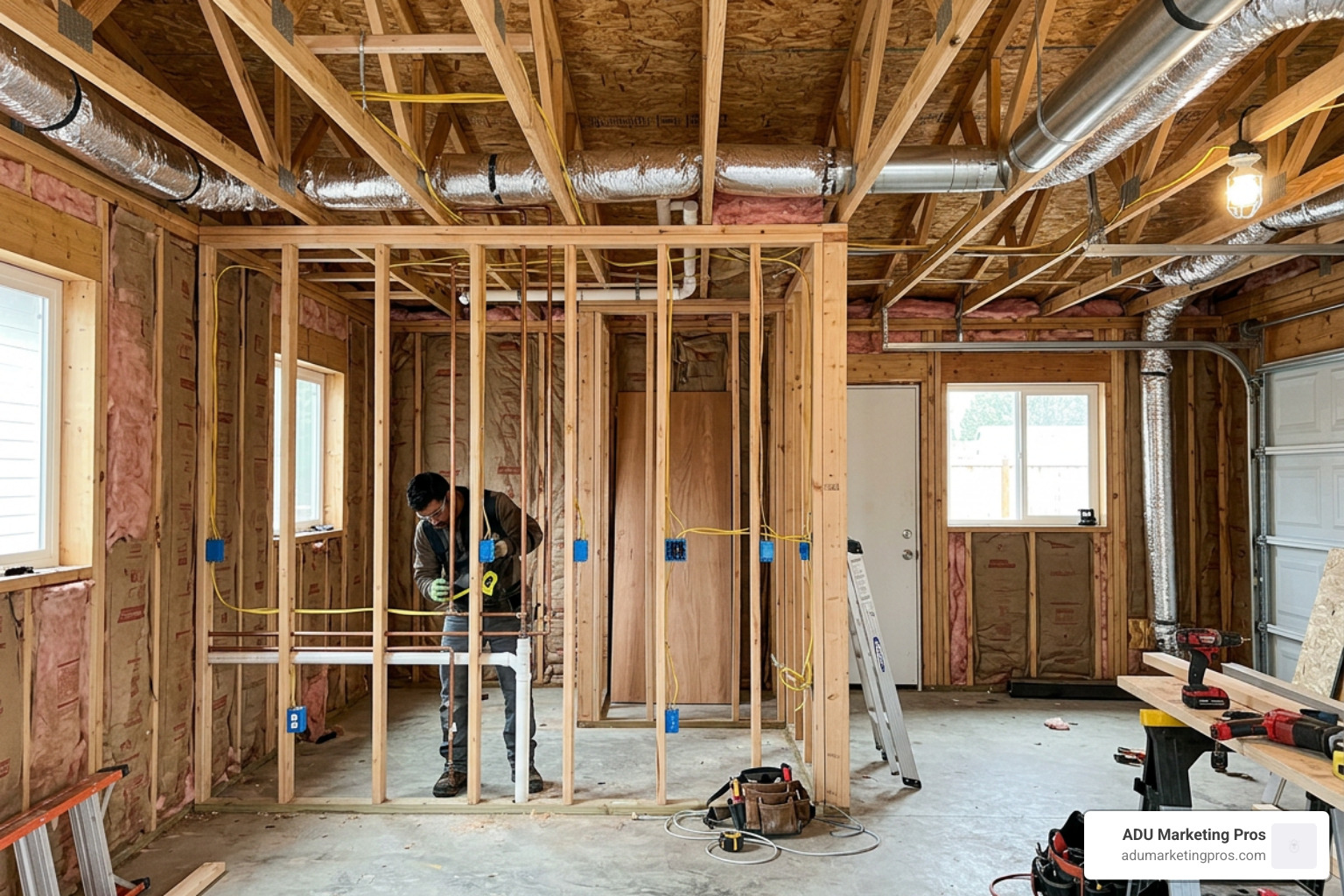
Before you start drafting your layout, it is crucial to understand the structural realities of your starting point. Our Garage Conversion Plans Ultimate Guide covers these foundational phases in detail.
Managing Plumbing, Electrical, and HVAC Systems
Getting utilities into a former garage is often the most complex and expensive part of the conversion process.
- Plumbing: Garages are built on solid concrete slabs. To install a toilet, shower, and kitchen sink, you must get waste lines out. This typically involves cutting trenches into the existing concrete slab to lay drain pipes, which can be labor-intensive. To save money, keep your kitchen and bathroom back-to-back so they share a plumbing wall. In some cases, building a small, framed-out floor system above the concrete slab can allow you to run plumbing lines without breaking the concrete.
- Electrical: A standard garage usually only has one or two basic electrical outlets and a light bulb. A fully livable apartment will require its own dedicated circuits for appliances, lighting, heating, and cooling. You will almost certainly need to upgrade your property’s main electrical panel or install a subpanel specifically for the ADU.
- HVAC: Extending your main home’s ductwork to a detached or even attached garage is rarely practical. Instead, ductless mini-split systems are the gold standard for garage apartments. They are highly energy-efficient, offer both heating and cooling, require no ductwork, and allow the occupant to control their own thermostat.
For a comprehensive breakdown of these mechanical and utility systems, refer to our Garage Conversion Apartment Ultimate Guide.
Structural Integrity and Separating Garage Space
If you are doing a partial conversion — meaning you are keeping one bay of a multi-car garage for parking or storage while converting the rest into an apartment — you must build a secure, code-compliant separation wall.
This wall is not just a visual barrier; it must serve as a strict fire barrier. Building codes require a continuous, fire-rated assembly (typically using 5/8-inch Type X drywall) between a garage space and a habitable dwelling to prevent vehicle exhaust and potential fire hazards from entering the living space.
You must also evaluate the structural bones of your garage. Many older garages were built as simple, lightweight accessory structures. If you want to add a second-story loft or carriage house, you must verify that the existing slab foundation and wall framing can support the additional weight. If the foundation is cracked or lacks proper footings, you may need to invest in foundation retrofitting before any framing can begin.
To learn more about the engineering and structural requirements involved in these projects, read our guide on Garage to ADU Conversion.
Maximizing Natural Light, Ventilation, and Ceiling Height
Garages are notoriously dark, often featuring only one or two tiny, high windows. To make the space feel like a true home, you must prioritize natural light.
One of the most effective strategies is to completely remove the old roll-up garage door and frame in a new wall featuring a large glass entry door, side-lites, or expansive windows. If your garage has a pitched roof, you can open up the ceiling to create vaulted rafters and install skylights. Skylights bring in up to three times more natural light than standard vertical windows and can make even a tiny 300-square-foot studio feel incredibly grand.
Clerestory windows — long, horizontal windows placed high up on the walls — are another fantastic design trick. They allow beautiful natural daylight to flood the space while maintaining absolute privacy from nearby neighbors, which is especially important in dense California neighborhoods.
Zoning, Permitting, and Building Code Considerations
You can design the most beautiful floor plan in the world, but if it doesn’t comply with local zoning laws and building codes, it will never get built. Navigating the legal landscape is a critical step in turning your garage apartment dream into a reality.
In California, state laws have made it significantly easier to build Accessory Dwelling Units (ADUs), but local municipalities still retain control over specific permitting and safety reviews. To prepare your project for approval, read our guide on ADU Garage Conversion California.
Navigating Local ADU Regulations
In California cities like Los Angeles, San Jose, and San Diego, garage conversions are officially classified as Accessory Dwelling Units (ADUs) or Junior ADUs (JADUs).
A JADU is a specific type of conversion that must be created within the existing walls of a primary residence (or an attached garage) and is limited to a maximum of 500 square feet. JADUs can share a bathroom with the main house, making them a highly cost-effective option for close family members. A standard ADU, on the other hand, can be attached or detached, can be up to 1,200 square feet (depending on local rules), and must be completely self-contained with its own kitchen and bathroom.
One of the biggest benefits of converting an existing garage in California is that you are often exempt from standard setback requirements. While new detached ADUs typically require 4-foot rear and side setbacks, an existing garage built right on the property line can usually be converted within its current footprint.
For local insights on converting spaces in Southern California, see our resource on Garage Conversion Los Angeles.
Meeting Egress and Safety Requirements
Building codes are designed to keep occupants safe, and garage conversions are subject to strict residential standards. The most important safety rule is the requirement for “emergency egress.”
Every bedroom in your garage apartment must have at least one operable window or door that opens directly to the outside to allow for emergency escape. This egress window must meet very specific dimensions:
- A minimum net clear opening of 5.7 square feet.
- A minimum opening height of 24 inches.
- A minimum opening width of 20 inches.
- A sill height of no more than 44 inches off the floor.
Additionally, habitable rooms must have a minimum ceiling height of 7 feet. If your existing garage roof is too low, you may need to excavate the floor or raise the roofline to meet these safety standards.
For a deeper dive into the safety and permitting standards required for legal occupancy, check out Garage Conversion to ADU.
Cost Ranges, Value-Add, and Project Feasibility
Before you jump into a garage conversion, you need to understand the financial realities. What will it cost to build, and what kind of return on investment (ROI) can you expect?
To help you visualize the financial landscape, we have put together a comparison table outlining typical costs based on the size and scope of the conversion:
| Conversion Type & Size | Average Square Footage | Estimated Cost Range | Best Use Case |
|---|---|---|---|
| Single-Car Studio | 280 – 350 sq ft | $50,000 – $100,000 | Guest suite, home office, single renter |
| Two-Car (1 Bedroom) | 500 – 700 sq ft | $90,000 – $180,000 | In-law suite, long-term rental income |
| Three-Car (2 Bedroom) | 700 – 1,000 sq ft | $150,000 – $250,000 | Multi-generational family living, premium rental |
| Carriage House (Above Garage) | 500 – 900 sq ft | $200,000 – $500,000+ | Maximizing yard space while retaining parking |
For a detailed look at the financial aspects of these projects, read our comprehensive guide on Garage Apartment Cost.
Estimating Your Conversion Budget
The cost of a garage conversion can vary wildly depending on your location, the condition of the existing structure, and the quality of your finishes.
A basic, single-story garage conversion where the foundation and roof are in excellent shape typically costs between $50,000 and $100,000 or more. However, if you are planning a larger, more luxurious two-story carriage house build that requires extensive structural reinforcement, costs can easily range from $150,000 to $500,000 or more.
The main cost drivers are plumbing, electrical upgrades, and insulation. Because garages are not originally designed to be lived in, they require extensive insulation in the walls, ceiling, and floors to meet modern energy-efficiency standards (such as California’s Title 24 regulations).
To help you map out your specific project expenses, check out our Complete Garage Conversion Cost Guide or use our interactive Garage Conversion Cost Calculator.
Evaluating Property Value and ROI
While the upfront costs of a conversion can be significant, the long-term financial benefits are substantial.
First, converting a garage into a legal, livable apartment can instantly add 10% to 20% or more to your property’s overall market value. In hot real estate markets like San Jose, Sunnyvale, Palo Alto, and Los Angeles, having a permitted ADU on your property is a massive selling point that sets your home apart.
Second, the rental income potential is incredible. In many California metropolitan areas, a well-designed 1-bedroom garage apartment can rent for $2,000 to $3,500+ per month. This passive income can easily cover your construction loan payments while building long-term wealth.
To explore how a conversion impacts your home equity and overall financial picture, read our Garage Conversion Value Guide.
Frequently Asked Questions about Garage Conversions
Do I need a permit to convert my garage into an apartment?
Yes, absolutely. In all California jurisdictions, converting a garage into a livable space requires a building permit. Attempting to convert a garage without a permit can result in heavy fines, code enforcement actions, and difficulty selling your home in the future. Unpermitted units also pose significant safety and liability risks.
How much value does a garage apartment conversion add to a home?
A legally permitted garage apartment conversion typically adds between 10% and 20% to a property’s overall value. The exact amount depends on the quality of the finishes, the local real estate market, and whether the conversion is classified as a fully independent ADU.
Can any garage support a second-story apartment addition?
Not without a professional structural evaluation. Most standard residential garages are built with basic foundations and wall framing designed to support only a single-story roof. Adding a second story requires an engineer to verify that the existing soil, concrete slab, and wall framing can support the heavy load of a second living level. If not, the structure will require reinforcement.
Conclusion
A garage conversion is one of the smartest, most cost-effective ways to add functional living space, house family members, and generate passive rental income. By carefully selecting the right floor plan, planning for essential utilities, and navigating the local permitting process, you can transform an underutilized garage into a beautiful, high-value asset.
At ADU Marketing Pros, we specialize in providing cutting-edge digital marketing and lead generation solutions specifically for ADU builders, designers, and architecture firms. Located in San Jose, CA, we help specialized construction businesses stand out in a highly competitive market by highlighting their unique design expertise and craftsmanship.
If you are an ADU builder or contractor looking to attract high-quality clients for garage conversions and backyard homes, discover how we can help you grow by visiting our guide on ADU Garage Conversions.