
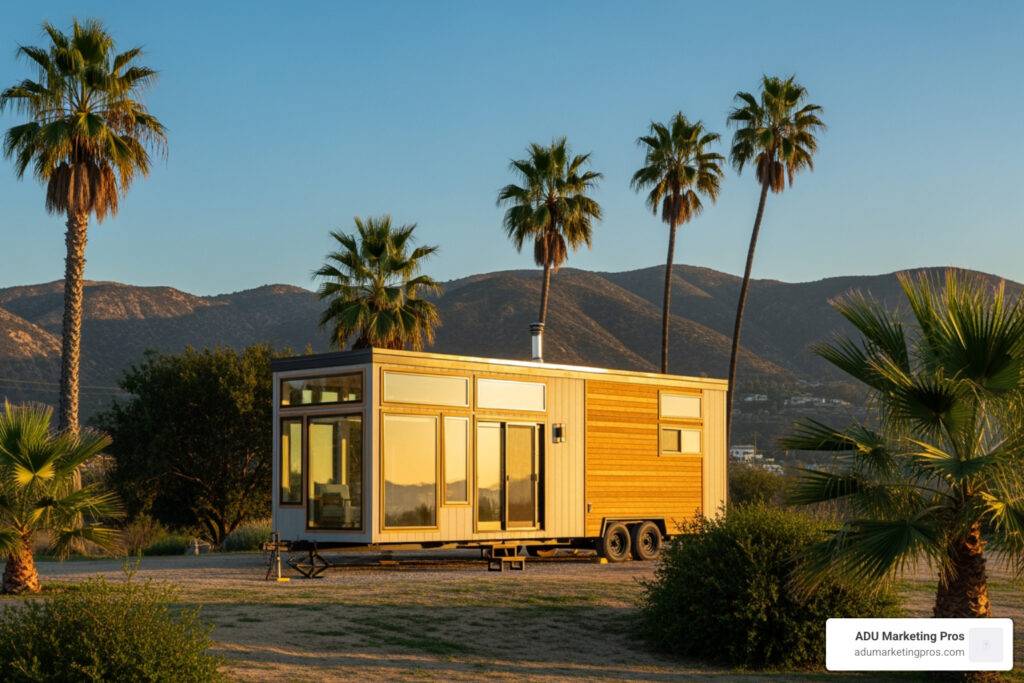
Why SoCal Tiny Homes Are Reshaping California Living
SoCal tiny homes are revolutionizing how Californians think about housing, offering an affordable, flexible alternative in one of the nation’s most expensive real estate markets. If you’re searching for tiny homes in Southern California, here’s what you need to know:
Quick Guide to SoCal Tiny Homes:
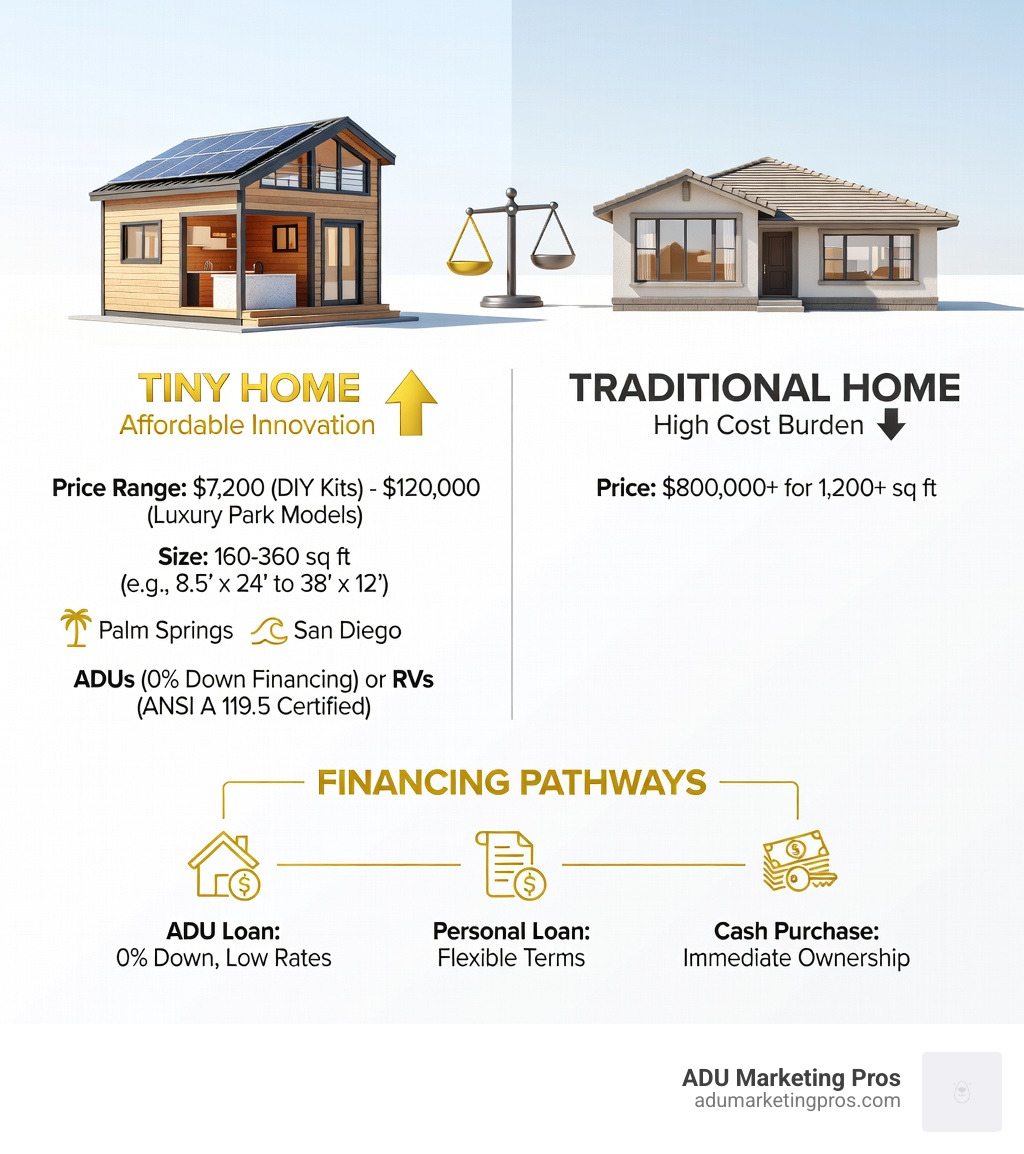
- Price Range: $7,200 (DIY kits) to $120,000 (luxury park models)
- Popular Sizes: 160-360 square feet (typically 8.5′ x 24′ to 38′ x 12′)
- Where to Find Them: San Diego, Los Angeles, Palm Springs, and Orange County
- Legal Options: Permitted as ADUs (0% down financing available) or registered as RVs (ANSI A 119.5 certified)
- Key Builders: Multiple local companies offering custom builds, shells, and container conversions
- Timeline: 3-4 months for production models
The Economic Shift Toward Minimalism
Southern California’s housing crisis has pushed creative solutions to the forefront. A tiny home in San Diego that once seemed radical now represents practical innovation. As one resident moving into a North Hollywood tiny home village put it: “I finally got a break here you know? I was a long time without anywhere to live.” The economic reality of the region—where the median home price often exceeds $800,000—has made the traditional “California Dream” of a sprawling suburban home unattainable for many.
In response, a new dream has emerged: one of financial freedom, reduced environmental impact, and the ability to live in high-demand coastal or mountain areas without a million-dollar mortgage. This shift isn’t just about saving money; it’s about a lifestyle change that prioritizes experiences over square footage. By choosing SoCal tiny homes, residents are finding they can afford to live in the neighborhoods they love, close to work and recreation, while maintaining a high standard of living.
Versatility in the Golden State
The tiny home movement in SoCal serves multiple purposes. For some, it’s downsizing into a minimalist lifestyle with ocean breezes and mountain views. For others, it’s building backyard ADUs that generate rental income or house extended family. And increasingly, tiny home villages are providing bridge housing for thousands experiencing homelessness—with over 534 beds added across Los Angeles County in just the first half of 2021.
Whether you’re a homeowner exploring ADU options, an investor seeking affordable housing solutions, or simply curious about tiny living in the Golden State, the market has evolved far beyond rustic cabins on wheels. Today’s SoCal tiny homes feature quartz countertops, solar panels, and smart home technology—all packed into spaces that maximize every square inch. The integration of indoor-outdoor living, a staple of California architecture, is perfectly suited for tiny homes, where a large sliding glass door can open onto a deck, effectively doubling the usable living space.
Simple SoCal tiny homes glossary:
Exploring the Market for SoCal Tiny Homes
The real estate landscape in cities like Los Angeles and San Diego is shifting. We are seeing a massive surge in interest for SoCal tiny homes as buyers realize they don’t need 2,500 square feet to live a high-quality life. The market is no longer just a niche for “minimalists”; it has become a legitimate inventory source for first-time homebuyers, retirees, and property owners looking to maximize their land. This surge is driven by a combination of legislative support, technological advancement in modular construction, and a cultural move toward sustainability.
Current market trends show a heavy lean toward “park models” and “movable tiny houses.” Unlike traditional real estate, which can take years to develop, tiny homes can be manufactured in a factory setting and delivered to a site in as little as 90 days. This speed to market is a critical factor in addressing the housing shortage. For those looking to browse current inventory, you can find more info about small houses for sale to see how these units are priced in today’s competitive environment.
Popular Sizes and Layouts
In SoCal tiny homes, size is relative. Most units fall between 160 and 360 square feet. A standard 8.5′ x 24′ model is a popular “sweet spot” for many, while larger park models can reach 38′ x 12′ (roughly 450 square feet). The choice of size often depends on the intended use: a 160-square-foot unit might serve as a perfect backyard office or guest suite, while a 360-square-foot model provides enough room for a full-time residence with a separate bedroom.
Layouts are meticulously designed to avoid a “cramped” feeling. Common features include:
- Lofts: Utilizing vertical space for sleeping quarters, leaving the ground floor for living and dining. This is ideal for younger owners or those looking to maximize floor space.
- High Ceilings: Many builders use “lofty” ceilings and massive windows to create an airy, open feel. In Southern California, where natural light is abundant, this design choice is essential.
- Multi-functional Furniture: Tables that fold into walls, Murphy beds, and stairs that double as storage drawers are standard in high-end builds.
If you’re interested in how these floor plans translate to everyday life, check out more info about small houses to explore the architectural magic that makes 200 square feet feel like 500. The key is “zoning” the space—creating distinct areas for cooking, relaxing, and working so the home feels organized and functional.
Custom Features in SoCal Tiny Homes
Living “tiny” doesn’t mean living “basic.” In fact, many SoCal tiny homes are more luxurious than the average apartment. Because the square footage is small, owners can afford high-end finishes that would be cost-prohibitive in a larger home. This “luxury per square foot” model is a major draw for the SoCal market.
We often see customizations such as:
- Gourmet Kitchens: Quartz countertops, soft-close cabinetry, and high-efficiency stainless steel appliances. Some even include full-sized ranges and dishwashers.
- Eco-Friendly Tech: Solar panel arrays, greywater recycling systems, and composting toilets for those looking to live off-grid or reduce their utility footprint.
- Indoor-Outdoor Flow: Large sliding glass doors or “garage-style” roll-up doors that open onto decks, effectively doubling the living space in the mild California climate. This is particularly popular in coastal areas like Malibu or Laguna Beach.
Ready to see these features in person? You can get in contact with a tiny home expert to discuss how to customize a build to your specific aesthetic. Whether you want a modern industrial look with corrugated metal or a warm, rustic feel with reclaimed redwood, the customization options are nearly limitless.
Navigating Legalities and Zoning in Southern California
One of the most frequent questions we hear is: “Where can I actually put this thing?” Zoning laws in California have historically been strict, but recent state legislation has opened the doors—literally. California building codes now provide clearer pathways for both permanent tiny homes on foundations and movable tiny houses. The state has recognized that tiny homes are a vital part of the solution to the housing crisis, leading to a wave of “pro-tiny” legislation.
Finding the right spot is key. You can research specific places in Southern California that allow tiny houses to see which cities have the most progressive ordinances. Cities like San Diego and Los Angeles have led the way, but smaller municipalities are quickly following suit as they see the benefits of increased housing density.
Tiny Homes as ADUs
The biggest “game changer” for the industry has been the reclassification of tiny homes as Accessory Dwelling Units (ADUs). If you own a single-family home in Los Angeles or San Diego, you likely have the right to add a tiny home to your backyard. This is thanks to state laws like SB 13 and AB 68, which severely limit the ability of local governments to block ADU construction.
This is a powerful way to increase property value or provide affordable housing for a family member. However, there are technical differences between a standard ADU and a tiny house. Understanding the ADU vs Tiny House distinction is vital for permitting and long-term resale value. A permanent ADU must meet the California Residential Code (CRC), while a movable tiny house must meet different standards.
Movable Tiny Houses (THOWs)
Movable tiny houses, or Tiny Houses on Wheels (THOWs), are gaining legal ground. Many SoCal cities now allow these to be parked in backyards as legal ADUs, provided they meet ANSI A 119.5 safety standards. These units must be registered with the DMV but function as permanent residences. This is a massive win for the movement, as it allows for a lower entry price point than a foundation-built home.
For those who don’t already own a primary lot, finding land is the next step. You can find more info about land for sale for tiny houses to identify parcels zoned for small-footprint living. Some rural areas in Riverside and San Bernardino counties are becoming popular hubs for tiny home enthusiasts who want more space and fewer neighbors.
The Permitting Process
While the laws have improved, the permitting process can still be daunting. It typically involves:
- Site Plan Approval: Showing where the unit will sit on the property and its proximity to existing structures.
- Utility Connection Plans: Detailing how the home will connect to water, sewer, and electricity.
- Inspections: If building on-site, multiple inspections are required. If buying a pre-built unit, you must ensure it has the proper certification (like Pacific West or NOAH) to be accepted by local building departments.
Navigating these steps requires patience, but the reward is a legal, safe, and valuable addition to your property.
Top Builders and Custom Models in the Region
Southern California is home to some of the most innovative builders in the country. From family-owned shops in Topanga to large-scale manufacturers shipping nationwide, the options for SoCal tiny homes are diverse. Quality is paramount; many local builds are certified by Pacific West Tiny Homes to ensure they are road-ready and safe for long-term habitation. Choosing a local builder is often advantageous because they are familiar with the specific seismic and fire safety requirements of the region.
If you are looking for a professional to bring your vision to life, we recommend looking at tiny house builders in Southern California who understand local climate needs and permitting quirks. These builders often offer “turn-key” services, handling everything from design to delivery and utility hookup.
Luxury and Custom Builds
For those who want a “turn-key” luxury experience, custom models like “The Modern” or “The Goosey” offer high-end finishes. These models often start around $90,000 to $120,000 and include everything from 5-star bathrooms with full-sized tubs to custom 3D-designed layouts. These homes are designed for full-time living, with high-grade insulation and climate control systems that can handle the SoCal heat.
Working with specialized architects who design tiny houses ensures that your home isn’t just a box, but a piece of art that maximizes natural light and airflow. Architects can help you navigate difficult lots, such as hillside properties in Silver Lake or narrow lots in Venice Beach, ensuring every inch of the property is utilized effectively.
Affordable Kits and Shells
On the other end of the spectrum, the DIY community is thriving. You can purchase rapid-assembly kits in Los Angeles for as little as $7,200. These are perfect for the “handy” homeowner who wants to finish the interior themselves. This approach can save tens of thousands of dollars in labor costs and allows for complete creative control over the interior design.
“Shell models”—which are structurally complete and weather-tight but unfinished inside—usually start around $60,000. These are excellent options for creating eco-friendly small homes on a budget, allowing you to choose sustainable insulation and non-toxic materials like redwood. Many shell buyers focus their budget on high-quality windows and doors, then finish the interior as their budget allows over time.
Container Homes: The Industrial Trend
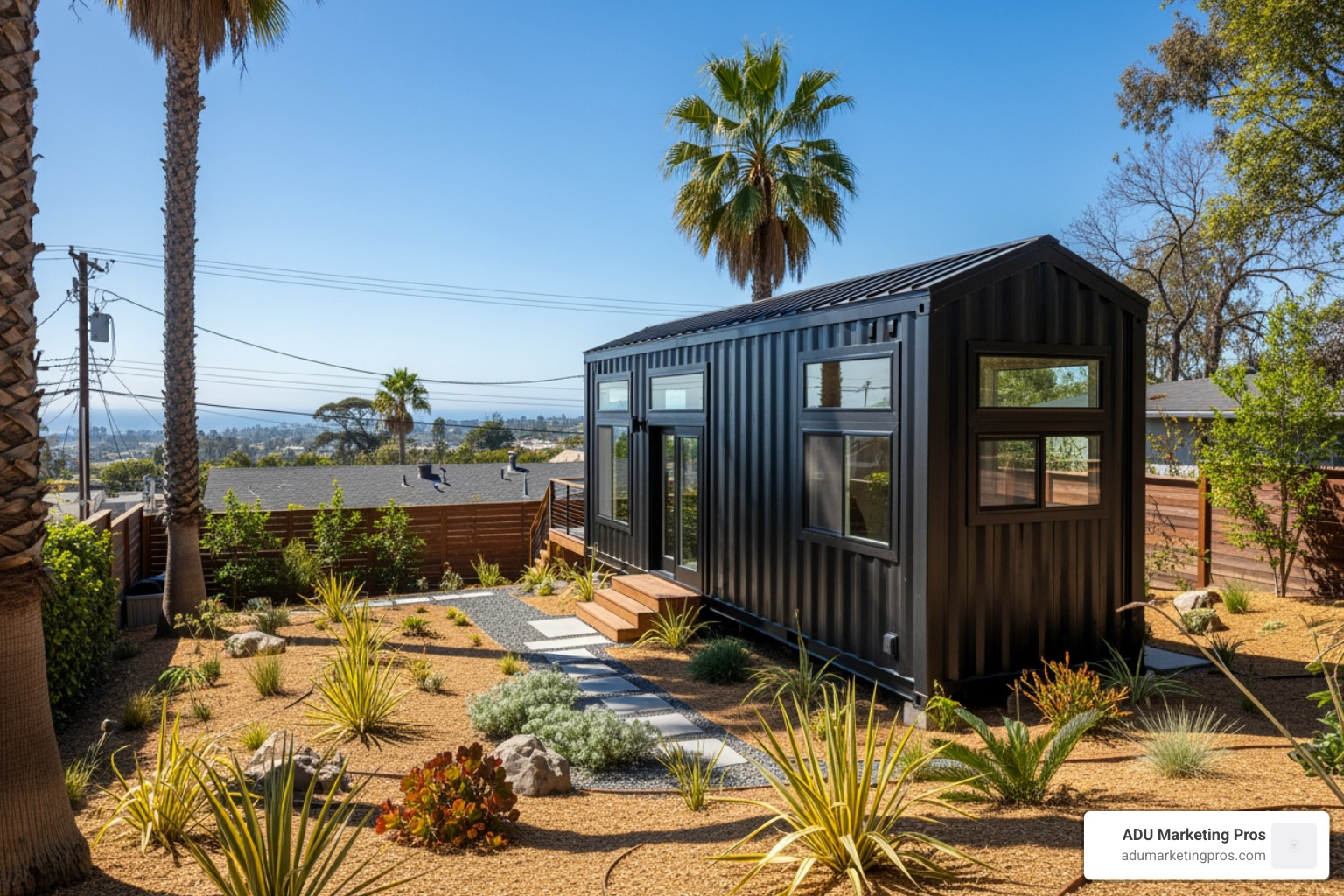
Shipping container homes have become a staple of the SoCal tiny homes scene. Their industrial aesthetic and inherent structural strength make them ideal for the California landscape. Builders in the region are transforming 20-foot and 40-foot containers into stunning modern residences. These units are particularly popular for ADUs because they can be craned into backyards with minimal site disruption. They offer a unique “plug-and-play” housing solution that appeals to those looking for a modern, minimalist vibe.
Financing and Costs for SoCal Tiny Homes
The cost of SoCal tiny homes is perhaps their most attractive feature. While a median-priced home in Los Angeles can easily exceed $900,000, a high-quality tiny home provides a path to homeownership for a fraction of that price. This affordability opens doors for younger generations who have been priced out of the market and for seniors looking to downsize without sacrificing their quality of life.
| Expense Type | Tiny Home (300 sq ft) | Traditional Condo (LA) |
|---|---|---|
| Purchase Price | $65,000 – $120,000 | $550,000 – $750,000 |
| Monthly Maintenance | $50 – $100 | $400 – $700 (HOA) |
| Monthly Utilities | $40 – $80 | $150 – $300 |
| Property Taxes | Variable (often as ADU) | $7,000+ per year |
Financing Options for SoCal Tiny Homes
We have seen a significant shift in how these homes are funded. Historically, tiny homes were hard to finance with traditional mortgages because they weren’t always considered “real property.” Today, if a tiny home is permitted as an ADU, 0% down financing is often available through specialized programs. This allows homeowners to start their build with zero upfront capital, paying off the unit through the increased property value or rental income it generates.
You can apply for financing through specialized lenders who understand the tiny home market and ADU regulations. Other options include:
- Personal Loans: Often used for movable tiny houses, these don’t require the home to be on a foundation.
- HELOCs (Home Equity Line of Credit): A popular choice for existing homeowners looking to add an ADU to their backyard.
- RV Loans: For units certified as RVs, traditional RV financing can sometimes be used, though terms vary.
Cost Comparison: Tiny vs. Traditional
The affordability of tiny living extends beyond the sticker price. Lower square footage means lower property taxes, lower insurance premiums, and significantly reduced utility bills. For many in SoCal, this “financial freedom” is the primary motivator for going tiny—it allows them to spend more on experiences, travel, and retirement, and less on a mortgage.
Furthermore, the “soft costs” of building a traditional home—such as architectural fees, extensive grading, and long-term construction interest—are drastically reduced with tiny homes. Because many are built off-site, the construction period is shorter, meaning you aren’t paying for a construction loan for 18 months while waiting for a traditional house to be finished.
Tiny Home Villages and Social Solutions
Perhaps the most heartening use of SoCal tiny homes is their role in solving the homelessness crisis. Cities across Southern California are partnering with nonprofits like Hope the Mission to build “Tiny Home Villages.” These communities provide more than just a roof; they provide dignity, safety, and a sense of belonging to those who have been living on the margins.
These villages, such as the Arroyo Seco Tiny Home Village (the largest in the country with 117 units), provide interim housing for unhoused residents. Each 64-square-foot unit features heating, cooling, and—most importantly—a locking door. For someone living on the streets, the ability to lock a door and keep their belongings safe is life-changing. It provides the stability needed to focus on the next steps, such as finding employment or permanent housing.
The Success of the Village Model
Success stories from projects like Esperanza Villa in Baldwin Park show that these villages work. Residents receive three meals a day, case management, and a path to permanent housing. The model is designed to be “low-barrier,” meaning it welcomes people as they are, while providing the support services necessary for long-term success.
You can read more about the Arroyo Seco Tiny Home Village to see how these communities are integrated into local neighborhoods. Far from being a “detriment” to the community, these villages have shown that they can improve local safety and cleanliness by providing a structured environment for those in need.
Future Outlook for Social Housing
As the success of these villages becomes more evident, we expect to see more cities adopting this model. The speed at which these villages can be deployed—often in just a few months—makes them a critical tool in the fight against homelessness. By utilizing underused city land or parking lots, Southern California is proving that tiny homes are not just a lifestyle choice for the wealthy, but a humanitarian tool for the vulnerable.
Frequently Asked Questions
What is the average cost of a tiny home in Southern California?
While you can find kits for around $7,200, a move-in ready, professionally built tiny home typically ranges from $50,000 to $120,000. Factors affecting price include whether it is on wheels or a foundation, the quality of finishes, and off-grid capabilities. Luxury models with high-end appliances and custom cabinetry will naturally fall at the higher end of this spectrum.
Can I legally live in a tiny home on wheels in Los Angeles?
Yes, under specific conditions. Los Angeles and several other SoCal cities have passed ordinances allowing “Movable Tiny Houses” to serve as legal ADUs in the backyards of single-family residences. They must be registered with the DMV, connected to water, power, and sewer lines, and meet specific safety standards (ANSI A 119.5). It is always recommended to check with the local planning department for the most current regulations.
Do tiny homes in SoCal require a special foundation?
It depends on the type. “Park Models” and THOWs stay on their chassis (wheels) and are often stabilized with jacks. However, if you are building a permanent tiny home as a standard ADU, it will require a traditional concrete foundation and must meet the California Residential Code. Foundation-built homes are often easier to finance with traditional mortgages but come with higher upfront construction costs.
How do I handle utilities for a tiny home?
Most SoCal tiny homes connect to the primary residence’s utilities. This involves running lines for water, electricity, and sewer/septic. For movable tiny houses, these connections are often made via heavy-duty hoses and cords, similar to an RV hookup. For permanent ADUs, the connections are buried and integrated into the property’s main systems. Solar panels and composting toilets are options for those looking for a more independent setup.
What is the resale value of a tiny home?
Tiny homes on foundations generally appreciate in value along with the land they sit on, much like a traditional home. Movable tiny houses are often viewed more like vehicles or personal property and may depreciate over time, though high-quality, well-maintained units from reputable builders tend to hold their value remarkably well due to high demand.
Conclusion
The “Golden State of Tiny” is more than just a trend—it’s a necessary evolution of the California Dream. As the traditional housing market continues to face challenges of affordability and inventory, SoCal tiny homes offer a versatile and beautiful path forward. They represent a shift toward a more sustainable, intentional, and financially free way of living that resonates with people across all demographics.
At ADU Marketing Pros, we are passionate about the growth of this industry. We help the builders and architects behind these innovative homes reach the people who need them most. As regulations continue to favor small-footprint living and more cities recognize the benefits of ADUs and tiny home villages, the future of SoCal housing looks smaller, smarter, and much more accessible.
Whether you are looking to escape the “rent trap,” provide a home for a loved one, or contribute to social solutions for the unhoused, the tiny home movement provides a tangible, immediate solution. The journey to a smaller life doesn’t mean a smaller quality of life—in fact, for many Californians, it’s the key to a much larger, freer existence.
Ready to find your spot? Discover places in Southern California that allow tiny houses and start your journey toward a smaller, freer life today. The future of housing is here, and it’s smaller than you think.