
Why Building an ADU in Los Angeles Is One of the Smartest Moves You Can Make Right Now
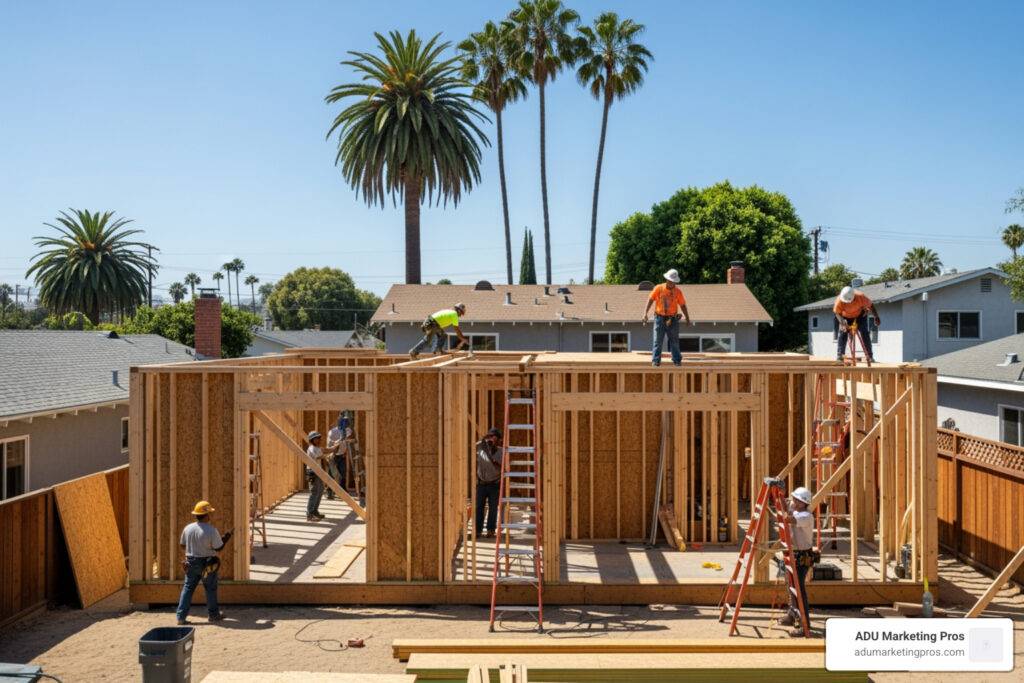
Building an ADU in Los Angeles is no longer just a niche home improvement project; it has become a cornerstone of the city’s strategy to combat the ongoing housing crisis. For homeowners, it represents one of the most practical and high-yield ways to add income, housing flexibility, and long-term equity to their property—all on land they already own. As the cost of living in Southern California continues to climb, the ability to generate passive income or provide a home for aging parents or adult children has never been more valuable.
Here’s a quick snapshot of what you need to know:
| Topic | Key Facts |
|---|---|
| ADU Types | Detached, Attached, Garage Conversion, Junior ADU (JADU) |
| Max Size | Detached: 1,200 sq ft / JADU: 500 sq ft / Attached: 50% of main home |
| Setbacks | 4 ft from side and rear property lines |
| Height Limit | 16 ft (up to 25 ft for some conversions) |
| Permit Timeline | 60-day ministerial review once application is complete |
| Full Project Timeline | 6–12 months from design to move-in |
| Cost Range | $80,000–$350,000 depending on type |
| Rental Income | $1,500–$3,500/month in LA |
| Property Value Boost | 25–35% increase on average |
Los Angeles is currently grappling with a severe housing shortage that has persisted for decades. This pressure has pushed state and local governments to make it significantly easier to build ADUs over the past several years. New laws have stripped away old barriers—like mandatory parking requirements and minimum lot sizes—that used to make these projects prohibitively expensive and legally complex. According to the California Department of Housing and Community Development, ADUs now account for a significant percentage of all new housing units permitted in the state.
The result of these legislative shifts is a construction boom. Thousands of LA homeowners are now turning underutilized garages, sprawling backyards, and unused square footage into livable, high-quality rentable spaces. This “missing middle” housing provides a solution that benefits both the property owner and the community at large.
Whether your goal is to secure a steady stream of passive rental income, create a private sanctuary for family members, or simply make a smarter long-term investment in your primary asset, an ADU delivers on all fronts. However, the process—navigating permits, understanding complex zoning rules, managing construction stages, and securing financing—can still feel overwhelming if you don’t have a clear roadmap. This guide is designed to walk you through every critical step of the journey.
Building an adu in los angeles vocabulary:
- Accessory Dwelling Unit Cost Los Angeles
- Los Angeles Accessory Dwelling Unit Ordinance
- Illegal Accessory Dwelling Unit Los Angeles County
Navigating the Legal Landscape of Building an ADU in Los Angeles
Before you break ground or even hire a designer, you must understand the legal framework that governs your property. In the past, obtaining an ADU permit in Los Angeles was a bureaucratic nightmare, often requiring public hearings and discretionary approvals that could be blocked by a single disgruntled neighbor. Today, thanks to sweeping California state laws, the power has shifted back to the homeowner.
Most residential properties in Los Angeles (specifically those in zones R1, R2, and R3) are now eligible for at least one ADU. If you own a single-family home, you are generally entitled to one full ADU and one Junior ADU (JADU). For a deeper dive into the fine print of these entitlements, check out our comprehensive look at Los Angeles ADU regulations.
The Power of Ministerial Review
State bills like SB-9 and AB-2299 have fundamentally changed the game by introducing “ministerial review.” This means that if your ADU plans meet the objective building and safety standards set by the city, the Los Angeles City Planning department must approve them. They cannot deny your permit based on subjective criteria like “neighborhood character” or “aesthetic preference.” This shift has reduced the uncertainty that used to plague residential development.
| Project Type | Average Cost | Estimated ROI (Resale) | Rental Potential |
|---|---|---|---|
| Garage Conversion | $80,000 – $200,000 | High (Lower entry cost) | $1,800 – $2,500/mo |
| New Detached ADU | $150,000 – $350,000 | Very High (Adds sq ft) | $2,500 – $3,500/mo |
Understanding Size and Setback Limits for Building an ADU in Los Angeles
While the laws are favorable, they are not a free-for-all. You must still adhere to specific spatial requirements:
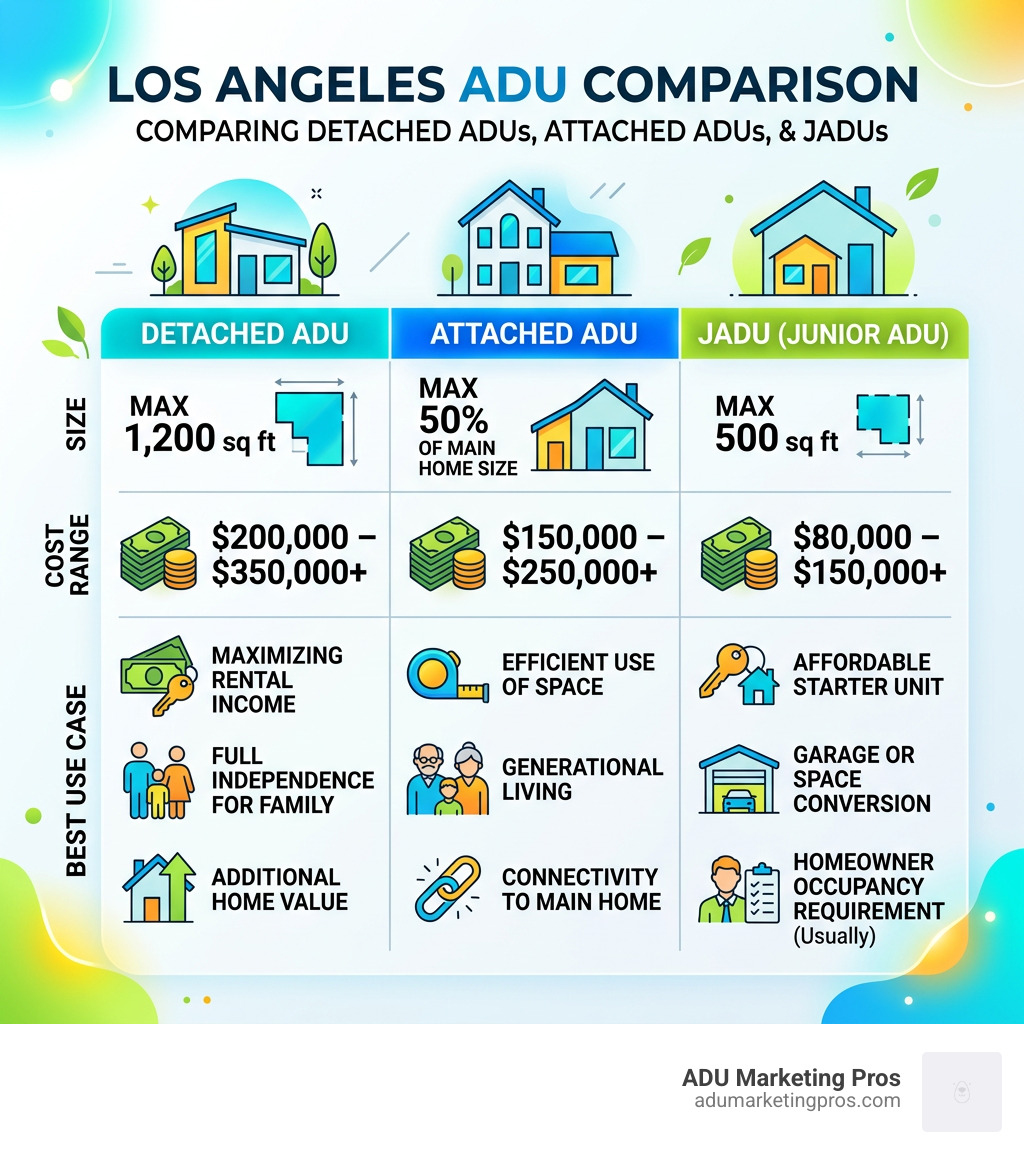
- Size Limits: A detached ADU in Los Angeles can be as large as 1,200 square feet, regardless of the size of the main house. However, if you are building an attached ADU, it is capped at 50% of the primary home’s existing floor area.
- The 4-Foot Rule: The “magic number” for setbacks is 4 feet. You are generally required to maintain a 4-foot distance from the side and rear property lines. This is a massive reduction from the 15- or 20-foot setbacks often required for primary residences, allowing homeowners to maximize their backyard space. For a detailed breakdown of these spatial rules, see your guide to Los Angeles ADU regulations.
- Height Restrictions: Most new detached units are capped at 16 feet in height. However, if your property is within a half-mile of a major transit stop, or if you are building on a multi-family lot, you may be eligible for increased height allowances up to 25 feet.
Recent Legislative Updates (2024-2025)
The legal landscape continues to evolve to favor density. AB 2533 is a critical piece of legislation for those with existing, unpermitted structures. It allows homeowners to legalize “bootleg” ADUs built before 2020, provided they meet basic health and safety standards, without facing the standard penalties. Furthermore, SB 1211 has expanded the possibilities for multifamily properties, now allowing up to eight detached ADUs on qualifying parcels. Perhaps the most important rule for any homeowner is the 60-day ministerial review clock: once you submit a complete application, the city is legally required to act within 60 days, preventing projects from languishing in bureaucratic limbo.
Choosing Your ADU Type and Design
When building an adu in los angeles, the design phase is where your vision meets reality. One size definitely does not fit all, and your choice will be dictated by your budget, the topography of your lot, and your ultimate goals for the space.
Popular ADU Configurations in LA
- Detached ADUs: These are standalone structures, often referred to as “granny flats” or “backyard cottages.” They offer the highest level of privacy for both the homeowner and the tenant, making them the premium choice for rental income. Because they are new construction, they allow for the most design flexibility.
- Attached ADUs: These share at least one wall with the primary residence. They are often the preferred choice for multigenerational living, where a family member wants to be close but still have their own kitchen and living area. They can often be more cost-effective than detached units because they can sometimes tap into the main house’s existing HVAC or plumbing systems.
- Garage Conversions: This is the most popular route in Los Angeles due to the abundance of detached two-car garages. By utilizing the existing foundation and framing, you can save significantly on construction costs. We’ve seen incredible transformations in our guide to ADU garage conversions.
- Junior ADUs (JADUs): These are smaller units (maximum 500 square feet) contained entirely within the existing walls of the primary home. A JADU must have an efficiency kitchen and a separate entrance. Interestingly, they are allowed to share a bathroom with the main house, which can drastically reduce plumbing costs.
Design Best Practices for Small Spaces
When designing a unit that is likely between 400 and 1,200 square feet, every inch counts. We recommend prioritizing an open-concept layout to prevent the space from feeling cramped. High ceilings (vaulted if possible) and large windows can make a 600-square-foot unit feel significantly larger. Privacy is also paramount; position the ADU’s entrance and windows away from the main house’s primary outdoor living areas. For inspiration on how to maximize your footprint, take a look at some modern ADU floor plans for Los Angeles.
The LADBS Permitting Process and Standard Plans
The Los Angeles Department of Building and Safety (LADBS) is the primary agency responsible for reviewing your plans and issuing permits. The process involves several stages, including a “Plan Check” where engineers and zoning experts ensure your project complies with the California Building Code and local ordinances.
The Standard Plan Program: A Shortcut to Approval
If the thought of hiring an architect and waiting months for custom drawings sounds daunting, Los Angeles offers a unique solution. The LADBS Standard Plan Program features a library of pre-approved ADU designs from some of the city’s top architects.
Using pre-approved ADU plans in Los Angeles can shave weeks—or even months—off your timeline. Because the structural integrity and energy calculations of these designs have already been vetted by the city, the review process is limited to how the unit sits on your specific lot (zoning, setbacks, and foundation). This not only saves time but also reduces the architectural fees associated with a custom build.
Navigating the “Clearance Summary Worksheet”
Even with a standard plan, you will need to navigate the “Clearance Summary Worksheet.” This is a checklist of approvals required from other city departments, such as the Department of Public Works (for sewer connections), the Fire Department (for hydrant proximity), and the Department of Water and Power (LADWP). Many homeowners find it helpful to hire a permit expeditor to manage these interactions. These professionals understand the technical requirements of an accessory dwelling unit in Los Angeles and can prevent common errors that lead to costly delays.
Budgeting, Costs, and Financing Your Project
Understanding the financial commitment is the most critical part of building an adu in los angeles. While ADUs are more affordable than buying a new home, they are still significant construction projects that require careful budgeting.
Breaking Down the Costs
Generally, a new detached ADU in LA will cost between $150,000 and $350,000. Garage conversions are more accessible, typically ranging from $80,000 to $200,000. It is important to distinguish between “Hard Costs” (labor and materials) and “Soft Costs” (permits, architectural fees, and impact fees).
A significant portion of your budget—often up to 40%—goes toward “the guts” of the building: Mechanical, Electrical, and Plumbing (MEP). In Los Angeles, running a new sewer line across a backyard or upgrading an electrical panel to handle the additional load can add thousands to the bottom line. You can see a more granular price list in our Los Angeles ADU cost breakdown.
Financing Strategies for LA Homeowners
Most homeowners do not pay for an ADU entirely in cash. Instead, they leverage the equity in their primary residence. Common financing options include:
- HELOC (Home Equity Line of Credit): This functions like a credit card secured by your home, allowing you to draw funds as needed during the construction process.
- Cash-Out Refinance: This involves replacing your current mortgage with a new, larger loan and taking the difference in cash to fund the build.
- Construction Loans: These are specialized short-term loans that pay out in “draws” as specific construction milestones are met.
- State Grants: For low-to-moderate-income homeowners, the CalHFA ADU Grant program has historically provided up to $40,000 to cover pre-construction costs. While funding cycles vary, it is always worth checking the latest updates from the LA Times regarding grant availability.
The return on investment (ROI) is where the math truly makes sense. With average rents in Los Angeles ranging from $1,500 for a studio to over $3,500 for a two-bedroom ADU, most units pay for themselves within 7 to 10 years, while simultaneously increasing the property’s resale value by 25–35%.
Construction Stages and Technical Standards
Once your permits are issued, the construction phase begins. In Los Angeles, this process typically takes between 6 and 12 months, depending on the complexity of the build and the availability of labor.
Phase 1: Site Prep and Foundation
The first step is preparing the land. This may involve clearing trees, removing old concrete, and grading the soil to ensure proper drainage. For most flat lots in the Los Angeles basin, a slab-on-grade foundation is the standard. However, if you are building on a hillside, expect significantly higher costs for caissons and specialized engineering.
Phase 2: Framing and MEP Rough-in
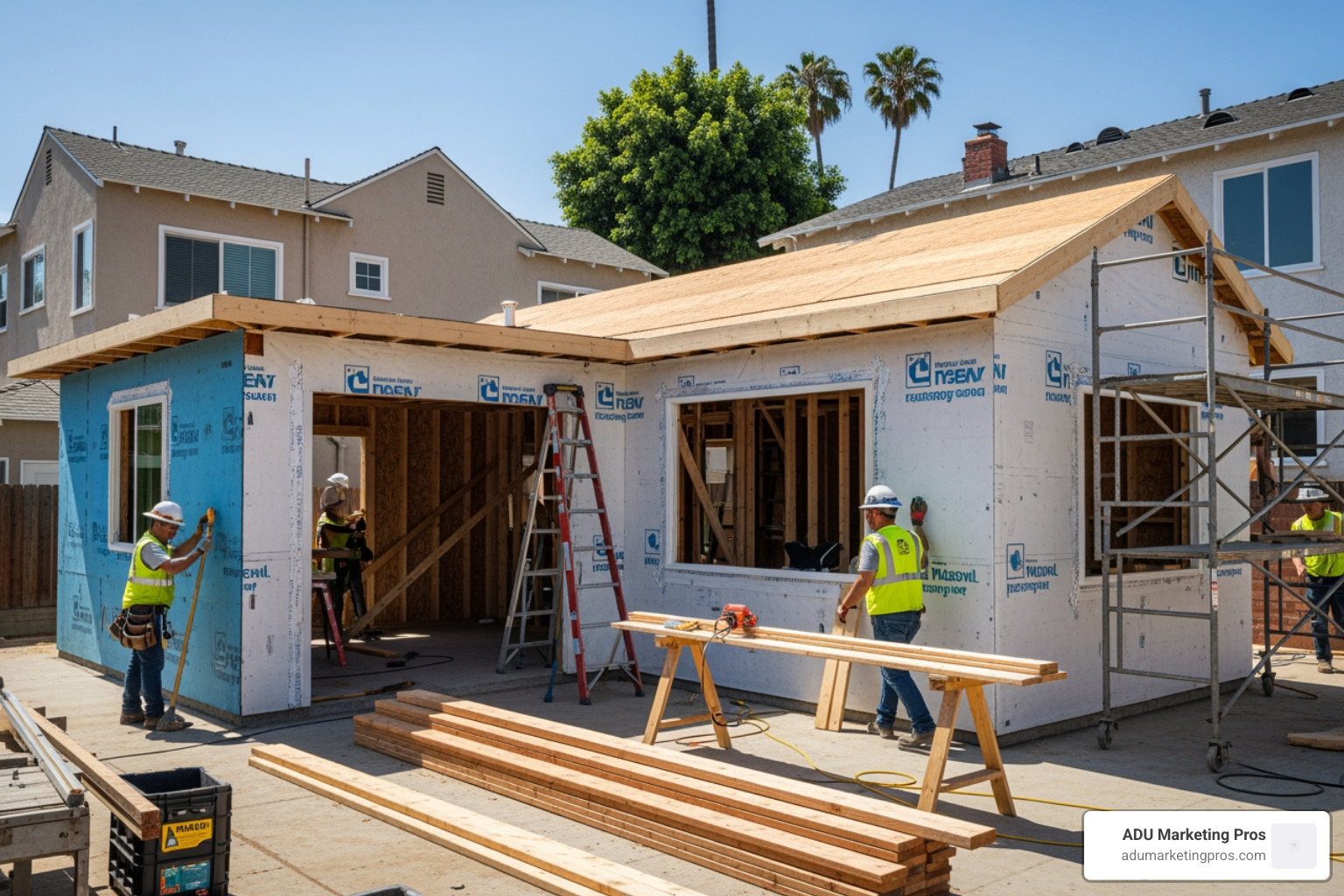
Framing is the most exciting stage, as the structure finally takes shape. In California, framing must include specific seismic retrofitting, such as “hold-down bolts” and shear walls, to ensure the building can withstand an earthquake. Following framing, the “rough-in” phase begins, where plumbers and electricians install the systems behind the walls. Pro tip: Many LA homeowners are opting for all-electric ADUs to skip the high cost of trenching for a new gas line, which can save upwards of $3,500.
Phase 3: Insulation, Drywall, and Title 24
Every new ADU in Los Angeles must meet strict energy efficiency standards known as Title 24. This includes high-performance insulation, dual-pane windows, and “cool roofs” that reflect sunlight to reduce heat absorption. The Cool Roof Rating Council provides the standards for these materials, which are essential for keeping the unit comfortable during LA’s hot summers without skyrocketing utility bills.
Phase 4: Finishes and Final Inspection
The final stage involves interior finishes: flooring, cabinetry, countertops, and paint. Once the build is complete, a city inspector will perform a final walkthrough. If everything meets the approved plans, the city will issue a Certificate of Occupancy, officially making the unit legal for habitation. To ensure a smooth build, it’s vital to work with an experienced ADU builder in Los Angeles who is familiar with local codes and the LADBS inspection process.
Frequently Asked Questions about LA ADUs
Do I need to provide additional parking for my ADU?
In the vast majority of cases in Los Angeles, the answer is no. Under state law, parking requirements are waived if the ADU is located within a half-mile walking distance of public transit. Given LA’s extensive bus and rail network, this covers nearly the entire city. Additionally, if you convert an existing garage or carport into an ADU, you are not required to replace those off-street parking spaces.
Can I build an ADU on a multifamily property in Los Angeles?
Yes, and this is one of the most lucrative opportunities for landlords. Thanks to SB 1211, owners of duplexes, triplexes, and apartment buildings can now add up to two detached ADUs on the property, or convert existing non-livable space (like storage rooms or basements) into ADUs. In some cases, you can add up to eight detached units depending on the size of the lot.
How does an ADU affect my property taxes?
Building an ADU will trigger a “blended assessment.” This means your primary home’s tax basis remains the same (protected by Prop 13), but the value of the new ADU is added to your total property value. Generally, your taxes will increase by roughly 1% of the construction cost of the ADU.
Can I use my ADU as an Airbnb or short-term rental?
In the City of Los Angeles, the rules are strict. Under the Home-Sharing Ordinance, you can only host short-term rentals in your primary residence. This means you generally cannot rent out a detached ADU on Airbnb while living in the main house, or vice versa, unless the unit is your primary legal residence. Most ADUs in LA are intended for long-term (30+ days) rentals.
Conclusion
The housing landscape in California is undergoing a historic transformation, and building an adu in los angeles is the most effective way for homeowners to participate in that change. It is a multi-faceted tool that offers a solution to the housing crisis while providing individual families with financial security, a safety net for multi-generational living, and a significant boost to their net worth.
At ADU Marketing Pros, we are dedicated to supporting the industry that makes these projects possible. We specialize in helping ADU builders, architects, and developers showcase their expertise and connect with homeowners ready to transform their properties. We understand the nuances of the Los Angeles market—from the latest Title 24 energy requirements to the complexities of SB-9 and SB-1211.
If you are a homeowner, there has never been a more favorable time to start your project. The legal barriers have been lowered, the demand for housing is at an all-time high, and the potential for growth is sitting right in your own backyard. Whether you are looking to build a modern detached unit or convert an old garage, the journey begins with a single step. Start your Los Angeles ADU project today and watch your property value soar.