
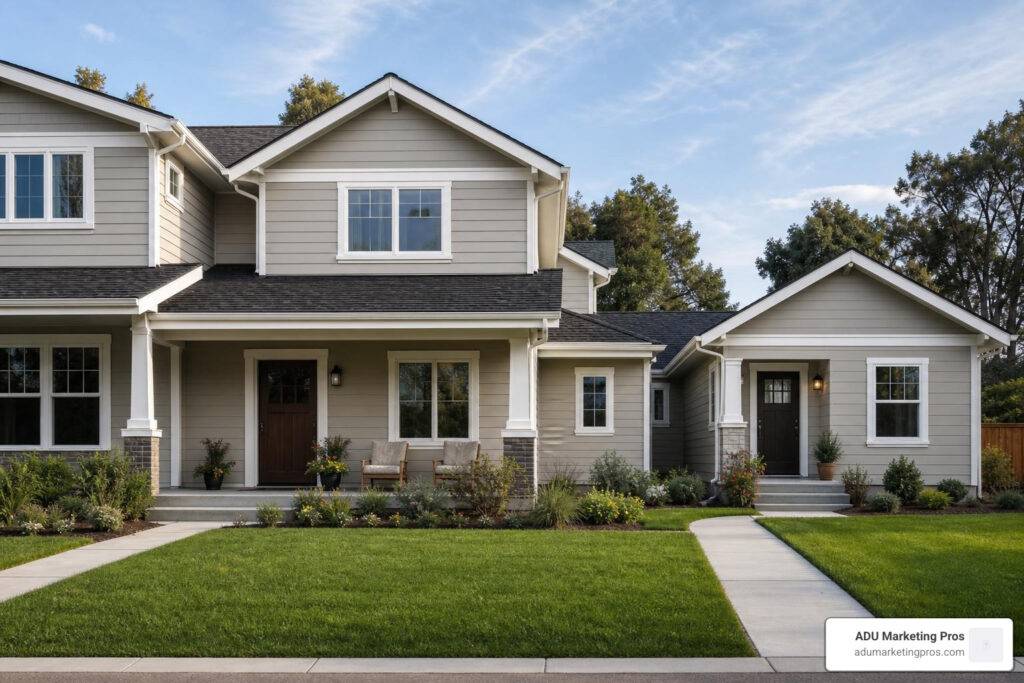
What Is an Attached Granny Flat — and Is It Right for Your Property?
An attached granny flat is a self-contained secondary dwelling that shares at least one wall with your main home — giving a family member or tenant their own private space without a fully separate structure in the backyard.
Here’s a quick overview of what you need to know:
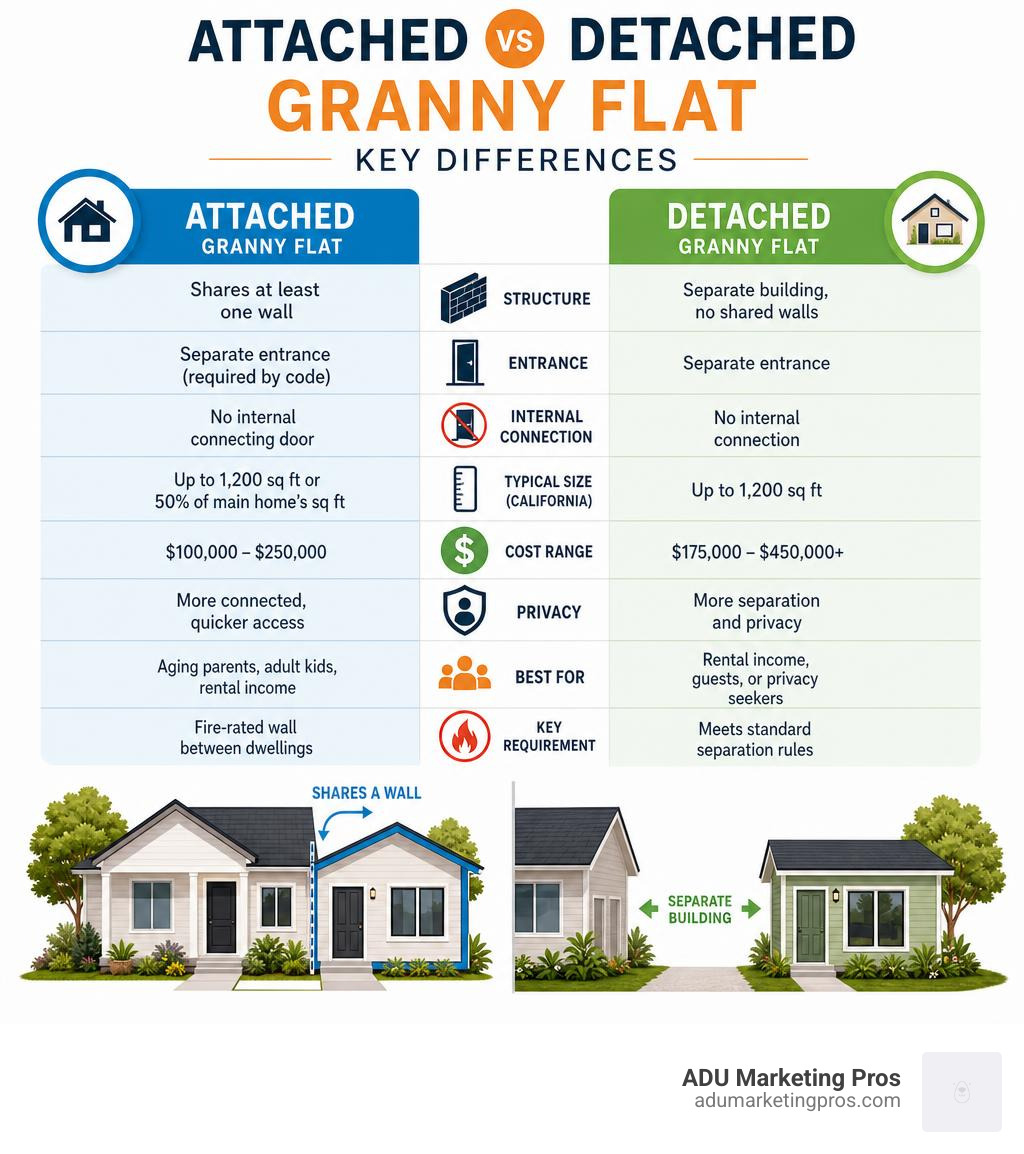
| Feature | Attached Granny Flat |
|---|---|
| Definition | Secondary unit sharing a wall with the primary home |
| Separate entrance | Yes — required by code |
| Internal connecting door | Generally not permitted |
| Typical size (California) | Up to 1,200 sq ft or 50% of main home’s sq ft |
| Common uses | Aging parents, adult kids, rental income |
| Cost range | $100,000 – $250,000 (vs. $175,000–$450,000+ detached) |
| Key requirement | Fire-rated wall between the two dwellings |
Think of it like a home extension — except the space functions as a completely independent home with its own kitchen, bathroom, living area, and front door.
It’s not the same as a spare bedroom or an in-law suite tucked inside your house. It’s not quite the same as a detached backyard cottage either. It sits right in between — and that middle ground is exactly what makes it so practical for so many homeowners.
ADUs (accessory dwelling units) now make up roughly one in six new homes built in California, and the attached format is gaining traction — especially for families who want loved ones close, but not too close.
Whether you’re housing an aging parent, helping an adult child get a foothold in a tough market, or simply creating a rental income stream, the attached format offers a compelling blend of cost efficiency, convenience, and flexibility.
This guide covers everything: how it compares to detached units and garage conversions, what the design and privacy tradeoffs look like, what permits and zoning rules apply, and how to think about cost and ROI before you build.
Explore more about attached granny flat:
Understanding the Attached Granny Flat vs. Detached ADUs
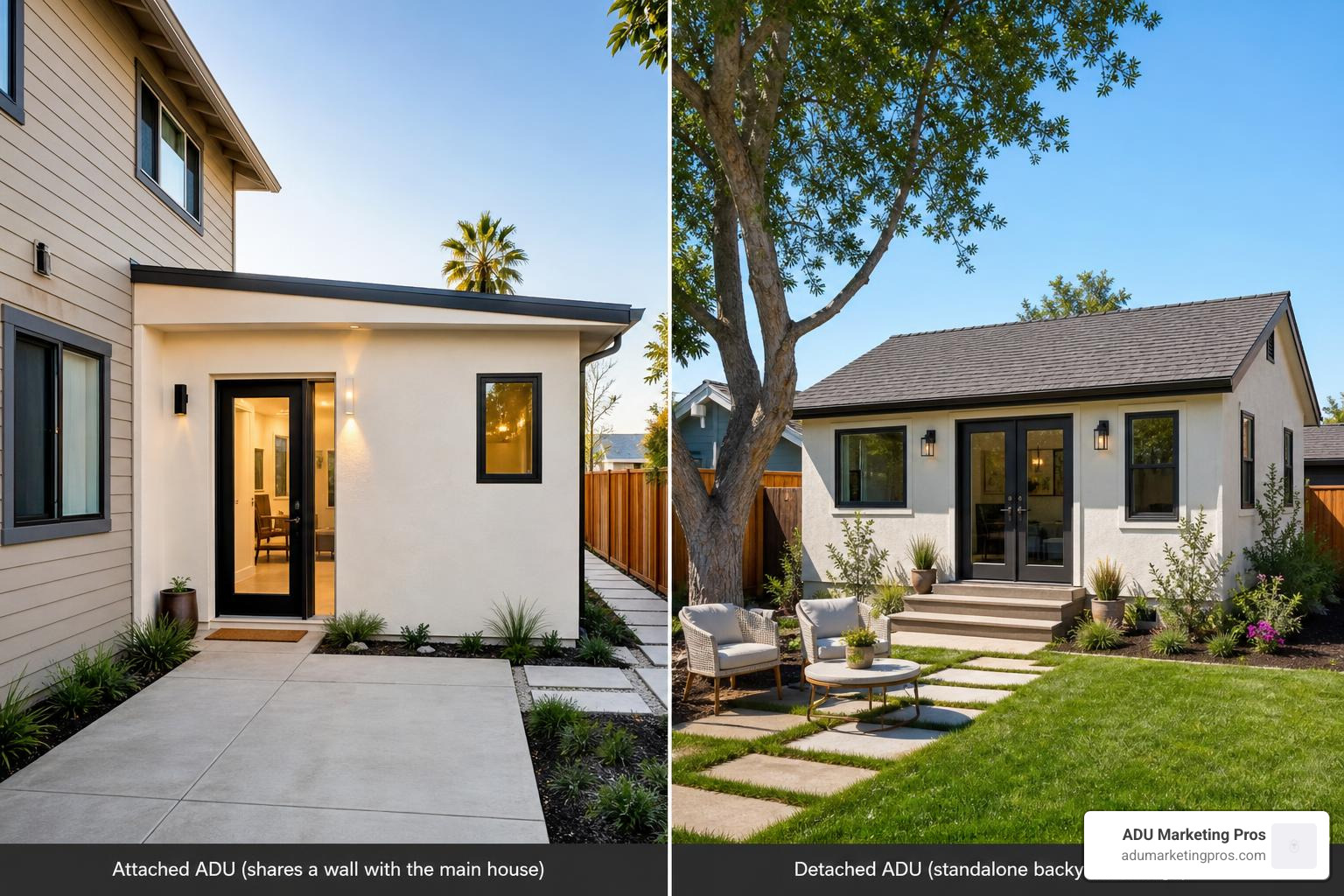
When embarking on a secondary dwelling project, the first major fork in the road is deciding between an attached structure and a detached backyard cottage. Understanding the technical, structural, and legal differences is essential to picking the right path for your property.
An attached granny flat is physically connected to your primary residence. This connection can take several forms: a brand-new addition built onto the side or back of your house, a second-story addition constructed over an existing structure, or a conversion of an existing integrated space, such as an attached garage or a basement. Structurally, it relies on the existing home for at least one shared wall, and its construction requires tying into your main home’s foundation, framing, and roofline.
In contrast, a detached ADU is a completely free-standing structure built from scratch in your backyard. It requires its own independent foundation, framing, and roof, and must adhere to specific separation distances from the main house to comply with local building and fire codes.
To fully understand how these structures are classified legally and historically, it helps to read our comprehensive breakdown of What is a Granny Flat? to see how these terms are utilized across different real estate markets.
For a direct comparison of the architectural and lifestyle differences between these two paths, you can also read the guide on Attached or Detached Granny Flats? | Granny Flats WA which details how property layouts dictate the best structural choices.
The Role of JADUs (Junior Accessory Dwelling Units)
Another critical distinction to make is between a standard attached granny flat and a Junior Accessory Dwelling Unit (JADU). Under California law, a JADU is a specific type of secondary unit that:
- Must be entirely contained within the existing or proposed walls of a primary residence (such as a converted bedroom, walk-in attic, or attached garage).
- Is strictly capped at a maximum of 500 square feet.
- May share a bathroom with the primary residence, though it must have its own efficient kitchenette.
- Requires the property owner to live in either the main house or the JADU (a rule that does not apply to standard ADUs in 2026).
A standard attached ADU, on the other hand, is a fully independent dwelling unit. It can be built as a brand-new structural addition, can scale up to 1,200 square feet, must have its own complete bathroom and kitchen, and is treated as a separate independent living space under building codes. If you are trying to navigate the broad spectrum of options available to you, our master Granny Flat Guide provides a bird’s-eye view of how these classifications fit together.
Pros and Cons of an Attached Unit
Building an attached unit comes with a unique set of advantages and challenges. Weighing these pros and cons carefully will help you determine if this style aligns with your budget, goals, and lifestyle.
The Advantages:
- Cost Efficiency: Because an attached unit shares at least one structural wall with your main home, framing costs are reduced. More importantly, tapping into your existing home’s electrical, plumbing, and HVAC infrastructure is often significantly cheaper than trenching separate utility lines across your yard for a detached unit.
- Preservation of Yard Space: If you live on a tight lot in dense urban areas like Sunnyvale, Palo Alto, or San Francisco, backyard space is at a premium. An attached unit allows you to build upward or convert existing space, preserving your garden, patio, or lawn.
- Proximity for Caregiving: For families utilizing the space for multi-generational living — such as housing an aging parent — having them attached to the main structure provides peace of mind. You are close enough to assist immediately in an emergency, yet both parties enjoy independent living spaces.
The Drawbacks:
- Stricter Fire-Rated Requirements: The Building Code of California mandates that any shared wall between two independent living units must be built as a certified fire-rated wall assembly. This requires specific drywall configurations, fire-caulking, and structural barriers to prevent fire from spreading between units.
- Acoustic Privacy Challenges: Sharing a wall means sharing sound. Without proper acoustic insulation, everyday noises — like a television, cooking, or footsteps — can transfer between the main home and the granny flat.
- Design and Structural Limitations: When building a detached unit, you have a blank canvas. With an attached unit, your design must conform to the existing home’s architectural style, foundation levels, and roofline, which can sometimes limit floor plan flexibility.
Design and Privacy Considerations for Your Secondary Unit
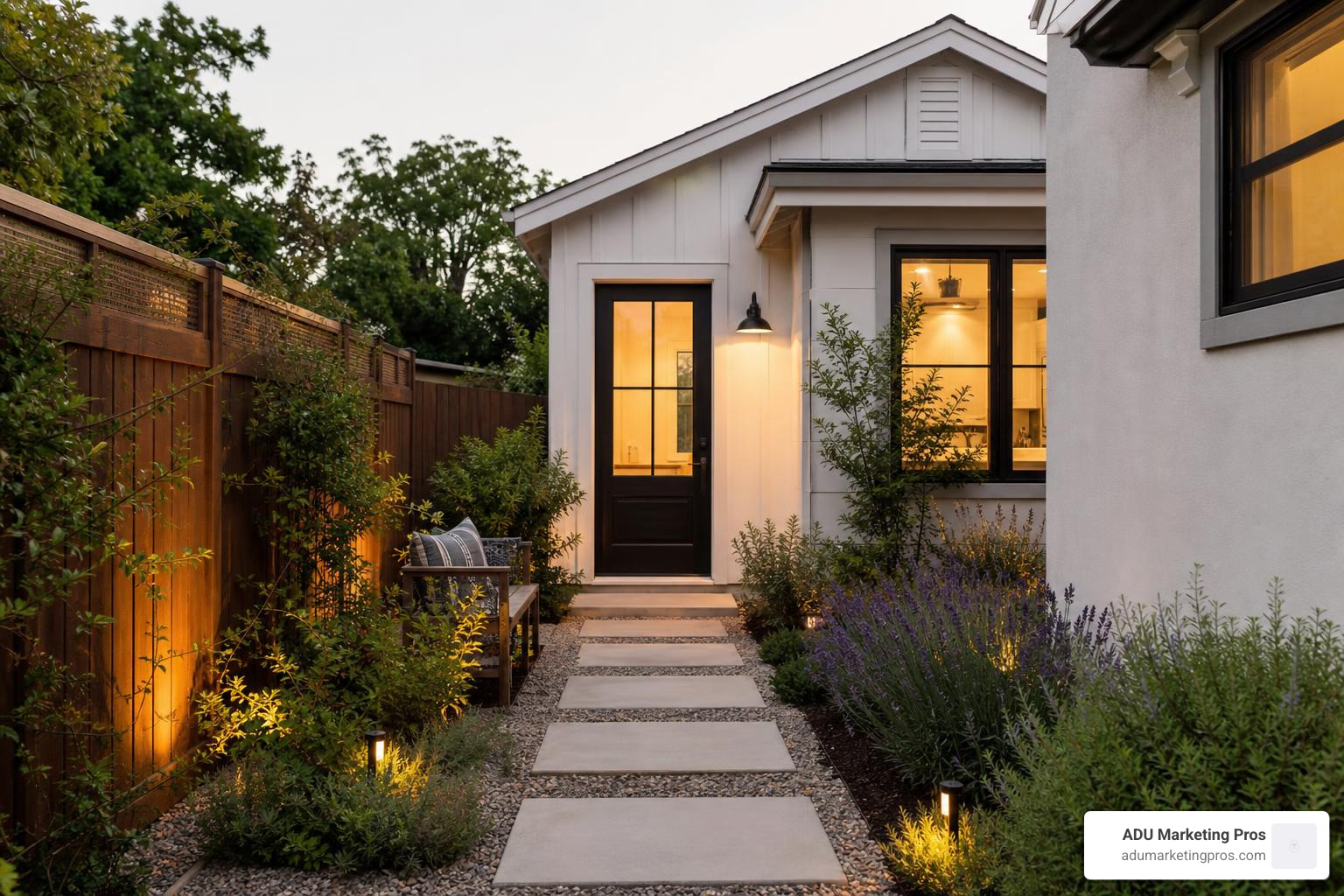
Designing an attached granny flat requires a delicate balance of architectural cohesion and functional separation. The goal is to make the addition look like a natural extension of your home from the street, while ensuring that the interior feels completely private and independent for its occupants.
Architectural Integration and Curb Appeal
Architectural integration is key to preserving your property’s curb appeal and long-term resale value. The exterior finishes of your attached flat — including siding, paint color, window trim, and roofing materials — should match the primary residence seamlessly.
Rooflines present one of the most challenging design hurdles. If your primary home features a complex hipped roof, extending it can be structurally complex and expensive. In these cases, designers often opt for a skillion (shed) roof or a simple gable roof over the addition. These roof styles can be integrated beautifully while keeping framing costs manageable. To explore the diverse aesthetic possibilities for your project, take a look at our collection of Granny Flat Designs for layout inspiration.
Privacy-First Design Strategies
To maintain privacy between the two households, consider the following design strategies:
- Separate Entrances: Position the front door of the attached unit on the side or rear of the property. Using landscaping, private pathways, and dedicated gates can create a distinct sense of arrival that doesn’t interfere with the main home’s front porch.
- Strategic Window Placement: Avoid placing large windows directly opposite the main home’s outdoor living spaces. Use high-set clerestory windows or frosted glass to bring in natural light without sacrificing privacy.
- Acoustic Insulation: Go beyond standard wall insulation. Use double layers of 5/8-inch drywall, sound-damping compounds (like Green Glue), resilient channels, or staggered-stud wall construction to ensure sound does not transfer through the shared wall.
- Fire Barriers: Ensure your contractor strictly adheres to local California building codes regarding one-hour fire-rated wall assemblies, including fire-rated doors and draft-stopping in attic spaces.
Floor Plan Layouts for an Attached Granny Flat
The interior layout of an attached unit must maximize every square inch of space. Open-concept living-dining-kitchen areas work best because they eliminate unnecessary hallways and make compact footprints feel expansive and airy.
When choosing between a 1-bedroom and a 2-bedroom floor plan, consider your target occupant. A 1-bedroom layout is highly efficient and perfect for an individual or a couple, leaving more room for a spacious living area. However, if you are looking to maximize rental income or accommodate a larger family, a 2 Bedroom Granny Flat layout offers superior long-term flexibility.
For a real-world example of how a 2-bedroom layout can be optimized on a restricted footprint, you can study the technical floor plan choices of the Tuggerah Two Bedroom Granny Flat Project – P J Cook Building. This case study illustrates how clever positioning of bedrooms, built-in wardrobes, and central bathrooms can make a small footprint feel highly functional.
Designing for Accessibility and Aging-in-Place
If you are designing the space for elderly family members, integrating aging-in-place features from day one is highly recommended. These modifications cost very little to implement during initial construction but are incredibly expensive to retro-fit later:
- Zero-Step Entries: Eliminate thresholds at the entryway to prevent tripping hazards.
- Wider Doorways and Hallways: Ensure doorways are 32 to 36 inches wide to accommodate walkers or wheelchairs.
- Curbless Showers: A walk-in shower with a flush floor eliminates the need to step over a tub edge.
- Lever Handles: Replace standard round door knobs and faucets with easy-to-use lever handles.
Regulations, Permits, and Zoning Rules
Before you pick up a hammer, you must navigate the regulatory landscape. California has some of the most progressive ADU laws in the country, designed specifically to strip away local red tape and make it easier for homeowners to build secondary units. However, local municipal codes still govern the specifics of how your project must be executed.
To understand the baseline requirements for your lot, read our comprehensive guide on Can I Build This? A Guide to Granny Flat Regulations to check your property’s eligibility.
California’s Progressive ADU Legislation
In California, cities are mandated to process ADU permit applications “ministerially.” This means they must review and approve your plans based purely on objective building codes within 60 days, without requiring public hearings or subjective design reviews. Under state law, an attached ADU can be built up to 50% of the existing primary home’s square footage, or up to 1,200 square feet, whichever is less. However, state law also guarantees that local jurisdictions must allow an attached ADU of at least 800 square feet, regardless of the size of the main house.
Key Zoning and Setback Requirements
Setback requirements have also been dramatically simplified. Under state law, the maximum side and rear setbacks a local city can enforce for an ADU is 4 feet. Furthermore, if you are converting an existing attached structure (like a garage) into an ADU, no setbacks can be enforced on that existing footprint. This makes attached garage conversions incredibly attractive for properties with tight lot lines.
Local vs. State Regulations
Because local rules can vary slightly by city, it is always wise to check the local department guidelines. For example, if you are building in the South Bay, you should review the specific requirements outlined by the Accessory Dwelling Units (ADUs) | City of San José to see how local utility connections and local building permits are handled.
While California has simplified its rules, other regions handle secondary dwellings differently. For instance, if you are interested in a comparative look at international frameworks, you can review the Granny flats exemption: Guidance and resources | Building Performance document, which explains how New Zealand allows certain small standalone units up to 70 square meters to bypass building consents entirely under strict professional supervision.
Cost Breakdown, Financing, and ROI
Building an attached granny flat is a major financial decision. Understanding the math — from initial construction costs to long-term equity gains — is key to ensuring your project is a smart investment.
The financial math of building a granny flat is highly favorable compared to alternative care options. For instance, senior assisted living facilities in major California metro areas like Los Angeles and the San Francisco Bay Area can easily run $5,000 to $8,000+ per month, which represents a pure expense that builds no family equity. By contrast, financing a custom attached unit often results in a monthly payment that is a fraction of that cost while actively building wealth.
To dive deeper into the financial comparisons, read the detailed analysis in the Granny Flat Guide: Build a Backyard Home for Aging Parents in California (2026) | CALI ADU to see how monthly financing payments compare to long-term care costs.
When it comes to property values, adding a high-quality secondary unit can increase your overall property value by as much as 35%. This equity stays in your family, providing a solid safety net and long-term financial security.
| ADU Type | Average Construction Cost | Utility Connection Fees | Average Property Value Boost |
|---|---|---|---|
| Attached Garage Conversion | $140,000 – $200,000 | Low (taps into existing) | 15% – 25% |
| Attached New Addition | $150,000 – $250,000 | Moderate (shared lines) | 20% – 30% |
| Detached Custom Build | $175,000 – $450,000+ | High (requires trenching) | 25% – 35% |
Property Tax and Proposition 19 Considerations
A common concern for homeowners is how building an ADU will impact their property taxes. In California, the construction of an ADU does not trigger a full reassessment of your entire property. Instead, the local county assessor will perform a “blended assessment.” This means they will assess only the value of the new square footage you added and add that amount to your existing tax bill, leaving your primary home’s tax basis untouched.
Additionally, if you are planning to transfer the property to your children in the future, you should consult with a CPA or estate planning attorney regarding Proposition 19. Prop 19 changed the rules for parent-to-child property tax transfers, and understanding how an ADU fits into your overall estate plan is essential to avoiding unexpected tax hikes down the road.
Financing Options for Homeowners
To fund your build, most homeowners utilize one of several popular financing options:
- Home Equity Lines of Credit (HELOCs): A flexible, revolving line of credit based on your home’s equity.
- Home Equity Loans (HELOANs): A fixed-rate, lump-sum loan that provides predictable monthly payments.
- Cash-Out Refinancing: Replacing your existing mortgage with a new, larger loan and taking the difference in cash.
- Construction Loans: Specialized loans designed specifically to fund home additions and renovations.
Comparing the Cost of an Attached Granny Flat to Other ADUs
If you are trying to minimize up-front construction costs, converting an existing space is almost always the most budget-friendly route.
An attached garage conversion is typically the cheapest way to add a secondary unit because the foundation, exterior walls, and roof structure are already in place. To understand the practical steps involved in this process, read our guide on Attached Garage Conversion: How to Gain a Room Without Losing Your Mind to learn how to manage the transition smoothly.
For a broader look at how to successfully convert these vehicular spaces into beautiful, liveable homes, check out our companion piece, From Cars to Comfort: Turning Your Garage Into a Granny Flat.
On average, garage conversions cost between $140,000 and $200,000, depending on the existing condition of the structure. Custom detached builds, by contrast, require a brand-new foundation, framing, and independent utility trenching, pushing prices to $175,000 to $450,000 or more.
Prefabricated units are another alternative, but they often face delivery and placement challenges on tight suburban lots, making custom-designed attached additions a highly competitive option on a cost-per-square-foot basis (which typically ranges from $150 to $600 per square foot depending on finishes).
Frequently Asked Questions About Secondary Dwellings
Can an attached unit have an internal door connecting to the main house?
Yes, under California building codes, an attached ADU can have an interconnecting door to the main house. However, this door must meet strict building standards: it must be a certified fire-rated door assembly (typically a self-closing, solid-core wood door or insulated steel door at least 1-3/8 inches thick) to maintain the required fire barrier between the two independent dwellings. While a door is permitted, many homeowners choose to omit it or lock it permanently to preserve acoustic privacy and clear boundaries between the units.
How much value does an attached unit add to a property?
An attached unit can increase your overall property value by up to 35%. The exact value added depends on the square footage, the quality of the finishes, and your local real estate market (with high-demand areas like San Jose, Palo Alto, and Los Angeles seeing the highest returns). In addition to appraisal value, an attached unit offers massive financial value in the form of potential rental income or by saving thousands of dollars a month in senior care costs.
What is the maximum size allowed for an attached unit in California?
In California, an attached ADU is legally limited to 50% of the square footage of the existing primary home, or up to 1,200 square feet, whichever is less. However, regardless of this 50% rule, local municipal codes must allow you to build an attached ADU of at least 800 square feet, provided it complies with standard 4-foot side and rear setbacks.
Do I need to provide separate parking for an attached granny flat?
Under California state law, local jurisdictions cannot require you to provide replacement parking if you convert a garage or carport into an ADU. Additionally, if the ADU is located within one-half mile walking distance of public transit, or if it is located within an architecturally or historically significant district, no additional parking spaces are required for the ADU itself.
Conclusion
Building an attached granny flat is one of the smartest, most cost-effective ways to support your family, preserve your yard, and build long-term wealth. By sharing structural walls and utility connections, you can bypass many of the high costs associated with detached backyard cottages while keeping your loved ones close.
Whether you are designing a cozy 1-bedroom suite for an aging parent or a spacious 2-bedroom rental unit to generate passive income, understanding the design, permitting, and cost variables is the first step toward a successful build.
If you are an ADU builder, architect, or construction firm looking to reach more homeowners interested in building these transformative spaces, we can help. ADU Marketing Pros specializes in high-performance digital marketing solutions tailored specifically to the ADU sector in California. Based in San Jose, we help industry professionals stand out in a competitive market by highlighting their unique craftsmanship and expertise.
Ready to grow your brand and attract high-quality construction leads? Grow your ADU building business with ADU Marketing Pros and let us help you scale your business today.