
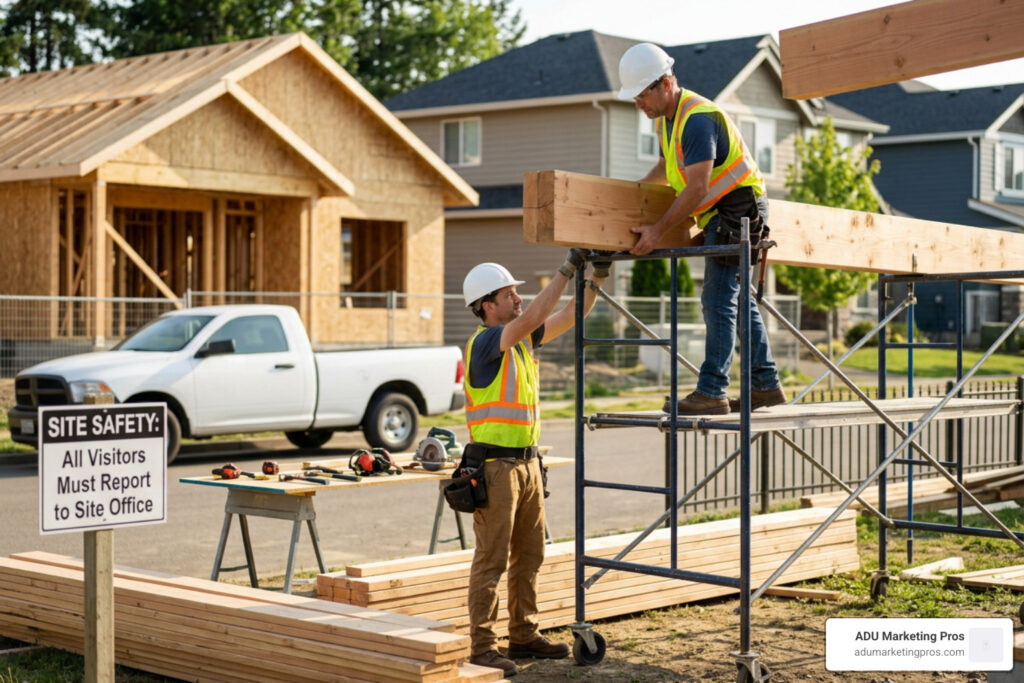
Find Trusted Small Home Construction Companies Near You
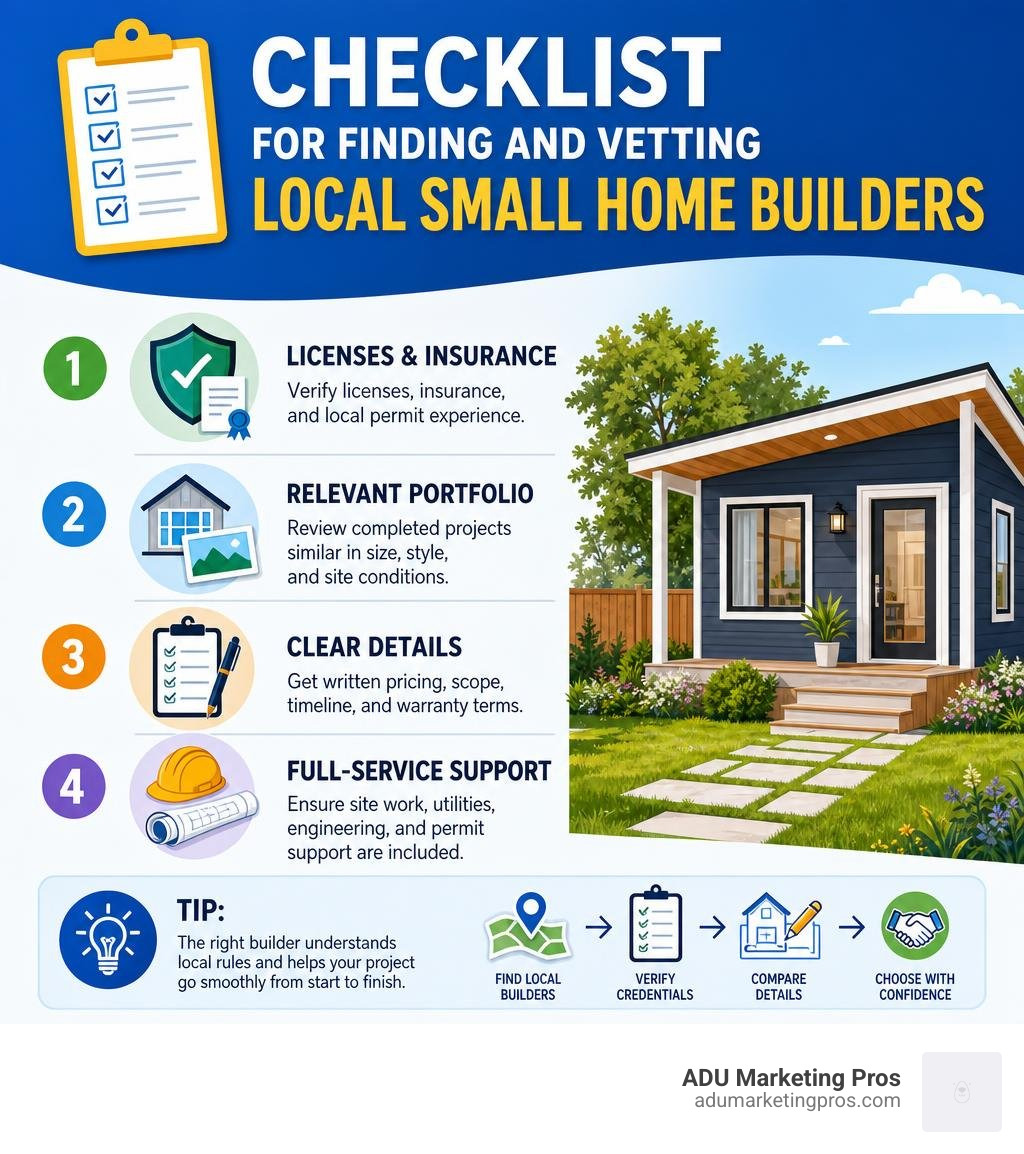
To find the best small home construction companies near me, start with builders that serve your city and specialize in your exact project type: an ADU, backyard cottage, foundation-built small home, modular unit, or tiny house on wheels. Then verify three things before requesting bids:
- Licensing and insurance in your state, plus experience with local permits and zoning.
- A relevant portfolio with completed projects similar in size, style, and site conditions.
- Clear pricing, scope, timeline, and warranty terms in writing – including site work, utilities, engineering, and permit support.
Small homes can create space for family, rental income, a home office, or simpler living. But the right builder is not simply the closest one. Local rules on setbacks, foundations, utility connections, height, and occupancy can change what is possible – and what the project will cost. A builder who primarily builds 4,000-square-foot luxury suburban houses may lack the micro-spatial design expertise and local zoning familiarity required to pull off an efficient 500-square-foot backyard cottage or a standalone 800-square-foot compact residence on challenging topography.
Compact residential construction requires specialized knowledge of space optimization, multi-functional mechanical routing, localized building codes, Title 24 energy compliance, and tight-access site logistics. When you work with dedicated small-footprint builders, you gain access to streamlined floor plans, established subcontractor relationships, and established municipal approval pathways that keep your timeline predictable and your budget intact.
This guide walks you through the practical path from identifying the right type of small-home builder to comparing credentials, budgets, financing, and permitting support. I’m Jock Breitwieser, and I help ADU and small-home firms explain these complex decisions clearly to the homeowners they want to reach.
Terms related to small home construction companies near me:
Top Types of Small Home Construction Services Available Locally
When searching for small home builders, it is important to recognize that “small home” covers a broad spectrum of structures. The right contractor depends entirely on whether your build is a secondary suite in your backyard, a ground-up primary residence on raw land, or a movable compact home on wheels. Understanding these distinctions early prevents costly permitting mistakes, design mismatches, and structural delays.
In urban and suburban centers—such as Los Angeles, San Diego, and across the San Francisco Bay Area—local building regulations strictly govern each category. Working with dedicated custom adu builders or specialized california modular builders ensures your structure complies with local zoning standards, safety codes, and energy efficiency mandates.
Detached ADUs and Backyard Cottages
Detached Accessory Dwelling Units (ADUs), commonly called backyard cottages, granny flats, or in-law suites, are independent living units built on the same parcel as an existing single-family or multi-family residence. They are popular solutions for generating secondary rental income, housing aging parents, or creating private home offices with full residential independence.
Because ADUs share a lot with an existing primary home, construction must navigate specific local constraints, including rear and side property setbacks (typically 4 feet in California), maximum height allowances, fire separation distances, and utility tie-ins. When evaluating adu builders near me, ensure the company provides turnkey design-build services that encompass site evaluation, architectural drafting, structural engineering, and municipal permit submittals. Experienced builders will also evaluate your current main electrical panel capacity, sewer lateral depth, and water meter sizing before finalizing floor plans, avoiding expensive change orders mid-construction.
Custom Foundation Small Homes and Micro-Dwellings
If you own an independent parcel or want a permanent, free-standing primary residence, custom micro-dwellings built on permanent foundations offer durability, longevity, and high real estate appreciation. These homes generally range from 360 to over 1,051 square feet, offering thoughtfully designed layouts with dedicated living, cooking, and sleeping zones. Unlike recreational vehicles, these permanent structures are built to standard International Residential Code (IRC) or California Residential Code (CRC) specifications, featuring continuous stem-wall or monolithic slab foundations, standard 2×4 or 2×6 framing, high-performance insulation, and full architectural integration.
A key benefit of permanent-foundation construction is financing. Builders like Cornerstone Design Build engineer foundation-anchored small homes that meet statewide residential building codes, allowing buyers to secure traditional 30-year fixed mortgages rather than higher-interest personal loans. For projects in Southern California, partnering with an experienced tiny house builder southern california ensures compliance with local structural standards and California Title 24 energy mandates. Permanent homes also qualify for conventional property insurance policies, standard utility hookups, and appraise alongside traditional residential inventory in your local real estate market.
Movable Tiny Houses and Modular Pods
Movable tiny houses, often categorized as Tiny Houses on Wheels (THOWs), are constructed on heavy-duty trailer chassis. These units offer mobility, rapid fabrication timelines, and a smaller initial cash outlay. However, zoning rules for movable tiny homes vary significantly by jurisdiction. While several West Coast cities have updated municipal codes to allow movable tiny homes as legal ADUs, other regions restrict them to designated RV parks or temporary recreational use.
When exploring movable structures or factory-built units, consult top prefab home builders to determine whether an off-site modular build or a NOAH-certified tiny home best fits your property. Modular homes, built in climate-controlled factory environments and delivered in crane-lifted sections onto permanent foundations, combine the fast construction speed of prefabrication with the full legal status and financing advantages of site-built architecture.
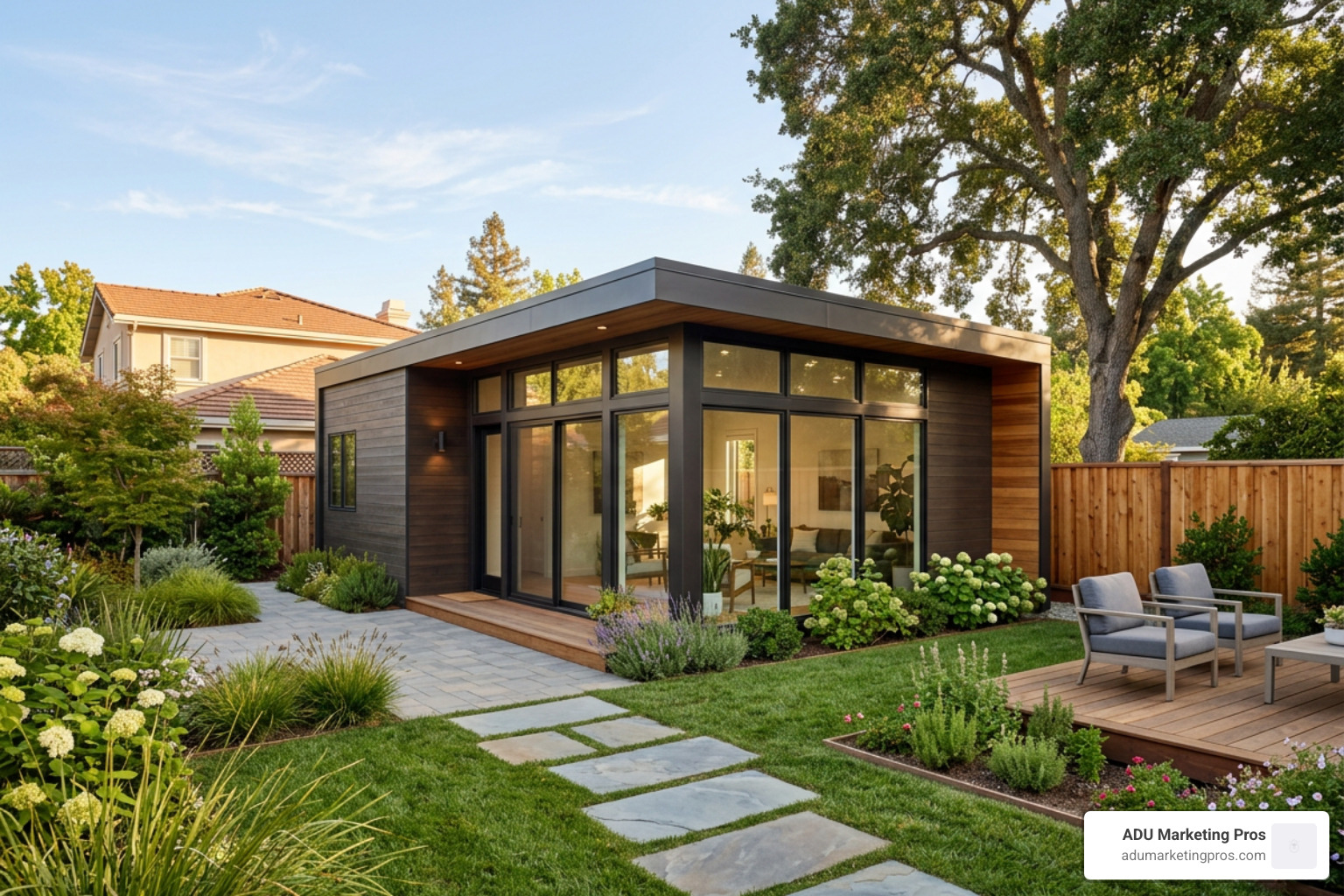
Leading Small Home Construction Companies Near Me and Across the Nation
Finding a qualified contractor requires evaluating real project performance, warranty coverage, and regional craftsmanship. Experienced teams understand how to optimize tight floor plans, streamline utility trenches, and expedite local government approvals. Here is an overview of reputable builders offering small-footprint residential construction:
| Builder / Platform | Primary Service Areas | Specialty / Build Type | Key Differentiators |
|---|---|---|---|
| IMKAT Homes | Sacramento, Placer & Yolo Counties | Custom Detached ADUs & Backyard Homes | 200+ completed units; 4.9 Google rating; end-to-end design-build |
| Bradley Knapp Construction | Southeast Region | Custom Stick-Built Small Homes & ADUs | 10-year workmanship warranty; full white-glove permitting |
| Montano’s Construction | Utah & Western Region | Tiny Houses & ADU Foundations | 1-year warranty; 10% military & first responder discount |
| Nanostead | Western NC & Upstate SC | Sustainable Small Homes & Tiny Houses | Gold Craftsmanship Award; integrated consulting for DIYers |
| Cornerstone Design Build | Florida & Regional Markets | Foundation-Built Small Homes | Floor plans starting from $99,000; 30-year mortgage qualification |
| Tourmaline Builders | San Diego, CA | Custom Coastal Homes & Luxury ADUs | High-end architectural integration and custom finishes |
| De Mattei Construction | San Jose & Silicon Valley | High-End Residential & Custom ADUs | Decades of luxury custom building and complex site management |
Top Regional Specialists and ADU Pros
Regional building companies often specialize in tailored solutions matching local soil conditions, climate requirements, and zoning regulations. For example, IMKAT Homes in Northern California has completed over 200 backyard homes, holding a 4.9-star rating across 68 reviews by offering a structured design-to-handover process that encompasses soil sampling, structural drafting, trenching, framing, and final finishes under single-source management.
In the Southeast, Bradley Knapp Construction sets a high benchmark by backing their custom homes and ADUs with a comprehensive 10-year workmanship warranty, giving homeowners exceptional peace of mind regarding structural longevity and moisture management. In the Mountain West, Montano’s provides dedicated in-house framing, utility hookups, and a 1-year workmanship warranty with discounts for veterans and first responders. Along the East Coast, Nanostead has received regional Gold Craftsmanship awards for blending sustainable design with functional small layouts, specializing in passive solar orientation, natural non-toxic insulation materials, and timber-frame detailing.
Working with experienced adu builders who manage site preparation, foundation pouring, and utility tie-ins helps prevent unexpected cost overruns and construction bottlenecks. General contractors with deep regional knowledge understand local building inspectors’ exact preferences, frost-line depths, regional wind-load requirements, and stormwater retention standards.
California and West Coast Small Home Builders
California remains an active market for small-footprint homes and backyard units due to progressive statewide ADU legislation. Homeowners in Northern California can explore specialized design-build teams through our tiny house builders northern california guide 2026 or source local teams via our tiny house builders in sf bay area directory.
For Bay Area residents, adu builders san francisco bay area can help you navigate local permitting challenges. In Silicon Valley, firms like De Mattei Construction handle complex high-end residential engineering, managing hillside stability, retaining walls, and custom architectural integration. Southern California homeowners can evaluate adu contractors san diego and firms like Tourmaline Builders for coastal projects requiring corrosion-resistant materials and strict coastal commission compliance. If you are located in the Los Angeles basin, reviewing an adu builder los angeles resource helps identify contractors familiar with city lot configurations, sewer saddle connections, and local utility standards.
How to Vet and Select Small Home Construction Companies Near Me
Selecting a contractor for a small home requires the same thorough vetting as hiring a builder for a full-sized house. Small spaces demand precise carpentry, efficient mechanical routing, and strict code compliance.
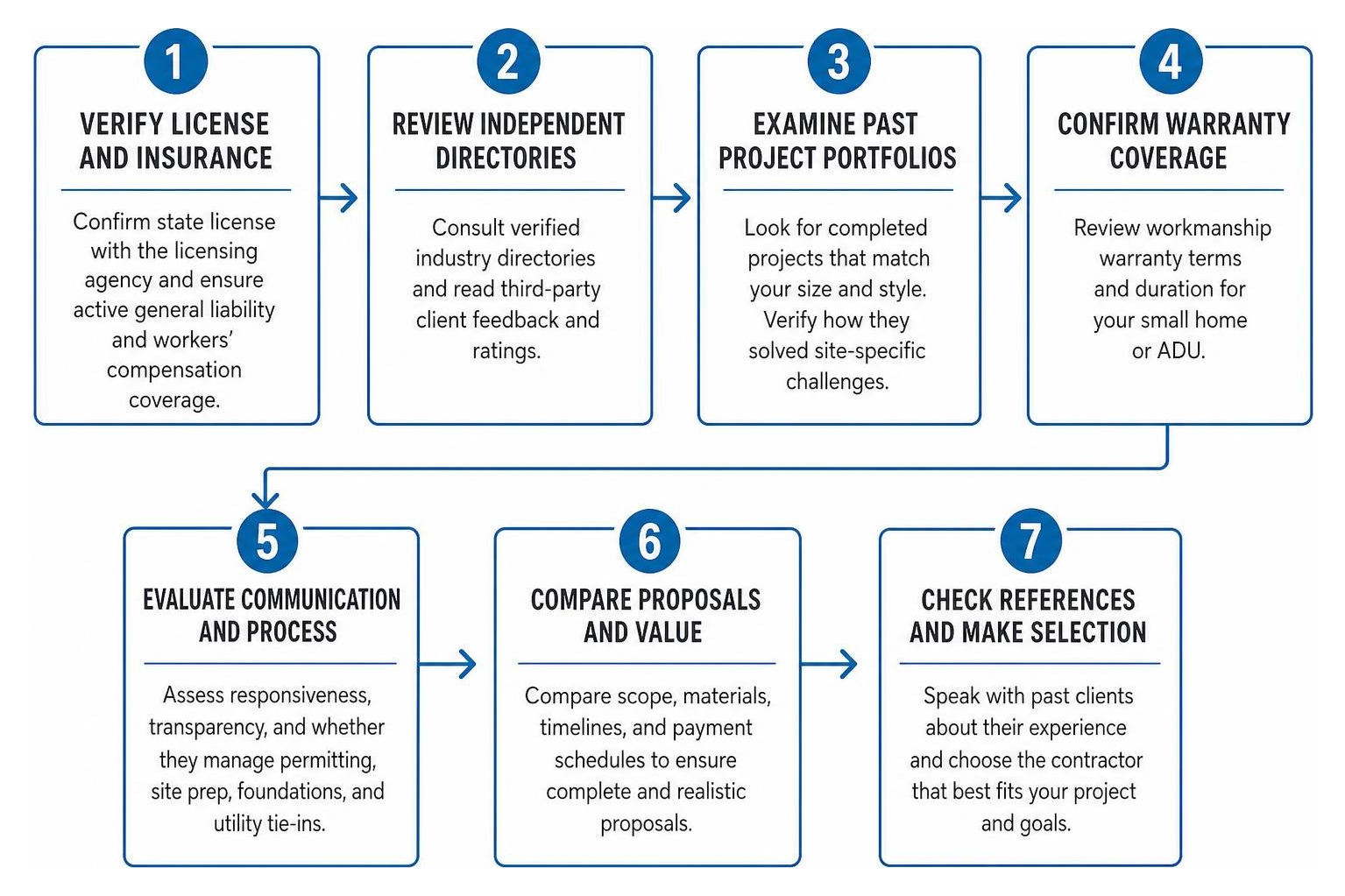
When vetting local general contractors, follow these practical evaluation steps:
- Verify State Licensing and Insurance: Check the contractor’s license number directly with your state’s licensing agency (such as the California Contractors State License Board – CSLB). Ensure they maintain active general liability insurance and workers’ compensation coverage for all on-site personnel.
- Review Independent Industry Directories: Consult verified directories such as the Houzz Los Angeles Custom Home Builders network to read third-party client feedback, verify project photographs, and review dispute histories.
- Examine Past Project Portfolios: Look for completed homes that match your target square footage and architectural style. Verify how the builder solved site-specific challenges like slope retention, utility routing, natural lighting, compact storage integration, and micro-kitchen layouts.
- Require a Detailed, Fixed-Price Contract: Avoid open-ended hourly estimates. A professional builder should supply an itemized contract covering site preparation, foundation engineering, rough framing, MEP rough-ins, interior finishes, and post-construction site restoration.
- Confirm In-House Permit Management: Ensure the builder manages the submission of architectural drawings, structural calculations, and Title 24 energy calculations to the local Authority Having Jurisdiction (AHJ), taking full responsibility for responding to plan-check review comments.
Our adu contractor california ultimate guide outlines critical contract protections, milestone schedules, and red flags to watch for during builder negotiations.
Sourcing Verified General Contractors and Design-Build Firms
Locating reliable builders in competitive metropolitan markets is simpler when using focused regional networks. For instance, homeowners in Silicon Valley can review verified specialists through Houzz Palo Alto General Contractors or consult our dedicated palo alto adu builders guide to discover teams with specific experience in local historic districts and green building standards.
Similarly, prospective builders in neighboring areas can review the Houzz Mountain View Design-Build Firms listings or examine contractors via Houzz Menlo Park General Contractors. If you are building in San Francisco proper, consult the Houzz San Francisco Custom Home Builders directory and our local resource for home builders san francisco to find contractors experienced with tight urban lot access, crane lifts over narrow Victorian rooflines, and zero-lot-line firewall ratings.
Reviewing Portfolios, Customer Ratings, and Warranties
When assessing reviews, look for consistent praise regarding project timelines, transparent communication, and post-construction support. Structural and workmanship warranties are strong indicators of a contractor’s confidence in their work. While entry-level builds may offer standard 1-year warranties, top-tier luxury tiny home builders often provide multi-year structural coverage that safeguards your investment against foundation settlement, roof leaks, and window seal failure.
Ask prospective builders for client references from projects completed two to three years ago. This allows you to verify how the foundation, roofing, and mechanical systems hold up over time and confirm whether the company honored their warranty commitments promptly when minor warranty claims arose.
Costs, Financing, and Permitting for Local Small Home Construction
A common myth in residential construction is that building a 500-square-foot small home costs a direct fraction of building a 2,500-square-foot home. In reality, smaller footprints have a higher cost per square foot because the most expensive components of any home—the kitchen, bathrooms, electrical panel, HVAC system, and utility hookups—must still be installed regardless of total size. Trenching across an established backyard, upgrading main electrical panels to 200 amps, running dedicated water lines, and connecting to municipal sewer systems represent essential fixed expenses that do not decrease simply because the living space is compact.
For a comprehensive breakdown of planning and budgeting variables across Northern and Southern California, review our bay area adu contractor complete guide.
Typical Cost Ranges and Project Timelines for Small Builds
Foundation-built small homes and custom ADUs across California typically range between $200 and $350+ per square foot, depending on site accessibility, soil conditions, and finish levels. Turnkey modular and foundation-anchored models, such as those from Cornerstone Design Build, start around $99,000 for compact layouts (360 sq. ft.), with larger 2-to-3 bedroom configurations (800 to 1,200 sq. ft.) scaling to $250,000–$375,000+ fully installed on site.
Project timelines generally follow a standard 4 to 9 month schedule:
- Site Feasibility & Architectural Design: 4 to 6 weeks
- Engineering, Title 24 & City Permitting: 6 to 12 weeks (varies by municipality)
- Site Preparation, Trenching & Foundation: 3 to 4 weeks
- Framing, Utilities & Insulation: 6 to 8 weeks
- Interior Finishes, Cabinetry & Fixtures: 4 to 6 weeks
- Final Inspections & Certificate of Occupancy: 2 to 3 weeks
For more localized cost data, consult our tiny homes builders california guide.
Financing Options for Tiny Homes and Backyard Units
Financing a small home build depends largely on whether the structure is permanently affixed to real estate or built on a movable chassis:
- Home Equity Line of Credit (HELOC) or Cash-Out Refinance: The most common financing mechanism for homeowners building a backyard ADU, leveraging accrued equity in the primary property at competitive interest rates.
- Construction-to-Permanent Loans: Bank financing based on the projected future appraisal value of the completed small home or secondary dwelling, rolling short-term construction financing into a standard mortgage once final inspection passes.
- Traditional 30-Year Mortgages: Available for foundation-anchored small homes built to local building codes on fee-simple land parcels.
- Personal Renovation Loans: Unsecured loans often used for smaller-scale garage conversions or prefabricated pod additions that do not require securing real estate equity.
Homeowners in Southern California can explore customized financing strategies through our guide on tiny house builders in southern california.
Frequently Asked Questions About Small Home Construction Companies Near Me
How do I find reputable small home construction companies near me?
Start by verifying contractor licenses and active insurance through your state licensing board (such as the CSLB in California). Consult local Home Builders Association (HBA) member directories and check third-party platforms like Houzz for verified client reviews. Inquire about their direct experience with micro-dwellings and ADUs specifically, as these structures carry unique setback and utility challenges that large-tract homebuilders rarely encounter.
Always ask prospective builders to provide addresses of completed local projects and speak directly with past clients. Inquiring about change order frequency, communication reliability, and warranty response speed will reveal how professionally the firm operates. For a statewide overview of top-rated contractors, review our directory of tiny house builders california.
What is the typical cost and build timeline for a custom small home or ADU?
Turnkey custom builds generally cost between $200 and $350+ per square foot, with total project budgets typically ranging from $150,000 to over $350,000 depending on size, topography, utility trenching distances, and the quality of interior fixtures and finishes chosen.
The complete timeline from initial concept through design, municipal permitting, construction, and final occupancy typically takes 4 to 9 months. Site conditions such as high water tables, rocky soil, or steep slopes can lengthen excavation times. For regional cost factors in Southern California, see our tiny house builders los angeles guide.
What local zoning laws and building permits are required for small homes?
Permanent small homes and ADUs must comply with local zoning bylaws, setback rules (typically 4 feet from side and rear property lines for California ADUs), maximum height restrictions, and state energy codes (such as California Title 24). Construction requires submitting architectural blueprints, structural engineering calculations, and Title 24 energy documentation to the local Authority Having Jurisdiction (AHJ) to obtain building, plumbing, mechanical, and electrical permits.
Additionally, fire separation distances and emergency egress access must meet local fire department criteria before permits are issued. For coastal and regional zoning specifics, see our guide on santa cruz adu builders.
Conclusion
Building a small home or detached backyard unit is one of the most effective ways to optimize underutilized property, generate predictable long-term rental income, or accommodate multi-generational family members. However, turning a compact floor plan into a durable, code-compliant living space requires partnering with a licensed general contractor who understands the nuances of site preparation, utility engineering, and local zoning.
By verifying credentials, reviewing completed project portfolios, and insisting on transparent, fixed-price contracts, you can navigate your build smoothly and protect your investment for decades to come.
Ready to take the next step? Connect with vetted local building pros and explore custom tiny home builders in California to start planning your build today.