
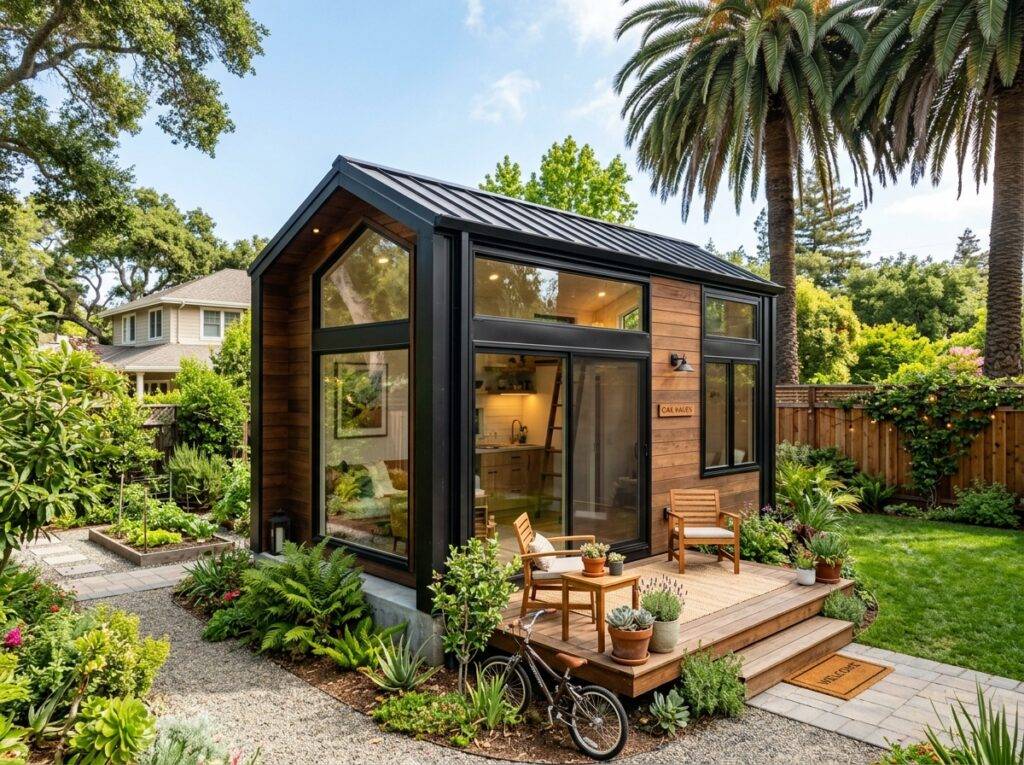
Why the Tiny House Palo Alto Market Is Booming Right Now
Tiny house Palo Alto options are growing fast — and for good reason. In one of the most expensive housing markets in the world, smaller structures offer a smart, flexible, and often affordable path to more space. The housing landscape in Palo Alto is defined by a unique set of pressures that have reached a boiling point over the last decade. As the epicenter of the global technology industry, the demand for residential space has far outpaced the supply, leading to a market where the median home price often exceeds $3.5 million. This economic reality has created a “missing middle”—a demographic of professionals, educators, and service workers who are essential to the community but are priced out of traditional single-family homes.
Here’s a quick snapshot of what you need to know:
| What You’re Looking For | Key Facts |
|---|---|
| Typical cost to build | $51,832 – $75,942 (range: $15,666 – $130,551) |
| Cost per square foot | $200 – $400 |
| Starting price (prefab cabin) | Around $30,000 |
| Typical size | Up to 400 sq. ft. |
| Common width (on wheels) | 8’6″ |
| Short-term rental rate | From $99/night |
| Primary uses | ADU, guest suite, home office, rental income, creative studio |
Palo Alto’s housing pressure is real. The average home in Silicon Valley costs well over a million dollars, and even rentals are out of reach for many. That’s pushing homeowners, artists, remote workers, and investors to look at smaller, smarter structures — from prefab backyard cabins to park-model tiny homes on wheels. The shift toward tiny living isn’t just about saving money; it’s about a philosophical change in how we view land use. In a city where every square foot of dirt is worth a premium, the traditional sprawling backyard is being reimagined as a productive asset. Whether it’s a place for a returning college graduate, a quiet sanctuary for a remote software engineer, or a source of passive income to offset a massive mortgage, the tiny house has become the Swiss Army knife of Silicon Valley real estate.
The history of Palo Alto is one of innovation, from the HP garage to the sprawling campuses of Google and Meta. It is only fitting that the next revolution in housing is happening in the backyards of these very neighborhoods. The options range widely. You might want a permanent accessory dwelling unit (ADU) anchored to a foundation, a mobile tiny home that can move with you, or a backyard cabin used as a creative retreat. Each comes with different costs, rules, and possibilities. For many, the journey begins with a simple realization: they don’t need 3,000 square feet to live a high-quality life. By focusing on high-end finishes, smart storage, and indoor-outdoor flow, these small dwellings can offer a level of luxury that rivals much larger homes.
One real example: a Stanford-connected designer built a portable art studio — just under 80 square feet — almost entirely from repurposed materials found on-site at Jasper Ridge. It sparked conversations about how tiny structures can serve as urban interventions, not just homes. This project, known as Studio 2, highlighted the potential for sustainable, low-impact living in a region often criticized for its environmental footprint. That creative energy is exactly what makes the Palo Alto tiny house market unique. It is a blend of high-tech innovation, architectural experimentation, and a desperate need for practical housing solutions. As we look toward the future, the integration of these units into the existing suburban fabric will be essential for maintaining the vibrancy and diversity of the Palo Alto community.

Common tiny house palo alto vocab:
Defining the Tiny House Palo Alto Market: ADUs vs. Mobile Units
When we talk about a tiny house palo alto, we are usually referring to one of three things: a permanent Accessory Dwelling Unit (ADU), a Tiny House on Wheels (THOW), or a specialized backyard cabin. Understanding the ADU vs Tiny House distinction is crucial because it dictates your permits, your taxes, and how you can use the space. In the eyes of the law, an ADU is a secondary residential unit that has complete independent living facilities for one or more persons. It must be attached to a permanent foundation and connected to local utilities. A Tiny House on Wheels, conversely, is often classified as a recreational vehicle (RV) or a park model, which brings a different set of zoning challenges.
In Palo Alto, the “backyard cabin” has become a popular middle ground. These are often high-quality prefab structures that can be customized for use as a guest suite or a quiet home office. Because they are often smaller than 120 square feet, some may not even require a full building permit if they don’t have plumbing, though local Palo Alto ordinances are notoriously strict and always require a check with the planning department. On the other end of the spectrum, we see innovative garage conversions. A notable case study in Palo Alto involved converting a 227-square-foot garage and covered driveway into a stunning, attached ADU. This project proved that even a tiny footprint can feel like a luxury primary residence when designed with intention. By utilizing high ceilings and skylights, the designers were able to eliminate the claustrophobic feel often associated with small spaces.

Size Limitations and Typical Dimensions
If you are planning to build or buy, you need to know the magic numbers. Most tiny homes in our area cap out at 400 square feet. This is a standard threshold for many building codes that distinguish between a “tiny house” and a standard small home. If the unit is mobile (a THOW), it must adhere to strict transport laws to be legally moved on California highways. This usually means a maximum width of 8’6″ and a height under 13’6″ to safely clear California overpasses. These constraints require a high degree of architectural ingenuity, as every inch of width is precious for creating a functional kitchen or a comfortable sleeping loft.
For those looking at larger “park models,” dimensions can reach up to 12′ wide and 44′ long, though these require specialized transport and wide-load permits. According to data on Tiny Homes in Palo Alto Costs, these dimensions are the industry standard for maintaining “tiny” status while maximizing livability. In Palo Alto, where lot sizes can be irregular, the ability to customize the footprint—perhaps making it longer and narrower to fit alongside a main house—is a significant advantage of custom builds over off-the-shelf prefab models. Furthermore, the California Building Standards Code (Title 24) plays a massive role in how these dimensions are utilized, requiring specific energy efficiency measures that can impact wall thickness and insulation choices.
Primary Uses for Small Structures in Silicon Valley
Why are our neighbors building these? In Palo Alto, the motivation is often practical. We see many “in-law suites” designed to keep aging parents close. With the high cost of assisted living facilities in the Bay Area, building a high-end tiny house in the backyard is often a more financially sound and emotionally fulfilling alternative. We also see a rise in millennial housing solutions, where adult children can have privacy while living on the family lot, allowing them to save for a future down payment in an otherwise impossible market.
However, the financial incentive is the biggest driver. With a Palo Alto Garage Conversion (227 Sq.Ft.) fetching above-market rent from university professionals, the “tiny” investment can pay for itself remarkably quickly. The proximity to Stanford University and major tech campuses like Google and Meta makes these units highly desirable for short-term visiting researchers or contract employees. A well-appointed tiny house can command a premium because it offers a level of privacy and autonomy that a shared apartment or a traditional hotel room cannot provide. Additionally, many residents are using these spaces as “flex rooms”—serving as a home office during the day and a guest room for visiting family during the holidays, maximizing the utility of their property year-round.
Top Builders and Customization Options for Your Tiny House Palo Alto
Finding the right partner to build your dream space is the first step. While there are many Tiny House Builders California to choose from, a few have made a significant splash specifically in the Palo Alto area. The local market demands a higher level of finish and architectural integration than many national builders provide. Palo Alto homeowners typically look for designs that complement the existing aesthetic of their neighborhood, whether that’s mid-century modern, craftsman, or contemporary minimalist.
One standout is the Halcyon Stay in Palo Alto by Fritz Tiny Homes. This model is a 10.5-foot-wide, single-level park model that feels incredibly airy due to its floor-to-ceiling glass. It was specifically designed to serve as a luxury retreat, proving that “tiny” does not have to mean “rustic.” Other prominent names include Forever Redwood, known for their sustainable backyard cabins and use of high-quality timber, and Pacifica Tiny Homes, which focuses on affordable mobile units built right here in California. These builders understand the specific seismic requirements and climate considerations of the Bay Area, ensuring that the structures are as durable as they are beautiful.
Designing Your Tiny House Palo Alto for Maximum Efficiency
In a small space, every inch must work overtime. To avoid a “cramped” feeling, we recommend 15-foot vaulted ceilings whenever possible. This vertical space makes a 200-square-foot room feel twice its size and allows for the inclusion of clerestory windows that bring in natural light without sacrificing privacy. In Palo Alto’s dense neighborhoods, managing sightlines is essential; you want to see the sky and the treetops, not your neighbor’s kitchen. The use of biophilic design—incorporating natural elements like wood, stone, and plants—can also help a small space feel more grounded and expansive.
Smart furniture is also a must. We’ve seen local builds utilize:
- Murphy beds that fold away to reveal a Pilates studio or a large mahogany workspace.
- White oak engineered flooring for a bright, durable finish that reflects light and stands up to heavy use.
- Custom cabinetry that hides smart appliances, like under-counter washer/dryer units and drawer-style dishwashers.
- Multi-functional tables that serve as both a standing desk for remote work and a dining area for four.
- Pocket doors that eliminate the “swing space” required by traditional doors, freeing up several square feet of usable floor area.
- Integrated lighting that uses LED strips in recessed channels to create a sense of depth and modern sophistication.
For those looking for a more traditional aesthetic, the Palo Alto Backyard Cabin by Forever Redwood offers a refined look with oversized timbers and custom partitions for bathrooms or kitchens. This approach appeals to those who want their tiny house to feel like a permanent, grounded extension of their main home rather than a temporary addition. The choice of materials, from reclaimed redwood to high-performance glass, allows homeowners to tailor the structure to their specific environmental values and aesthetic preferences.
Sustainable Materials and Eco-Friendly Features
Palo Alto residents value sustainability and environmental stewardship. Many builders now offer “restoration forestry” options, using redwood timbers sourced in ways that help recreate old-growth ecosystems. This aligns with the city’s broader goals of reducing carbon footprints and promoting green building practices. Beyond the wood, look for off-grid capabilities like solar power arrays and high-end lithium-ion battery storage.
High-performance insulation is another critical factor. Using spray foam or mineral wool insulation ensures that the tiny house remains cool during the increasingly hot California summers and warm during the damp winters, all while minimizing energy consumption. Double-paned, low-E windows and premium sealants are essential for maintaining energy efficiency in the Bay Area’s unique microclimates. Many homeowners are also opting for greywater systems that repurpose sink and shower water to irrigate their backyard gardens, further enhancing the sustainability of the tiny living lifestyle. By integrating these features, a tiny house becomes more than just a dwelling; it becomes a statement of environmental responsibility.
The Financials: Costs, Pricing, and Rental Potential
Let’s talk numbers. While a tiny house palo alto is cheaper than a mansion, it isn’t “cheap” by national standards. You are paying for Silicon Valley labor, which is among the most expensive in the country, and high-quality materials that meet California’s rigorous Title 24 energy standards. Furthermore, the cost of site preparation in Palo Alto can be significant, especially if your backyard has limited access or requires extensive utility trenching. It is not uncommon for site prep alone to account for 15-20% of the total project budget.
Generally, you can expect to pay between $200 and $400 per square foot for a high-quality build. A basic prefab cabin might start around $30,000, but a fully customized, move-in-ready tiny home typically averages between $51,832 and $75,942. Some high-end models with luxury finishes, smart home integration, and premium appliances can easily exceed $130,000. It is important to distinguish between the “shell” price and the “turnkey” price, which includes everything from the foundation to the final coat of paint. When comparing quotes, always ask for a detailed breakdown of “hard costs” (materials and labor) versus “soft costs” (permits, design fees, and engineering).
Is a Tiny House Palo Alto a Good Investment?
The short answer? Yes. The return on investment (ROI) for a tiny house in this region is bolstered by the extreme demand for housing. Short-term rentals for a Brand new and private tiny house in Palo Alto can start at $99 per night and go much higher during peak university events or tech conferences. For long-term stays, well-designed ADUs often command above-market rent because they offer a private, stand-alone living experience that apartments can’t match.
Working with experienced Palo Alto ADU Builders ensures that the value added to your property exceeds the construction cost. In many cases, adding a legal ADU can increase your property value by 10% to 20%, making it one of the most effective ways to build equity. Furthermore, the rental income can often cover the monthly payments on a home equity line of credit (HELOC) used to finance the build, essentially allowing the unit to pay for itself over time. In a market where property values appreciate steadily, the long-term financial benefits of adding a secondary unit are substantial.
Hidden Costs and Installation Fees
When budgeting, don’t just look at the “sticker price” of the unit. There are several additional costs that can catch homeowners off guard:
- White Glove Assembly: For prefab cabins, professional onsite assembly usually costs 30-45% of the structure price. This includes the labor to piece together the precision-cut components and ensure they are weather-tight.
- Utility Hookups: Running water, electricity, and sewage lines to a backyard unit can cost between $5,000 and $15,000 depending on the distance from the main lines and the complexity of the soil. If your main electrical panel needs an upgrade to handle the extra load, that can add another $3,000 to $5,000.
- Foundation Prep: Whether it’s a concrete slab, a structural deck, or a pier-and-beam system, your ground must be leveled and engineered to support the weight and meet seismic codes. In Palo Alto, soil stability can vary, sometimes requiring deeper piers.
- Permit Fees: Palo Alto has its own set of fees for building, safety, and school district impact. These can add several thousand dollars to the total project cost. School impact fees are typically triggered for units over 750 square feet, but smaller units still face administrative costs.
- Landscaping: Once the construction is done, you will likely want to restore your backyard and create a private path or patio for the tiny house, which adds to the final tally. High-quality hardscaping can significantly improve the rental appeal and overall value of the unit.
Navigating Regulations and Challenges for a Tiny House Palo Alto
This is where things get a bit “crunchy.” Palo Alto has specific zoning laws, parking requirements, and aesthetic standards that must be met. The city has made strides in recent years to ease the process for ADUs in response to state mandates like SB 9 and SB 10, but it remains a complex environment. For example, some ADU types might eliminate the need for additional parking if they are located within a half-mile of public transit or if they replace an existing garage, while others might require a dedicated off-street spot. Understanding these nuances is the difference between a smooth project and a bureaucratic nightmare.
If you’re looking at a tiny house on wheels, you’ll need to navigate DMV registration and ensure the unit is certified to US park model codes (ANSI A119.5). While some California cities have officially recognized THOWs as legal ADUs, Palo Alto’s stance is often more restrictive, frequently requiring these units to be used as temporary guest housing rather than permanent primary residences. It’s helpful to look at Places in Southern California that Allow Tiny Houses to see how different regions handle these units, but always double-check with the Palo Alto Planning Department for the most current local rules. The regulatory landscape is shifting rapidly, and staying informed is crucial.
Permitting and Installation Hurdles
The permitting process can be a test of patience, even for the most seasoned homeowner. We typically advise clients to plan for a 9-12 month lead time from the initial design phase to the move-in date. This allows time for the Land, Buildings & Real Estate Office to conduct safety assessments, for fire department reviews, and for insurance requirements to be met. Palo Alto requires “Objective Design Standards,” meaning your tiny house must meet certain visual criteria regarding roof pitch, siding materials, and window placement to ensure it fits the neighborhood character. These standards are meant to prevent “eyesores” and maintain the high property values of the surrounding area.
To streamline this, many homeowners hire Architects in Southern California Who Design Tiny Houses or local Bay Area specialists who are familiar with the rigorous California building codes (Title 24). These professionals can help navigate the “Plan Check” process, where city officials review your blueprints for compliance with structural, electrical, and plumbing codes. While this adds an upfront cost, it can save thousands of dollars in potential fines or required retrofits later on. Additionally, you must consider the “setback” requirements—the minimum distance the structure must be from your property lines—which in Palo Alto is typically 4 feet for side and rear yards for most ADUs. Failure to respect these setbacks can result in the city requiring you to move or demolish the structure.
Case Studies: Creative Living and Working Spaces
One of the most inspiring aspects of the tiny house palo alto movement is the sheer creativity involved. These structures are not just boxes; they are reflections of the people who inhabit them. Take A tiny house for art, for example. This project, known as Studio 2, was an 80-square-foot portable studio built by Stanford students. It utilized repurposed materials like fallen live oak and leftover insulation, serving as a mobile retreat for artists. The project demonstrated that with enough ingenuity, a functional and inspiring space can be created on a shoestring budget using sustainable methods. It also highlighted the importance of “portability” in a market where land ownership is often out of reach for younger creatives.
The Artist Retreat: A Halcyon Stay Case Study
We recently saw a beautiful application of the Halcyon Stay by Fritz Tiny Homes for a local artist who needed a space that could double as a gallery and a fitness studio. The client customized the interior to include features that maximized every square inch of the 10.5-foot-wide frame:
- An artist desk modified from a concrete table, providing a sturdy and unique surface for painting and drafting.
- Dedicated art supply storage integrated into the wall cavities, keeping the floor clear of clutter.
- A Murphy bed that, when folded, cleared enough floor space for a full-sized Pilates reformer, allowing the room to transform from a bedroom to a gym in seconds.
- A luxury bathroom with a glass-walled shower and high-end fixtures to maintain the open, high-end feel of the rest of the unit.
- Custom acoustic panels that were integrated into the ceiling to allow for high-quality audio recording, as the artist also produced a weekly podcast.
This “luxury home away from home” shows that tiny living doesn’t have to mean sacrificing your hobbies or your comfort. In fact, by stripping away the excess, many residents find they have more time and energy to focus on the things they truly love. Another case study involved a tech executive who used a tiny house as a “deep work” station, free from the distractions of the main house. By installing soundproofing and a dedicated fiber-optic line, they created the ultimate Silicon Valley home office. This trend of “specialized outbuildings” is redefining how we think about the traditional residential lot, turning single-use properties into multi-functional hubs of productivity and creativity.
Frequently Asked Questions about Tiny Living
Can I legally live in a tiny house on wheels in Palo Alto?
The legality depends on how the unit is classified and where it is parked. If it is registered as an ADU and meets all local zoning, safety, and foundation requirements, then yes, it can be a legal residence. However, “camping” in a THOW on a city street or in a driveway without proper permits is generally not allowed. Most residents use them as backyard guest houses or secondary dwellings that comply with the city’s ADU regulations. It is vital to consult with the Palo Alto Planning Department before moving a unit onto your property, as code enforcement is active in the area.
How much does a tiny house in Palo Alto cost on average?
Based on Tiny Homes in Palo Alto Costs, the typical range for a completed project is $51,832 to $75,942. However, your final price will depend heavily on whether you choose a prefab “shell” or a fully custom, high-end architectural build. In Palo Alto, luxury builds with premium materials often reach the $100,000 to $150,000 range once site prep, utility connections, and high-end interior finishes are factored in. Remember that labor costs in the Bay Area are significantly higher than the national average.
What are the size limits for a backyard cabin?
Most backyard cabins fall under the 400-square-foot limit to be considered a tiny house or ADU. Dimensions typically range from a compact 10’x10′ (100 sq. ft.) to a more spacious 24’x20′ (480 sq. ft.). You must also consider “setback” requirements—how far the structure must be from your property line—and the total “lot coverage” allowed for your specific zoning district. Palo Alto generally allows ADUs up to 800 square feet regardless of lot coverage limits, but smaller “tiny” units are often easier and faster to permit.
Do I need a permit for a tiny house if it’s under 120 square feet?
In many jurisdictions, a shed or cabin under 120 square feet does not require a building permit. However, Palo Alto has specific rules regarding “accessory structures.” If the unit has electricity, plumbing, or is intended for human habitation (sleeping), a permit is almost always required regardless of the size. Even a small art studio without plumbing may require a permit if it is permanently anchored. Always verify with the local building department to avoid costly code enforcement issues and potential fines.
How do I finance a tiny house in Palo Alto?
Since tiny houses on wheels are often titled as vehicles, they may require a personal loan or an RV loan. Permanent ADUs, however, can often be financed through a Home Equity Line of Credit (HELOC), a cash-out refinance, or specialized ADU construction loans. Because of the high property values in Palo Alto, many homeowners have significant equity they can leverage to fund these projects. Some local credit unions also offer specific “green building” loans for eco-friendly tiny homes.
Conclusion
The tiny house palo alto market is a testament to Silicon Valley innovation and adaptability. By choosing to build smaller, we aren’t just saving money; we are creating more sustainable, flexible, and creative communities. The movement represents a shift away from the “bigger is better” mentality toward a more intentional way of living that prioritizes quality, location, and environmental responsibility. Whether you are looking for a rental income stream to help navigate the high cost of living, a comfortable home for a loved one, or a private art studio to foster your creativity, the right tiny house can transform your property and your lifestyle.
As the regulatory environment continues to evolve in favor of increased density and diverse housing types, the opportunities for tiny living in Palo Alto will only expand. The city’s commitment to addressing the housing crisis through innovative solutions makes it a prime location for the tiny house movement to flourish. At ADU Marketing Pros, we are proud to support the builders, architects, and homeowners who are making these dreams a reality. We believe that ADU Marketing Solutions are the key to helping homeowners find the experts they need to navigate this complex but rewarding market. By embracing the tiny house movement, Palo Alto is proving that even the smallest spaces can make a massive impact on the future of urban living. The journey to a smaller footprint is not just about the house itself, but about the freedom and possibilities that come with it.