
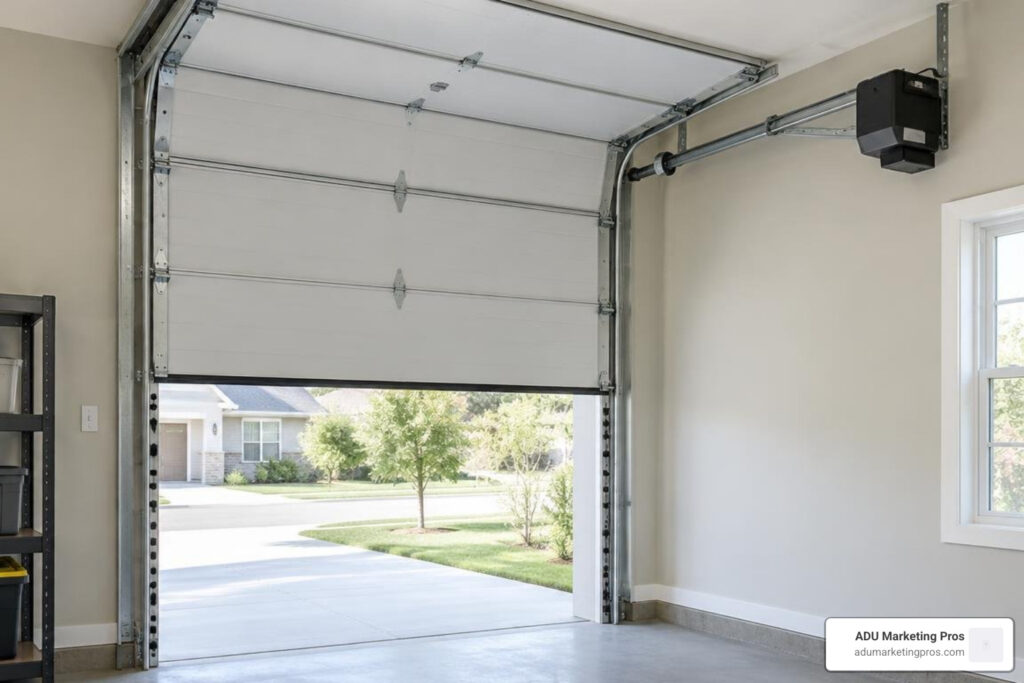
High Lift Garage Door Conversion Cost: 2026 Price Snapshot
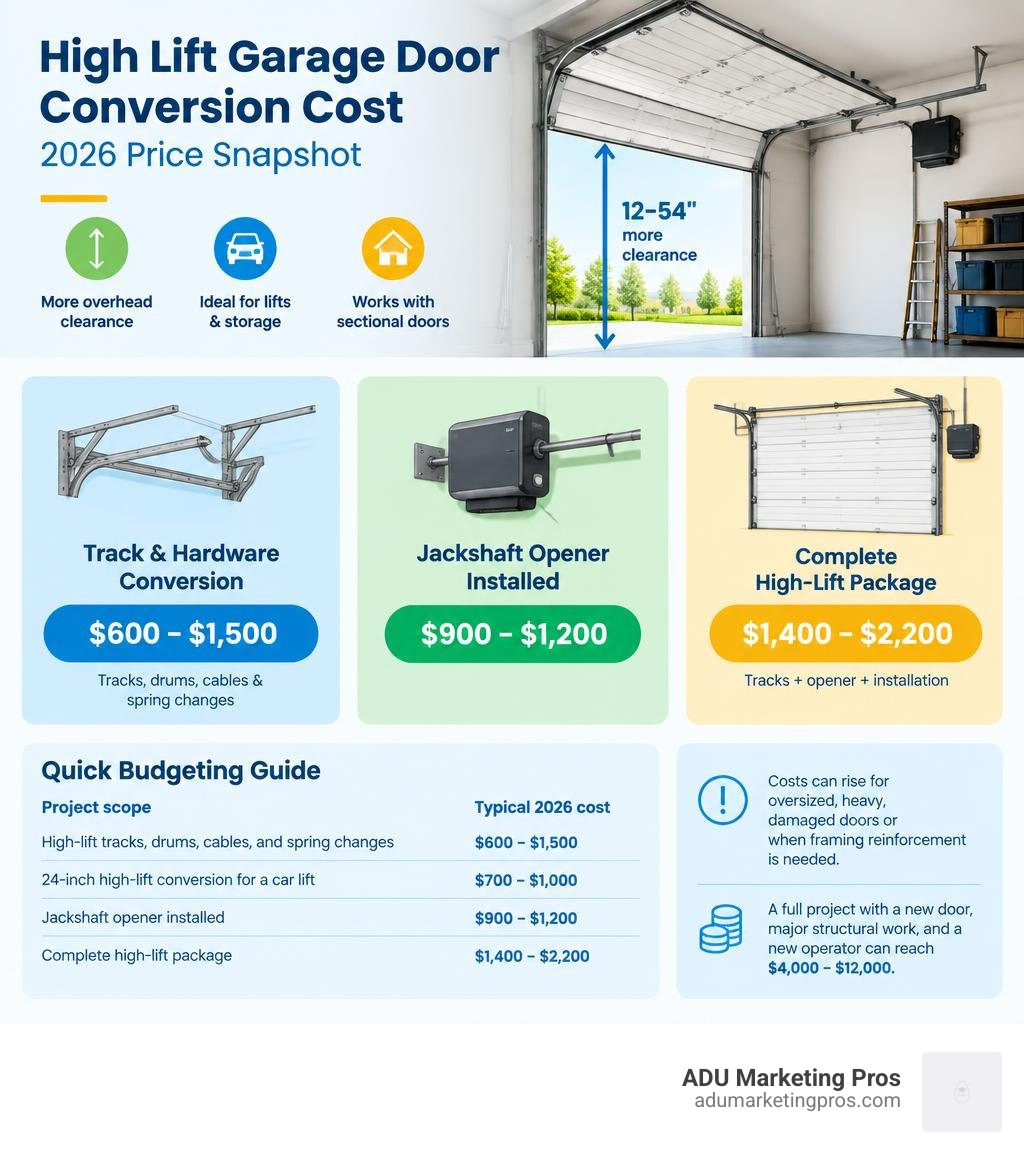
A high lift garage door conversion cost typically ranges from $600 to $1,500 for the track, spring, and hardware conversion alone. When factoring in a required wall-mounted direct-drive jackshaft opener, the typical turn-key installed package ranges from $1,400 to $2,200 per door.
For homeowners seeking to maximize their usable vertical headroom, convert an underutilized garage bay into a functional automotive workshop, or install a 2-post or 4-post car lift, understanding the comprehensive pricing framework is essential. The high-lift system fundamentally redesigns how the garage door tracks guide the door upward, moving panels tightly against the wall rather than sweeping immediately across valuable vertical airspace. Depending on your garage ceiling height and door dimensions, a high-lift conversion can reclaim between 12 and 54 inches of clear overhead space.
2026 High Lift Conversion Pricing Summary
| Project Scope & Hardware Components | Average Material Cost | Professional Labor | Total Estimated Cost |
|---|---|---|---|
| Basic High-Lift Hardware Kit (Tracks, Drums, Cables) | $250 – $450 | $350 – $650 | $600 – $1,100 |
| Complete Track, Tapered Drums & High-Cycle Torsion Springs | $400 – $700 | $400 – $800 | $800 – $1,500 |
| 24-Inch High-Lift Conversion for Car Stacking Lift | $450 – $650 | $350 – $550 | $800 – $1,200 |
| Wall-Mounted Direct-Drive Jackshaft Opener Installed | $500 – $750 | $300 – $450 | $800 – $1,200 |
| Full Package (High-Lift Hardware, Springs & Jackshaft Opener) | $900 – $1,400 | $500 – $800 | $1,400 – $2,200 |
| Premium Heavy-Duty Package (Insulated/Custom Wood Door) | $1,500 – $2,500 | $700 – $1,200 | $2,200 – $3,700 |
| Structural Modifications, Framing Header & Electrical Addition | $400 – $1,200 | $500 – $1,500 | $900 – $2,700 |
The overall price can rise when a door is unusually heavy, structurally compromised, or requires extensive rough framing reinforcement before new track profiles can be anchored safely. If your project involves a brand-new insulated commercial-grade door, major structural ceiling or joist modifications, custom electrical branch circuits, and a high-horsepower smart operator, total expenditures can range from $4,000 to $12,000.
A high-lift system works exclusively with modern sectional doors rather than vintage one-piece tilt-up doors or commercial rolling steel shutters. Because the door climbs vertically along the wall before transitioning to the ceiling, the central ceiling space remains completely unobstructed by traditional overhead motor rails.
If you are evaluating how this project compares with other structural improvements, reviewing the broader garage door conversion cost helps you weigh simple mechanical track modifications against full wall replacements. Similarly, assessing your overarching garage conversion cost or budgeting for the cost to convert garage into master suite will clarify whether optimizing your ceiling clearance or transforming the entire footprint provides the highest return on investment.
Understanding High Lift Conversions: Mechanics and Space Gains
In standard residential construction across California and nationwide, garage door tracks are installed with a rapid 90-degree curve positioned approximately 12 to 15 inches above the door opening header. While this standard-lift configuration is economical and fits low-ceiling homes with 8-foot or 9-foot plates, it suspends horizontal door sections roughly 7 to 8 feet off the finished floor. This creates an artificial ceiling across the entire depth of the garage, cutting usable room volume in half and eliminating the opportunity to store tall recreational vehicles, install mezzanine shelving, or mount a vehicle lift.
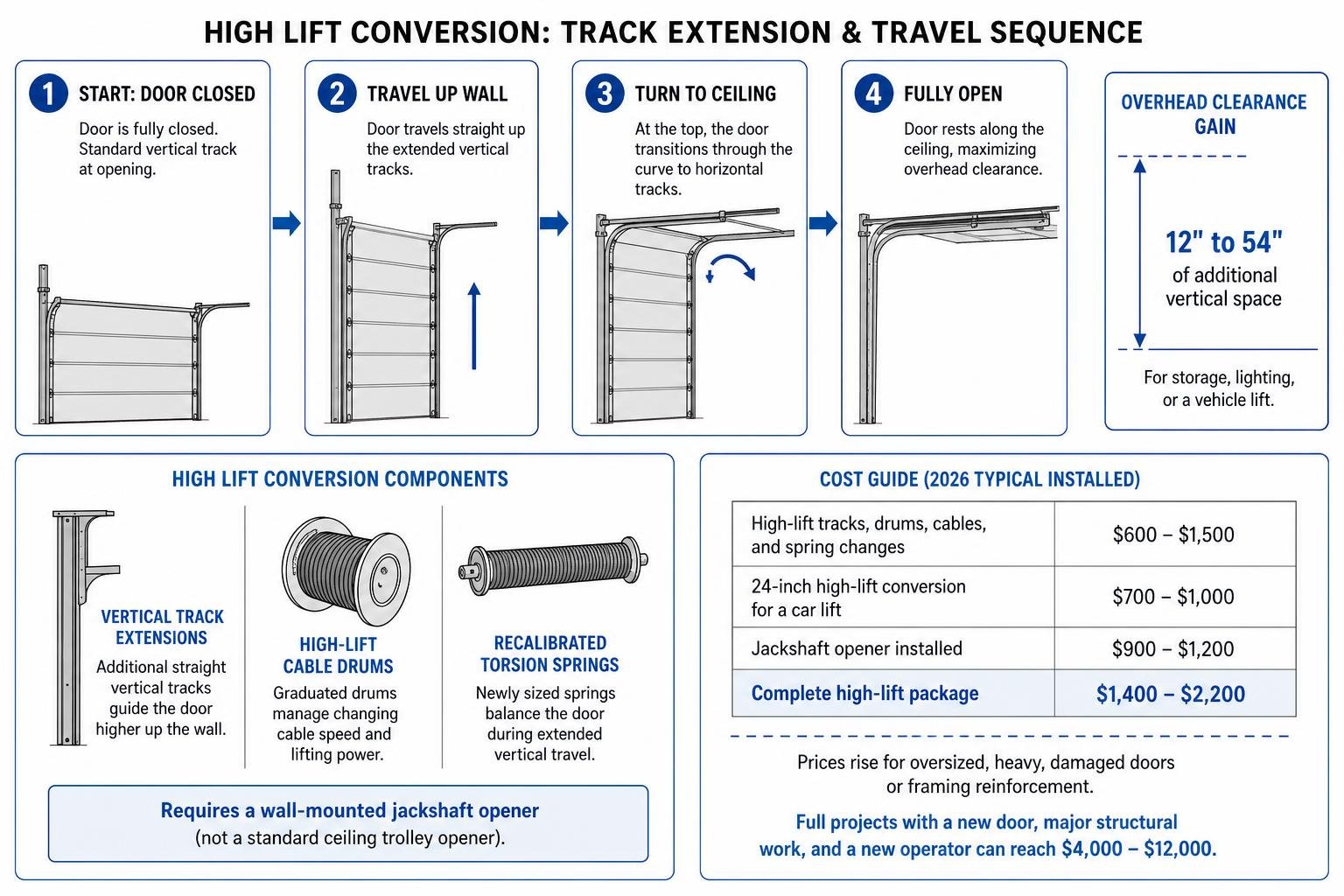
A high lift conversion completely restructures track geometry. By integrating straight vertical track extensions, the door panels travel upwards along the interior garage wall before turning backward toward the ceiling, allowing you to reclaim valuable cubic footage.
Core Mechanical Components of a High Lift System
Converting a garage door to a high-lift configuration involves replacing or upgrading several interconnected mechanical assemblies:
- Vertical Track Extensions: Heavy-gauge galvanized steel tracks are added to the existing vertical runs. These are secured into solid wall studs using heavy structural angle brackets to prevent deflection under operational loads.
- Graduated High-Lift Cable Drums: In a standard setup, cable drums are flat cylinders. In a high-lift configuration, the system requires specialized tapered cable drums. These drums feature a spiraled, graduated diameter that alters cable pickup speed and mechanical torque as the door sections transition between vertical and horizontal positions.
- Recalibrated Torsion Springs: Because the door sections remain vertical for a longer travel distance, the counterbalance dynamics shift significantly. Standard springs cannot safely lift or hold a high-lift door. New oil-tempered or galvanized torsion springs must be calculated using exact door weights, track radius, and the high-lift dimension.
- Heavy-Duty Lift Cables and Solid Torsion Shafts: Standard 1/8-inch 7×7 aircraft cables are replaced with longer, thicker 7×19 strand galvanized or stainless steel cables. Depending on door weight, hollow torsion tubes may be swapped for 1-inch solid cold-rolled steel shafts with keyed couplings to handle elevated torsional torque.
- Adjustable Top Roller Brackets: Extended commercial-grade top fixtures are required so the upper door section seals tightly against the perimeter weatherstripping when closed, while swinging freely outward into the track radius upon opening.
Comparing Standard Lift, High Lift, and Full Vertical Lift Configurations
Selecting the correct lift geometry depends on finished ceiling height, roof pitch, unobstructed wall space, and your functional goals.
- Standard Lift Systems: Standard assemblies use a tight 12-inch or 15-inch radius curve, turning the door horizontal immediately above the header. They are ideal for ceilings under 9 feet but monopolize the upper half of the garage.
- High Lift Systems: Built for ceilings between 10 and 14 feet, high-lift systems route vertical tracks higher up the wall before curving horizontally just below the ceiling joists. For detailed hardware dimensions and track layout schematics, refer to the DDM Garage Doors conversion guide.
- Full Vertical Lift Systems: Used in commercial service bays, agricultural barns, or residential garages with ceiling heights of 15 feet or more, full vertical tracks eliminate horizontal ceiling tracks entirely. The door travels straight up the wall and parks flat above the rough opening.
- Roof Pitch (Follow-the-Roofline) Systems: Designed for cathedral, vaulted, or sloped ceilings, follow-the-roofline tracks angle the horizontal rails to match the slope of the roof trusses, preserving headroom along the rake of the ceiling.
| Lift Configuration | Minimum Ceiling Height Required | Track Travel Path | Best Suited Applications |
|---|---|---|---|
| Standard Lift | 8.5 to 9.5 feet | Immediate 90-degree turn above header | Compact garages, standard sedan parking |
| High Lift | 10.0 to 14.5 feet | Extended vertical climb before 90-degree curve | Car storage lifts, high-bay lighting, workshops |
| Full Vertical Lift | 15.0+ feet | 100% vertical travel along the wall | Commercial auto bays, tall RV storage garages |
| Roofline Slope Lift | 10.0+ feet (sloped) | Vertical climb followed by pitched angle track | Garages with vaulted ceilings or open scissor trusses |
The Physics of High-Lift Counterbalance Systems
The operation of any sectional overhead garage door relies on balanced counterbalance physics. When a door rests closed on the garage floor, 100% of its deadweight hangs from the lift cables. In a standard lift door, the moment the top section rounds the 90-degree curve, its weight transfers to the horizontal track hanger assembly, decreasing the load on the torsion springs.
In a high-lift configuration, the door panels remain suspended vertically much longer. If standard flat drums were used, the door would feel extremely heavy and difficult to open off the floor, but once the panels reached the high horizontal tracks, the spring tension would overpower the door, causing it to shoot upward violently and jump the cables. High-lift cable drums counteract this imbalance with a tapered spiral step. The smaller diameter at the bottom of the drum provides high mechanical advantage when lifting deadweight off the floor, while the expanding spiral diameter balances cable take-up speed as panels turn horizontally.
Complete High Lift Garage Door Conversion Cost Breakdown
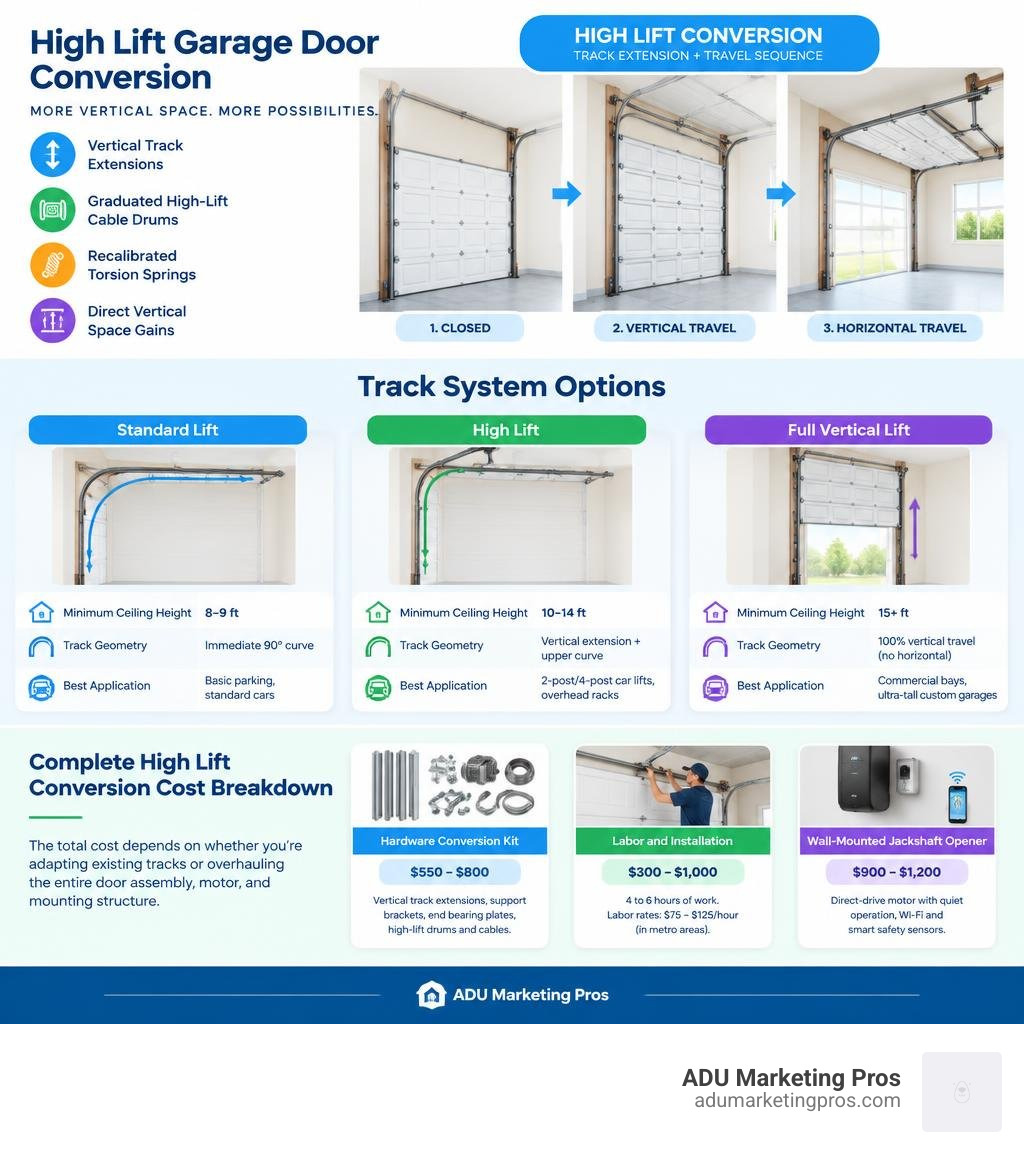
The total cost to complete a high lift conversion is determined by whether you are modifying existing tracks and installing new springs, or replacing the entire door assembly, motor, electrical wiring, and framing structure.
Detailed Line-Item Project Breakdown
- Hardware Conversion Kit ($550 – $800): Includes commercial-grade vertical track extensions, structural mounting angle brackets, end bearing plates, high-lift tapered drums, and extended high-strength aircraft cables.
- High-Cycle Torsion Springs ($150 – $350): Custom-calculated oil-tempered or galvanized torsion springs engineered specifically for the door’s exact weight, width, and high-lift travel measurement.
- Direct-Drive Wall-Mounted Jackshaft Opener ($900 – $1,200 installed): Because high-lift tracks elevate the door past the location of a traditional ceiling-mounted trolley, a side-mounted motor (such as the LiftMaster 8500W or 98022 series) is installed on the torsion bar. This includes an automated deadbolt lock, smart phone connectivity, safety sensors, and wall control panel.
- Professional Labor and Calibration ($300 – $1,000): A complete conversion typically requires 4 to 6 hours for a certified two-person garage door installation crew. In high-demand metropolitan markets such as the San Francisco Bay Area, Los Angeles, and Seattle, labor rates range from $85 to $145 per hour.
- Rough Framing and Header Reinforcement ($150 – $450): If wall studs do not align with upper track mounting positions, contractors install structural 2×6 timber or heavy-gauge steel angles to secure the upper assembly.
- Electrical Outlet Installation ($150 – $350): Jackshaft operators require a grounded 115V outlet within 6 feet of the torsion shaft. If no front header outlet exists, an electrician must run a new circuit.
When evaluating larger functional improvements to your property, compare these line items with overall cost of garage remodel projections to prioritize your budget.
Estimating Conversion Costs by Door Dimension and Material
Door weight and size directly dictate the steel gauge, spring wire diameter, shaft strength, and installation complexity:
- Single Car 8×7 or 9×7 Steel Door ($1,200 – $1,600 installed): Lighter weight allows for single torsion spring assemblies, standard 14-gauge track steel, and straightforward 3-to-4-hour installation.
- Standard Double 16×7 Steel Door ($1,400 – $2,200 installed): The most common residential configuration; requires dual torsion springs, 2-inch heavy-gauge commercial tracks, and heavy-duty center support plates.
- Oversized Double 16×8 or 18×8 Door ($1,800 – $2,800 installed): Increased height and surface area demand custom high-IPPT springs, 1/4-inch aircraft cables, and reinforced intermediate track braces.
- Custom Solid Wood, Glass, or Insulated Composite Doors ($2,500 – $4,500+ installed): Heavy designer doors weighing between 350 and 600+ pounds require 3-inch commercial tracks, solid steel keyed torsion shafts, heavy-duty commercial bearing assemblies, and structural reinforcement struts.
Primary Cost Variables and Technical Considerations
- Spring Engineering and Cycle Life: High-lift conversions require accurate Inch-Pounds Per Turn (IPPT) spring calculations. Standard 10,000-cycle springs are common, but upgrading to high-cycle springs (25,000 to 50,000 cycles) adds $100 to $200 while tripling operational lifespan.
- Smart Jackshaft Opener Selection: Direct-drive motors eliminate ceiling vibration. High-end models with integrated battery backup, automatic deadbolts, and security cameras represent the upper end of the $900 to $1,200 price range.
- Framing and Structural Stud Alignment: If garage walls lack backing studs at the upper track mounting points, technicians must install framing anchors. For additional clearance guidelines and technical structural tips, review the Pitstop Pro high lift guide.
- Obstacle Relocation: Existing ceiling obstacles—such as HVAC supply ducts, gas lines, lighting fixtures, or overhead plumbing—may require relocation if they intersect the new elevated track travel zone.
DIY vs. Professional High Lift Conversion
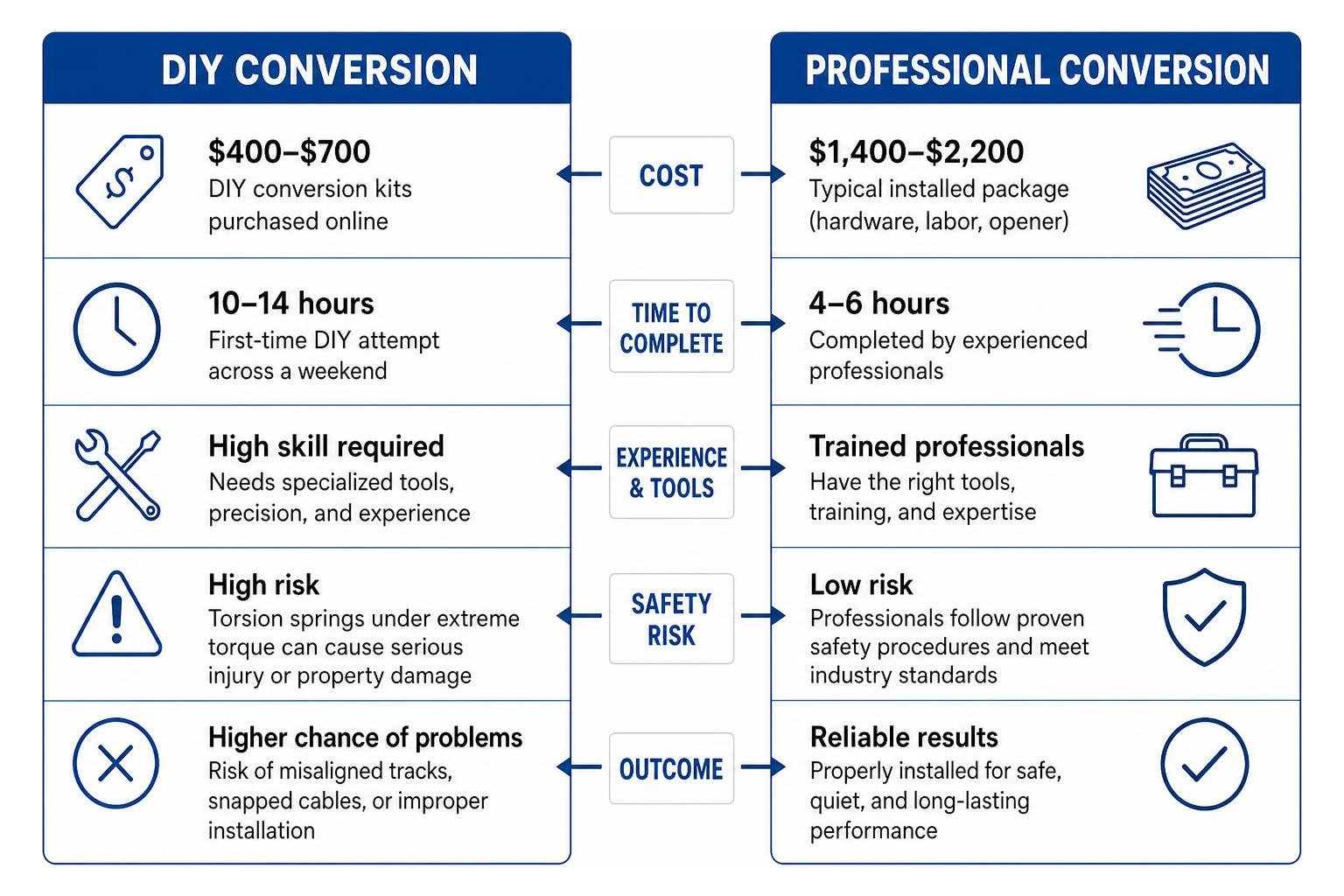
While high-lift hardware packages can be purchased online for $400 to $700, undertaking a high-lift track and spring conversion as a do-it-yourself project is strongly discouraged due to significant mechanical hazards.
Mechanical Risks and Safety Dangers of DIY Torsion Work
Torsion springs operate under hundreds of foot-pounds of stored mechanical energy. Releasing or winding these springs incorrectly can cause severe injuries, bone fractures, or deep lacerations. Common DIY hazards include:
- Improper Tool Usage: Using makeshift tools like screwdrivers, rebar, or adjustable pliers instead of hardened solid steel winding bars frequently leads to slippage and violent spring unwinding.
- Incorrect Spring and Drum Calculations: Ordering incorrect drum tapers or improperly matched spring wire diameter results in an unbalanced door that either crashes into the floor or flies off the upper track stops.
- Misaligned Track Geometry: If vertical track extensions are out of plumb by even 1/8 of an inch, door rollers will bind in the tracks, causing cable separation and panel buckling.
- Cable Snapping and Panel Drops: Releasing torsion cable tension without securing the door panels with locking vice-grip clamps can cause the entire sectional door to drop instantly.
Professional Installation Protocol
A certified garage door technician completes a conversion in 4 to 6 hours by following a systematic installation procedure:
- Inspection and Weight Measurement: The technician disconnects the existing door to measure its exact deadweight using an analog scale, verifying spring calculations against high-lift drum specifications.
- Safe Spring De-Tensioning: Using matched winding bars and locking clamps, the technician safely unwinds existing springs and removes old hardware.
- Structural Wall Framing: Structural angle brackets are secured into wall studs with heavy lag screws to support extended vertical loads.
- Track Extension and Laser Alignment: Vertical track extensions are positioned and aligned using precision levels to guarantee smooth travel.
- Torsion Assembly Installation: The torsion shaft, high-lift tapered drums, center bearing plate, end bearings, and newly calculated high-cycle springs are mounted and locked in place.
- Spring Winding and Neutral Balancing: Springs are wound to exact turn counts, and the door is tested across multiple travel points to confirm neutral balance.
- Jackshaft Opener Mounting: The side-mounted jackshaft operator is attached directly to the torsion tube, travel limit switches are programmed, and auto-reverse photo eyes are aligned.
High Lift Conversions Compared to Full Garage Transformations
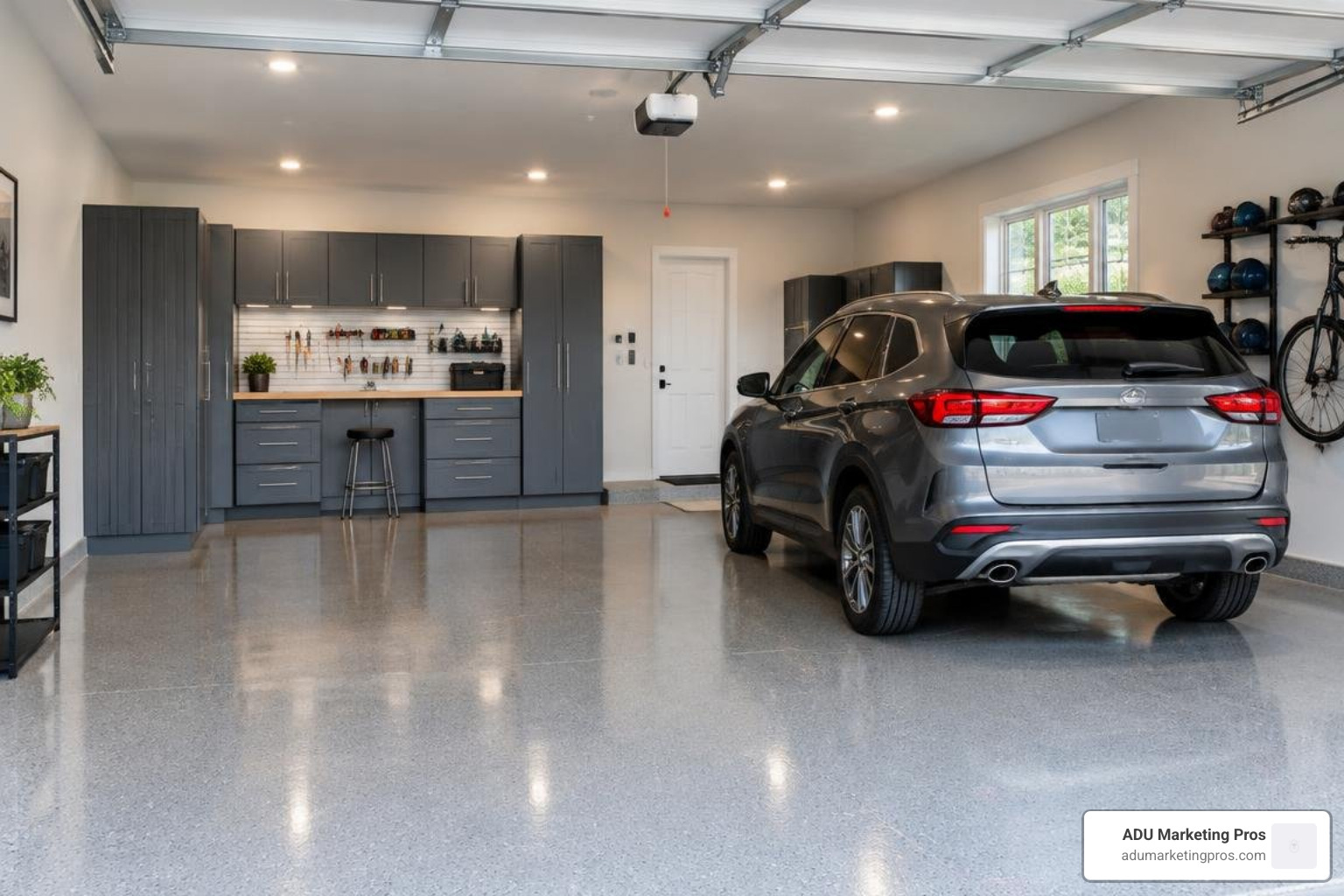
When evaluating space planning options, compare track modifications with complete room remodeling. If you are exploring full floor plan adjustments, our detailed guide to garage conversion cost provides extensive budgeting context. For homeowners considering converting the garage into conditioned living space and permanently framing over the door, understanding how much does it cost to turn a garage door into a wall helps you decide between mechanical ceiling optimization and full residential framing.
Long-Term Value and Return on Investment
Investing between $1,400 and $2,200 into a professional high lift garage door conversion provides substantial functional utility, safety improvements, and real estate appraisal value:
- Automotive Lift Compatibility: A high-lift track setup allows car enthusiasts, hobbyists, and professional mechanics to install a 2-post or 4-post parking lift. This effectively doubles indoor vehicle parking capacity within an existing single-bay footprint without the need for expensive structural additions.
- Ceiling and Overhead Storage Maximization: Reclaiming up to 4.5 feet of upper vertical clearance allows homeowners to install heavy-duty overhead mezzanine racks, suspended shelving, or elevated kayak and bicycle storage systems without interfering with door travel.
- Ultra-Quiet Operation: By replacing central ceiling drawbars and trolley motors with a direct-drive jackshaft motor mounted on the wall, ceiling vibration and noise transfer are virtually eliminated. This creates a quiet indoor environment for living rooms or bedrooms situated directly above the garage.
- Enhanced Resale Appeal: In high-density property markets like the San Francisco Bay Area, Silicon Valley, Los Angeles, and Seattle, maximizing garage functional storage and vehicle parking utility adds tangible appeal for prospective buyers and automotive collectors.
- Open Workshop Lighting and Climate Control: Removing horizontal tracks and ceiling rails leaves overhead space clear for high-bay LED shop fixtures, ceiling ventilation fans, overhead radiant heaters, and air circulation ductwork.
To see how full garage renovations impact overall property valuations and lifestyle flexibility, review our complete garage conversion cost guide for comprehensive financial comparisons.
Frequently Asked Questions About High Lift Garage Door Conversions
Can I keep my existing ceiling-mounted garage door opener?
No. Traditional ceiling trolley openers utilize a central drawbar rail that pulls the top door section horizontally immediately above the door header. In a high-lift configuration, the door climbs vertically along the wall, which would cause the top door panel to collide with a ceiling drawbar. High-lift systems require a wall-mounted direct-drive jackshaft operator attached directly to the torsion tube.
How much vertical ceiling clearance will I actually gain?
Most residential conversions yield between 12 and 54 inches of extra vertical clearance. You can calculate your maximum available lift using this standard formula:
$$\text{High Lift Dimension} = \text{Ceiling Height} – \text{Door Height} – 12\text{ inches}$$
For example, if your garage features a 12-foot (144-inch) ceiling and an 8-foot (96-inch) tall door, you have roughly 36 inches of available high-lift travel before accounting for the upper horizontal track profile.
Will a high lift conversion work on any garage door?
High-lift conversions work on standard multi-panel sectional garage doors constructed of steel, aluminum, wood, or composite materials. They are not compatible with one-piece tilt-up canopy doors or commercial roll-up steel curtain doors.
Can I reuse my existing torsion springs when converting to high lift?
No. Reusing old standard-lift torsion springs on a high-lift track setup is dangerous and mechanically impossible. Because high-lift doors remain vertical for a longer travel distance and use tapered cable drums, the counterbalance dynamics require newly calculated springs with specific wire diameter, inside diameter, and coil length.
How often do high-lift springs and cables require maintenance?
Because high-lift assemblies place elevated rotational stress on the torsion shaft and cable drums, you should lubricate tracks, rollers, and torsion springs every 6 months with a non-silicone garage door lubricant. Torsion springs and cables should undergo professional balance and safety inspections once a year.
Conclusion
A high lift garage door conversion is one of the most cost-effective and practical ways to reclaim vertical headroom in a residential garage. For an investment of $1,400 to $2,200 for a professionally installed track, spring, and jackshaft opener package, you can recover up to 4.5 feet of usable overhead clearance for car stacking lifts, mezzanine storage platforms, and high-output workshop lighting.
Whether you are upgrading a suburban workshop in Sunnyvale or expanding vehicle capacity in San Diego, evaluating your ceiling height, door condition, and spring requirements is the first step toward getting maximum utility out of your space. To explore comprehensive cost projections across custom garage renovations and structural builds, use our interactive garage conversion cost calculator to plan your next home project with confidence.