
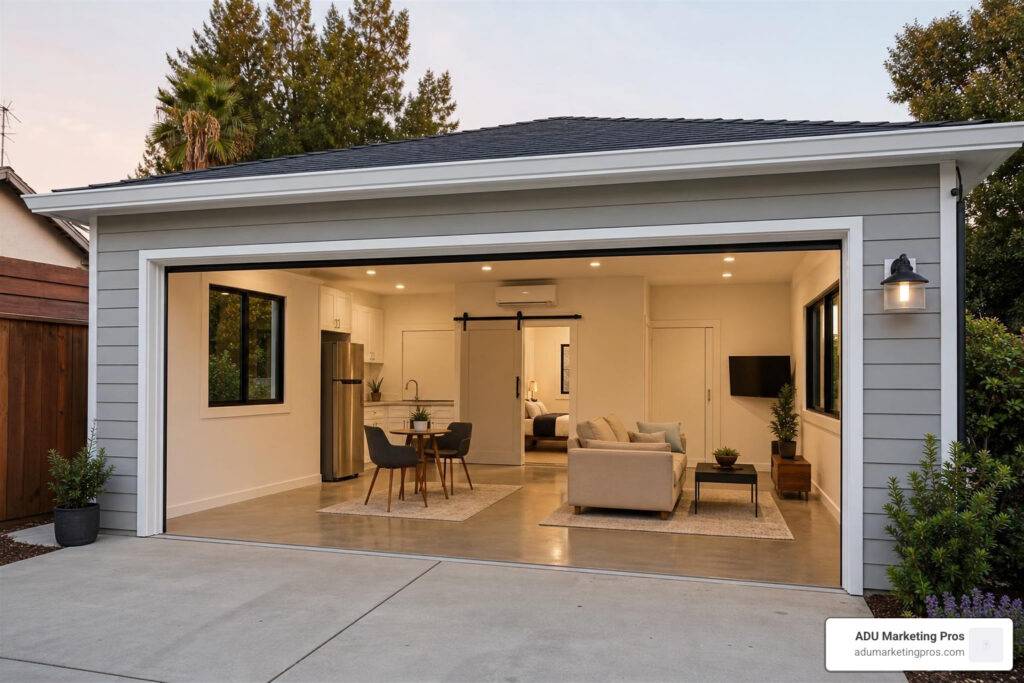
Why a Prefab Granny Flat in a Double Garage Is One of the Smartest Property Moves You Can Make
A granny flat in a double garage prefab setup is one of the fastest-growing solutions for homeowners who want to add livable space without the cost or complexity of a full new build.
Quick answer — here’s what you need to know:
| Question | Answer |
|---|---|
| What is it? | A prefabricated dwelling unit placed above, beside, or converted from an existing double garage |
| Typical size | 35–45m² (double garage footprint) |
| Cost range | $12,000–$159,900+ depending on approach |
| On-site install time | As little as 1–2 days for modular prefab units |
| Does garage space count toward the 60m² granny flat limit? | No — garages are classified as non-habitable space |
| Do you need permits? | Yes, almost always — planning and building approval required |
A double garage gives you a ready-made footprint of roughly 35–45m². That’s enough space for a fully functional studio or one-bedroom flat. And because garages are classified as non-habitable space, that floor area doesn’t eat into your 60m² granny flat allowance.
The prefab approach takes this further. Instead of a lengthy on-site build, modular units can be delivered and installed in days — not months.
This guide walks you through everything: sizes, costs, regulations, construction timelines, and the key differences between converting an existing garage and dropping in a prefab unit.
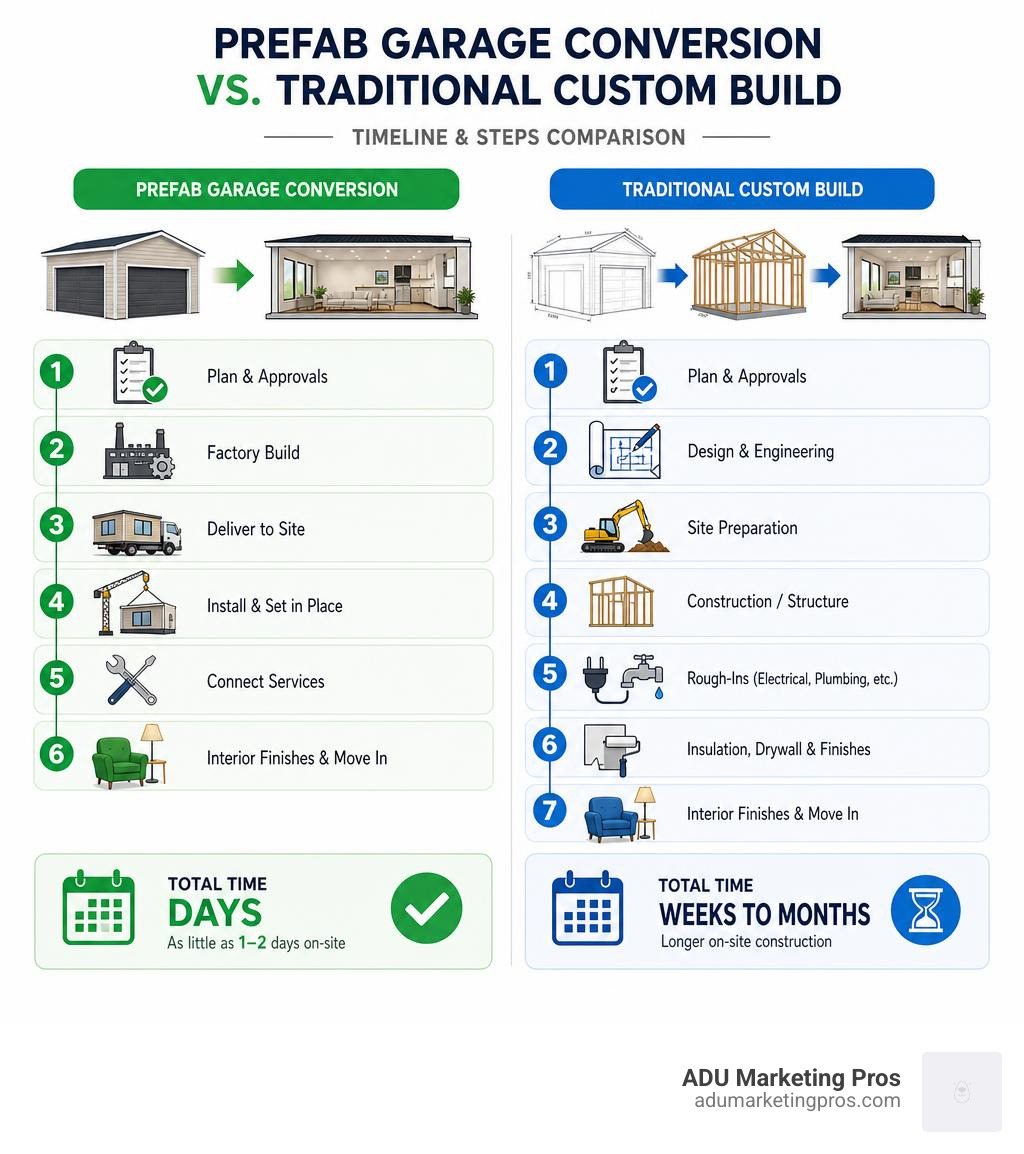
Granny flat in double garage prefab glossary:
What is a Granny Flat in Double Garage Prefab?
When we talk about a granny flat in double garage prefab, we are looking at two distinct but highly efficient modern building methods. The first is converting an existing, site-built double garage using prefabricated interior wall panels or modular drop-in kits. The second—and increasingly popular—method is installing a completely new, prefabricated two-story structure that features a double garage on the ground floor and a stylish, fully independent apartment (accessory dwelling unit, or ADU) on the second level.
Unlike traditional, stick-built construction where contractors spend months sawing, hammering, and tracking mud across your lawn, a prefab unit is built in a climate-controlled factory. This off-site manufacturing process ensures tight quality control, precise insulation values, and minimal waste.
From a structural standpoint, integrating a granny flat with a garage is an incredibly efficient use of your property’s footprint. In places like Los Angeles, San Diego, and the San Francisco Bay Area, backyard space is at a premium. By combining parking (or storage) with housing, you maximize your land-use ratio.
A standard double garage footprint typically measures between 35 to 45 square meters (roughly 376 to 484 square feet). Because garages are legally classified as non-habitable spaces, they do not count against your state or local secondary dwelling size limits when attached to a new build. This means you can build a spacious, detached double-car garage and place a fully permitted granny flat right next to or on top of it, without sacrificing any of your allowable living area. For a deeper dive into how these conversions work structurally, check out our guide on From Cars to Comfort: Turning Your Garage into a Granny Flat.
Typical Sizes, Layouts, and Floor Plans
Designing a small space requires a bit of architectural magic. You want to avoid the “hallway feel” and create a bright, open environment where every square inch serves a purpose.
A double garage footprint is surprisingly versatile. At 35 to 45 square meters, you have more than enough room to design a comfortable living space. If you are opting for a larger panelized kit, you can even expand up to 1,200 square feet depending on your local zoning limits.
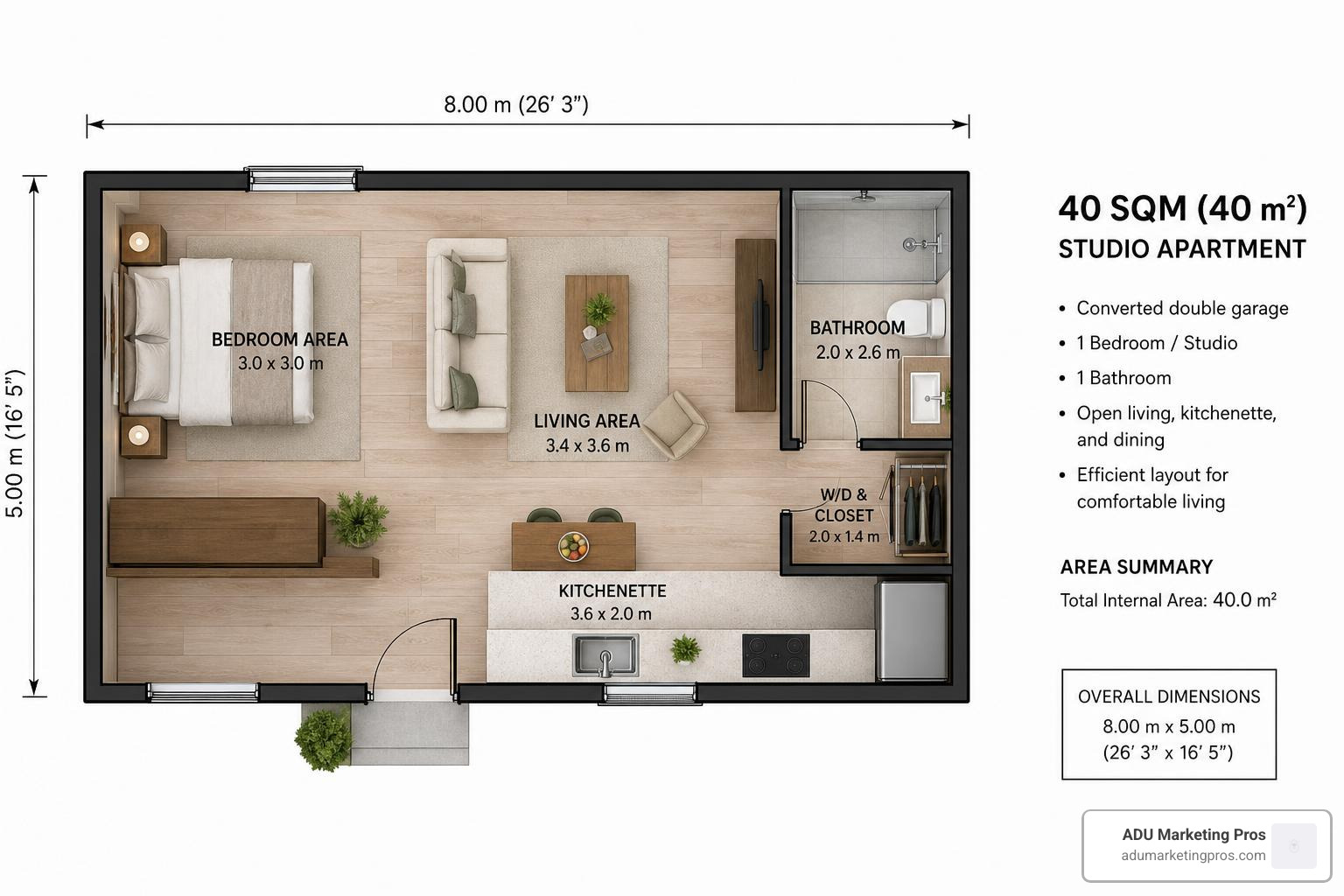
Designing a Granny Flat in Double Garage Prefab Layout
Depending on who will be living in the space—whether it is an aging parent, a returning college grad, or a high-paying tenant—there are three primary layout styles we recommend:
- The Open-Plan Studio: Best for short-term rentals, guest suites, or home offices. This layout eliminates interior walls between the bedroom and living area to maximize the sense of light and space. A compact bathroom and a single-wall kitchenette complete the loop.
- The Classic One-Bedroom: Perfect for long-term tenants or independent family members. This design uses a dedicated wall to separate the bedroom from the main living and kitchen zone. By separating the spaces, it feels like a true, independent home. You can explore various layout options through GRANNY FLAT PLANS | Ritz ADU Design Build – San Diego CA to see how these separation lines work in real-world dimensions.
- The Dual-Purpose Office & Guest Suite: If you want to retain some garage utility, you can convert half of the garage into an office/guest space while keeping the other half for parking. For tips on how to pull this off, read The Ultimate Guide to Converting Half Your Garage: Ideas, Permits, and Practical Steps.
For those looking at larger, detached options that span beyond the basic garage footprint, panelized plans like the Granny Units 600 – 1,200 ft² – California Precut Homes and Granny Flat Panelized ADU Kits 600 to 1200 sq ft | PMHI offer fantastic pre-engineered frameworks designed to comply with local California building codes.
Prefab Modular Kits and Expandable Options
If speed is your number-one priority, modular kits are the way to go. These units are built almost entirely in a factory and shipped to your site.
For instance, the Modular Granny Flat 62sqm Dual-Module – Prefab Granny Flat Kit | GrannyFlatKits features an innovative T-shaped layout that naturally separates the living zone from the bedroom, creating an incredibly private and livable flow.
If you have tight backyard access in neighborhoods like Sunnyvale or Palo Alto, you might want to consider an expandable model. The Expandable Granny Flat Kit – Configure Your Prefab Granny Flat Online is a brilliant piece of engineering. It ships as a compact container and literally unfolds on-site in a matter of hours, giving you a ready-to-go shell with minimal site disruption. For properties where privacy is paramount due to close neighboring houses, a specialized option like the Prefab Granny Flat with Privacy 48sqm – Variant D Modular Kit | GrannyFlatKits balances solid, insulated wall panels with strategic glazing to ensure natural light without making you feel like you are living in a fishbowl.
Cost Comparison: Prefab vs. Traditional Conversion
Let’s talk numbers. Budgeting for a granny flat in double garage prefab project depends heavily on whether you are converting an existing structure or building a brand-new prefab garage-with-apartment combo from the ground up. Understanding these financial dynamics is crucial before breaking ground.
Converting an existing double garage is generally the most budget-friendly path because the foundation, framing, and roof are already in place. However, upgrading that structure to meet residential living codes can still incur significant costs. For example, you may need to pour a self-leveling concrete topper to raise the floor, add moisture barriers, and structurally reinforce the roof rafters to accommodate ceiling drywall and insulation. On the other hand, buying a brand-new prefab two-story garage shell gives you a pristine, engineered structure, but you will need to factor in the cost of the foundation, delivery, and interior finishing.
| Project Type | Average Cost (Shell Only) | Est. Turnkey Finish Cost | Key Variables |
|---|---|---|---|
| Existing Double Garage Conversion | N/A | $12,000 – $100,000+ | Plumbing proximity, structural retrofitting, insulation needs |
| Prefab 2-Car Garage Shell (No Loft) | $43,000 – $76,000 | $80,000 – $120,000 | Concrete slab, local delivery fees, utility hookups |
| 2-Story Prefab Garage with Apartment Shell | $65,000 – $112,000 | $150,000 – $250,000+ | Electrical panel upgrade, second-story plumbing, HVAC |
| Premium Turnkey Modular ADU Kit | $124,900 – $159,900+ | Included | Site prep, crane rental, local municipal utility fees |
Key Cost Drivers to Keep in Mind
When planning your budget, several hidden expenses can quickly alter your bottom line:
- Utility Trenching: Running sewer, water, and electrical lines from the primary residence to the garage can cost anywhere from $50 to $150 per linear foot depending on the soil type and distance.
- Electrical Panel Upgrades: Most older homes have a 100-amp or 150-amp main panel. Adding a fully equipped granny flat with an electric range, mini-split HVAC, and water heater usually requires upgrading the main service panel to 200 amps, which costs between $3,000 and $6,000.
- Foundation Retrofitting: If you are building a second story over an existing garage, the existing slab and footings must be verified by a structural engineer. If they do not meet modern load-bearing standards, underpinning the foundation can add $10,000 to $25,000 to your budget.
To get a highly accurate estimate tailored to your backyard, you can use our interactive Garage Conversion Cost Calculator or read through our comprehensive breakdown on How Much Do Garage Conversions Cost?.
For those located in specific high-cost areas like Northern California, local labor and permitting fees can sway these numbers significantly. Check out the Cost to Build a Granny Flat: San Jose to see exactly how municipal fees, school district impact fees, and local utility hookups affect your bottom line.
Building Regulations, Permits, and Zoning Rules
Before you order a shiny new prefab kit or hire a contractor to tear up your garage floor, we must address the legal elephant in the room: zoning and permits.
In California, ADU laws have become incredibly friendly over the last few years, but local municipalities in the San Francisco Bay Area, Los Angeles, and San Diego still have strict guidelines regarding structural safety, setbacks, and height limitations.
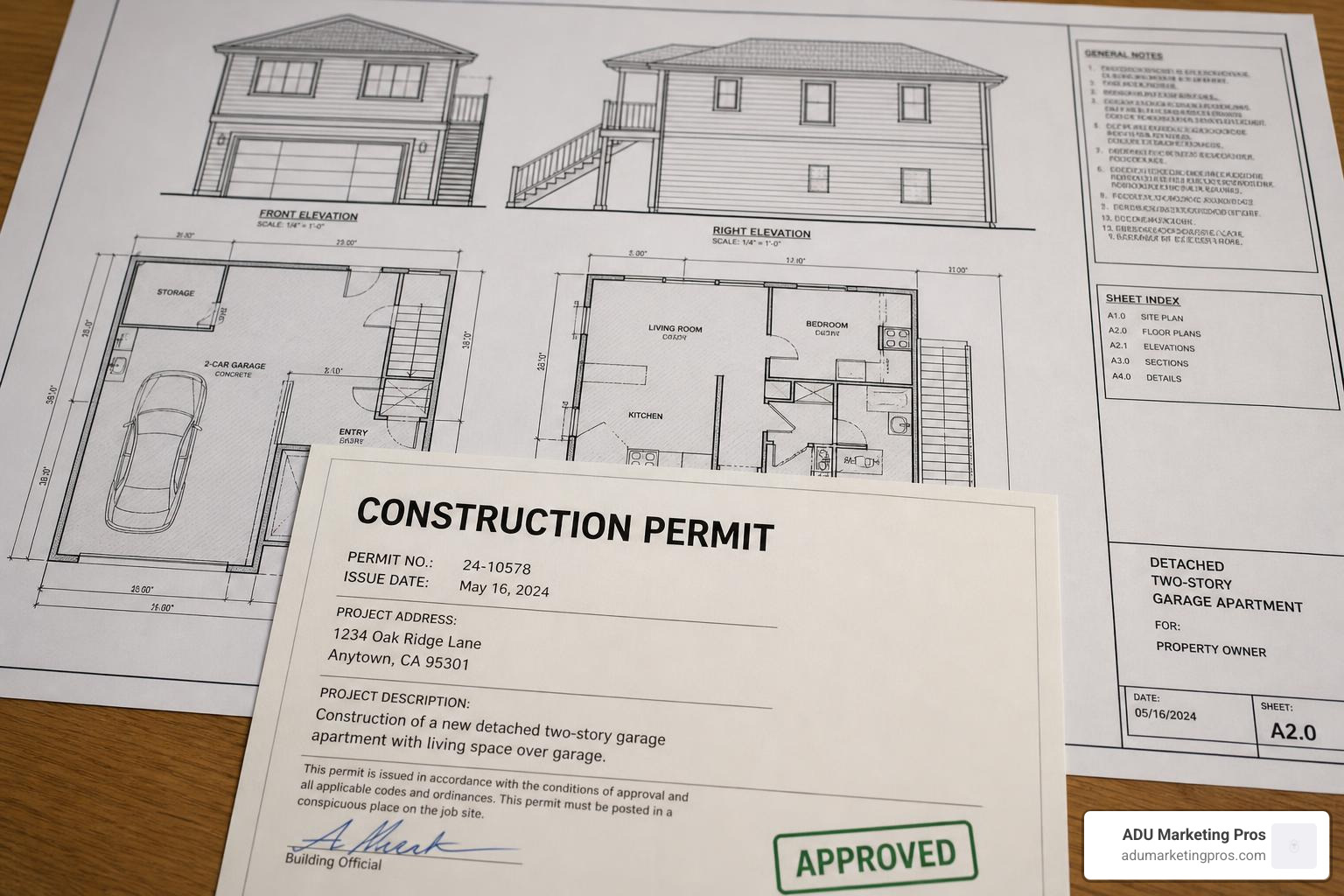
Here are the key regulatory hurdles you must clear:
- Setbacks: Under California state law, if you are converting an existing garage into an ADU, you are generally exempt from local setback requirements (you can keep the existing footprint even if it sits right on the property line). However, if you are building a new detached prefab garage with a granny flat on top, you must typically maintain a minimum setback of 4 feet from the side and rear property lines.
- Height Limits: Two-story prefab garage apartments are fantastic, but they must comply with local height ceilings. Most California jurisdictions allow detached ADUs to reach up to 18 or 20 feet if they are close to public transit or built above an existing garage, but you must verify this with your local planning department.
- Parking Requirements: Historically, converting a garage meant you had to replace those lost parking spots elsewhere on your property. Thankfully, under current California ADU law, if your property is within a half-mile of public transit, you are not required to replace the garage parking spaces.
- Fire Separation: Because you are parking vehicles (which contain flammable fuel) beneath or adjacent to a living space, building codes require strict fire barriers. You will need to install 5/8-inch, Type X fire-rated drywall on the garage ceiling and walls to protect the living space above.
Understanding Title 24 and Energy Compliance
In California, any new habitable space must comply with Title 24 Energy Standards. This means your prefab granny flat must meet strict requirements for insulation, window glazing, and HVAC efficiency.
- Solar Panels: Under current California building codes, newly constructed detached ADUs are technically required to have solar panels installed. However, if you are converting an existing garage, you are exempt from this requirement. If you are installing a prefab unit on top of a newly built garage, you may need to factor solar installation into your overall project timeline and budget.
- Mechanical Ventilation: To maintain healthy indoor air quality in highly insulated prefab units, you will need to install a continuous whole-house mechanical ventilation system, such as a heat recovery ventilator (HRV) or a high-efficiency exhaust fan.
Navigating these state-specific codes can be tricky, which is why we put together the ADU Garage Conversion California guide to help you stay compliant and avoid costly design mistakes.
Construction Timeline and Site Preparation
One of the biggest selling points of a granny flat in double garage prefab is the blazing-fast installation timeline. Traditional home additions can drag on for six months to a year, turning your backyard into a noisy, dusty construction zone. A prefab build, by contrast, shifts almost all of that disruption off-site.
Installing a 2-Storey Granny Flat in Double Garage Prefab
If you choose a two-story prefab garage with a loft or apartment, you might wonder how such a massive structure is transported down California’s busy freeways. The secret lies in innovative folding-roof and modular engineering.
Some manufacturers utilize unique raised-roof technology. The structure is built in the factory with the second-story floor joists, stairs, and walls pre-assembled, but the roof is engineered to fold flat during transport to comply with highway height limits. Once the modular delivery trucks arrive at your property in Menlo Park, San Jose, or Mountain View, a specialized crew uses a crane to lift the roof package. Within just 1 to 2 days, the main shell is fully erected, bolted down, and made completely weatherproof. For an idea of how these robust structures are delivered and configured, take a look at the Double Garage | Reliable Since 2007 options.
Utility Connections and Interior Finishing
While having a weatherproof shell up in 48 hours is incredibly exciting, you aren’t ready to move in just yet. The remaining timeline involves trenching for utilities and finishing the interior.
- Trenching for Sewer and Water: Your new granny flat needs to tie into your main home’s sewer lateral and water line. This involves digging a trench through your yard.
- Electrical Subpanel: A double garage conversion or new ADU will require its own electrical subpanel (typically 100 amps) to handle the kitchen appliances, lighting, and HVAC.
- Insulation and Drywall: Prefab walls are typically pre-insulated, but you will still need to complete the interior drywall, paint, flooring, and cabinetry.
To understand what happens during this crucial hand-off phase between the prefab delivery and your local contractor, read our step-by-step breakdown of the Garage Conversion to ADU process.
Pros and Cons of Prefab Garage Apartments
Deciding whether to go the prefab route or stick with a traditional site-built conversion is all about balancing your priorities. Let’s look at the honest pros and cons of choosing a prefab modular garage apartment:
The Pros
- Unmatched Speed: The on-site construction phase is cut down by up to 70%. While a traditional build can take 6 to 9 months of active construction in your backyard, a prefab shell can be erected and dried-in within a matter of days.
- Cost Predictability: Because the shell is built in a factory, you avoid the sudden “change orders” and material price spikes common with traditional builders. You know exactly what the unit costs before it leaves the factory floor.
- Superior Quality Control: Factory-built structures are framed on perfectly level jigs and kept dry throughout the entire build process, preventing mold, wood warping, and structural misalignments caused by weather exposure.
- Minimal Backyard Disruption: Your dogs, kids, and neighbors will thank you. The heavy construction, sawing, and framing are done off-site, meaning you only have to deal with contractors during the brief site prep and utility hookup phases.
- High Energy Efficiency: Prefab manufacturers utilize precision-cut materials and advanced sealing techniques, resulting in a tighter thermal envelope that lowers your monthly heating and cooling bills.
The Cons
- Access Limitations: If your backyard is blocked by giant oak trees, low-hanging power lines, or narrow alleyways, delivering a massive prefab module via crane might not be physically possible. A site visit by a transport specialist is mandatory before purchasing.
- Upfront Capital: Prefab manufacturers usually require significant deposits or full payment for the shell before shipping, whereas traditional builders let you pay in smaller milestones over time as work progresses.
- Design Constraints: While highly customizable, you must work within the manufacturer’s pre-engineered floor plans and shipping dimensions. If you want a highly irregular architectural shape, a custom site-built design may be your only option.
If you are still weighing these options, our Garage Conversion Apartment Ultimate Guide offers a deep dive to help you make the right call for your specific property layout.
Frequently Asked Questions about Garage Granny Flats
Can you build a granny flat on top of a garage?
Yes, absolutely! Building a granny flat on top of a garage is one of the best ways to preserve your backyard’s green space. However, it requires careful engineering. If you are building on top of an existing garage, a structural engineer must inspect the existing foundation and framing to ensure it can support the immense weight of a second story. If it can’t, the foundation will need to be retrofitted (underpinned) with additional concrete and steel, which can add significant cost. For a seamless project, it is often more cost-effective to work with specialized builders. You can find experienced regional experts by checking out Granny Flat Builders in Northern California | Sidex or consulting a 5-Star Menlo Park Custom ADU Builder to evaluate your site’s vertical potential.
Do garages count toward the 60m² granny flat space limit?
No. In most jurisdictions that impose a square-footage or square-meter cap on secondary dwellings (such as the common 60m² limit in some regions, or local ADU size caps in California cities), garages are classified as non-habitable utility spaces. This means you can build a 40m² double garage with a 60m² granny flat attached to it, and the planning department will only count the 60m² of livable space toward your limit.
Is it safe to live above a garage?
Yes, it is completely safe as long as the build complies with modern building codes. The two primary safety concerns when living above a garage are carbon monoxide (from car exhaust) and fire hazards. To mitigate these risks, building codes require:
- A continuous gas-tight seal between the garage ceiling and the upstairs subfloor.
- The installation of 5/8-inch, Type X fire-rated drywall on the garage ceiling.
- Strictly placed carbon monoxide and smoke detectors in both the garage and the upstairs living areas.
Conclusion
Investing in a granny flat in double garage prefab is more than just a way to add extra square footage—it is a highly strategic property play. Whether you are looking to house an aging parent in comfort, provide a private space for your young adults, or generate a steady stream of passive rental income in high-demand markets like San Jose, Los Angeles, or San Diego, these dual-purpose structures deliver incredible value.
By choosing a prefabricated approach, you bypass the headaches, delays, and surprise expenses of traditional construction, allowing you to enjoy your new space in a fraction of the time.
If you are ready to explore your options and want to see how a modern, high-quality accessory dwelling unit can transform your backyard, explore our curated list of Modern Prefab Granny Flats to find the perfect layout for your property today.