
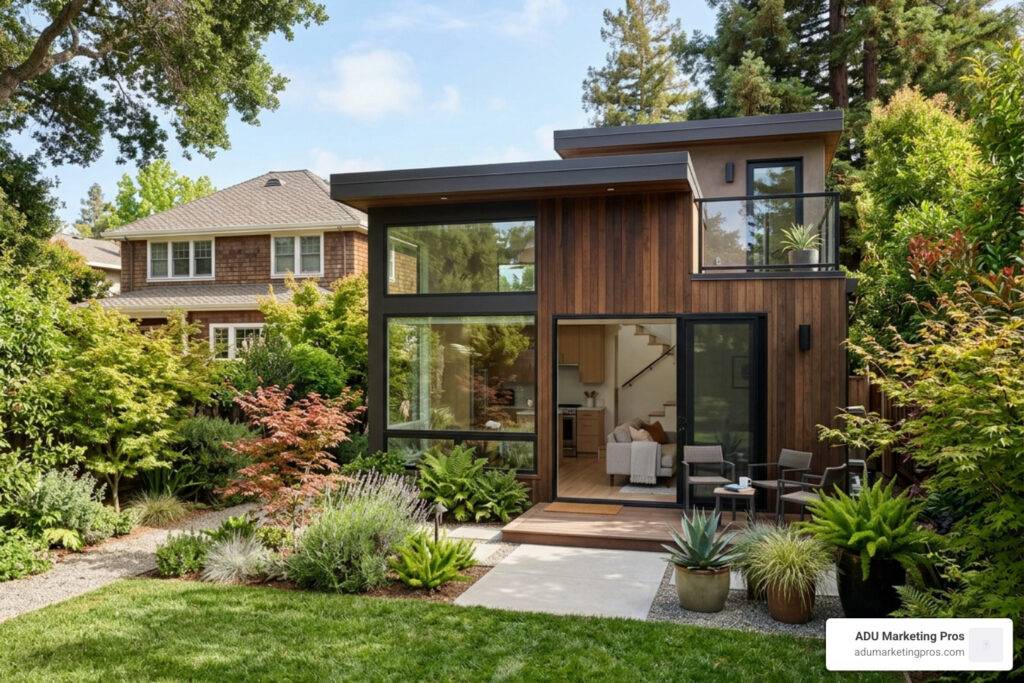
Why Palo Alto ADU Permits Are More Complex Than You Think
Palo alto adu permits sit at the intersection of fast-moving state law and a city ordinance that California’s housing regulators have formally flagged for non-compliance — making this one of the trickiest permit landscapes in the Bay Area right now. For decades, Palo Alto has maintained a reputation for strict zoning and architectural preservation, but the state-wide housing crisis has forced a dramatic shift in how the city handles secondary dwellings.
As of late 2024, the California Department of Housing and Community Development (HCD) issued a formal notice to the City of Palo Alto, identifying 20 specific areas where local rules failed to meet state standards. This creates a unique window of opportunity for homeowners: while the city works to update its code, state law often takes precedence, allowing for more flexible building options than were previously possible. However, navigating this “gray area” requires a deep understanding of both the local Ordinance No. 5585 and the overarching California Government Code.
Here’s what you need to know upfront:
| Topic | Quick Answer |
|---|---|
| Who can build an ADU? | Any owner of a single-family or multi-family residential lot in Palo Alto |
| How many units are allowed? | 1 ADU + 1 JADU on a single-family lot (state law allows more combinations than Palo Alto currently permits) |
| Max size (detached ADU) | 900 sq ft (studio/1-bed) or 1,000 sq ft (2+ beds) |
| Permit review time | Max 60 days by law; typically 3–6 months in practice |
| Key fees | $2,000–$8,000 building permit; $4.79/sq ft school fees; $10,000–$80,000 impact fees |
| Construction cost | $300–$400 per sq ft on average |
| Current compliance issue | Palo Alto’s Ordinance No. 5585 was flagged by the California HCD for 20 specific violations of state ADU law |
The Silicon Valley Housing Context
Palo Alto is currently under immense pressure to meet its Regional Housing Needs Allocation (RHNA) targets, which require the city to plan for over 6,000 new housing units by 2031. Because the city is largely built out, Accessory Dwelling Units (ADUs) have become the primary tool for increasing density without altering the character of historic neighborhoods. This tension between “local control” and “state mandates” is exactly why the permit process feels so complex. The city faced a written response deadline of November 28, 2024, to address the HCD’s findings, and the resulting changes are still rippling through the planning department as of April 2026.
For homeowners and builders, this creates real uncertainty. The rules you read today may shift as Palo Alto works to bring its ordinance into compliance. That’s why this guide exists — to walk you through what the rules currently say, where the gaps are, and exactly how to navigate the permit process step by step.
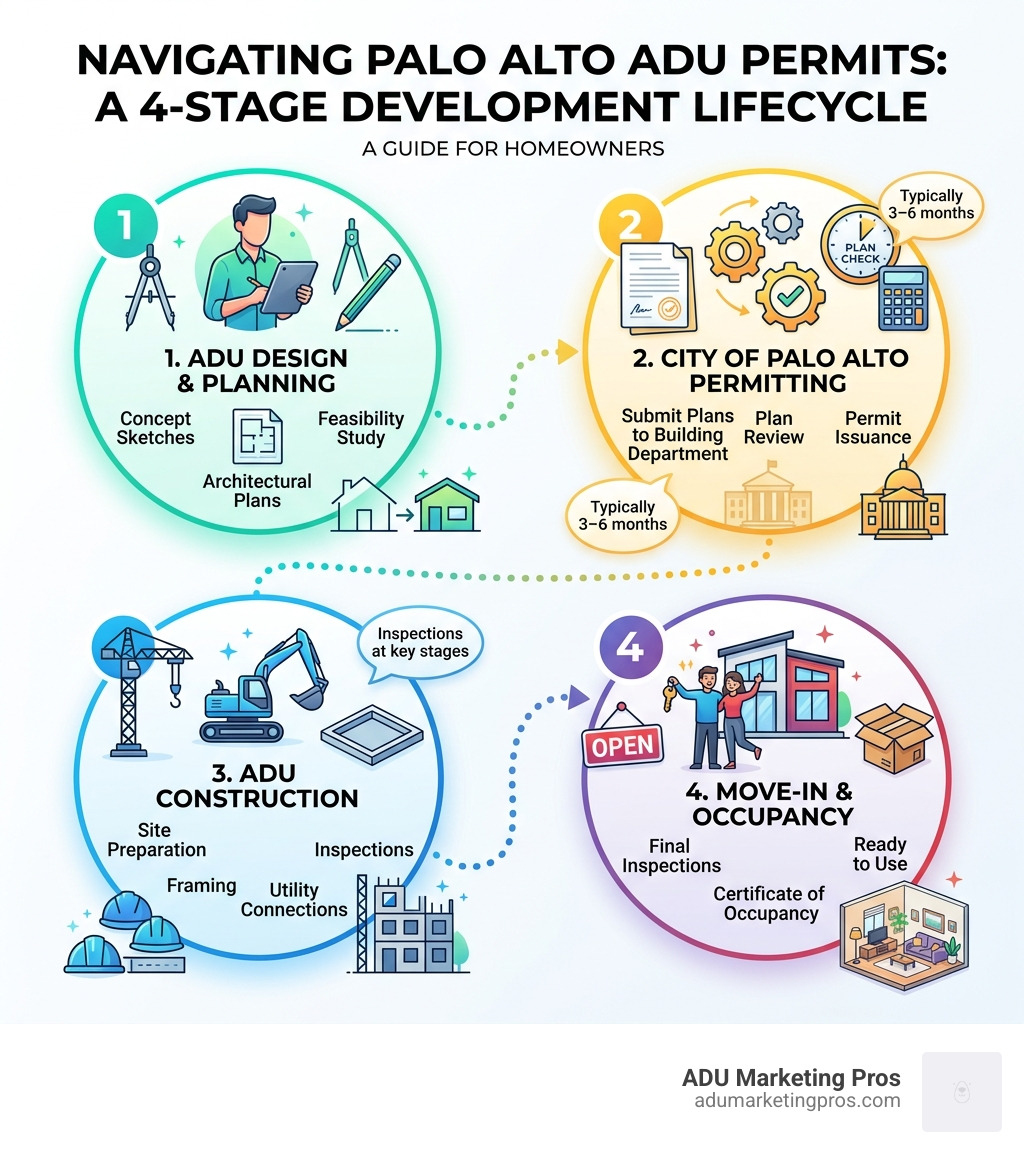
Palo alto adu permits word guide:
Understanding Palo Alto ADU Permits and State Compliance
Navigating palo alto adu permits requires a bit of legal detective work. At the heart of the current landscape is Ordinance No. 5585, the city’s local law governing Accessory Dwelling Units. However, as we move through 2026, the shadow of the California Department of Housing and Community Development (HCD) looms large. The HCD’s role is to ensure that local cities do not create “unreasonable barriers” to housing production, and Palo Alto has been a primary focus of their enforcement efforts.
The Impact of SB 477 and Government Code Updates
In late 2024, the HCD issued a formal notice identifying 20 specific areas where Palo Alto’s local rules clashed with state mandates. One major point of contention was the renumbering of state ADU law under SB 477, which moved the relevant regulations to Government Code Sections 66310-66342. Palo Alto’s ordinance initially relied on outdated references, which can lead to confusion during the ministerial approval process. When a city uses outdated code, it can lead to illegal denials of permits based on repealed standards.
What does “ministerial approval” mean for you? It means that if your project meets the specific, objective requirements laid out in the law, the city must approve it without a public hearing or discretionary review. By law, the city has a 60-day window to act on a completed application. If they don’t, the application is often deemed approved by default under state law. For the most current official updates, you should always consult the Accessory Dwelling Units Official Portal.
If you are looking for a broader perspective on how these rules function across the Golden State, check out our guide on Adu Permits California.
The 2024-2025 Regulatory Shift
The transition from 2024 into 2025 was a pivotal moment for Palo Alto. The HCD findings forced the city to address several non-compliance issues. For example, the state pointed out that Palo Alto was being too restrictive regarding unit combinations. State law technically allows a single-family lot to have one converted ADU, one detached new construction ADU, and one Junior ADU (JADU)—a “triple threat” that Palo Alto’s local ordinance initially tried to limit. This means you could potentially have three separate living units on a single residential lot, provided you meet the safety and size requirements.
Furthermore, the state mandated that local agencies cannot use local “health and safety” codes or tree ordinances as a backdoor way to deny or delay ADU permits. While Palo Alto’s famous tree canopy is protected, it cannot be the sole reason for rejecting a state-exempt ADU. For a comparison of how neighboring cities handle these shifts, you might look at the Latest ADU standards from Mountain View.
State vs. City Standards for palo alto adu permits
When applying for palo alto adu permits, you will encounter three types of standards:
- State Standards (S): These are the “floor” or minimum requirements the city must allow. If the city’s local code is more restrictive than these, the state standard usually wins.
- City Standards (CS): These are Palo Alto’s local tweaks that are often more generous than state law. For example, Palo Alto allows larger ADUs than the state-mandated minimum of 800 sq ft.
- Additional City Standards (ACS): Best practices and local guidelines for larger ADUs that exceed the state-exempt minimums, often involving architectural compatibility.
Palo Alto actually offers some “bonus” flexibility. For instance, while the state baseline for a detached ADU is 800 sq ft, Palo Alto allows up to 1,000 sq ft for units with two or more bedrooms. This local flexibility is a hallmark of California Adu Regulations, where cities can be more permissive, but never more restrictive, than the state.
Development Standards: Size, Height, and Setbacks
Understanding what you can actually build is the first step in the design process. Palo Alto categorizes units into three main buckets: JADUs, Attached ADUs, and Detached ADUs. Each has its own set of “objective standards” that must be followed to qualify for ministerial approval.
| Requirement | Junior ADU (JADU) | Attached ADU | Detached ADU |
|---|---|---|---|
| Max Size | 500 sq ft | 1,000 sq ft (or 50% of main home) | 1,000 sq ft (for 2+ beds) |
| Min Size | 150 sq ft | 150 sq ft | 150 sq ft |
| Setbacks | Existing structure | 4 ft (Side/Rear) | 4 ft (Side/Rear) |
| Height | Part of main home | Up to 30 ft (Zone dependent) | 16–18 ft |
The 800 Square Foot Exemption
One of the most powerful tools for homeowners is the 800 sq ft exemption. Under state standards, an ADU up to 800 sq ft with 4-foot setbacks and a 16-foot height limit is exempt from local Floor Area Ratio (FAR) and lot coverage limits. This means even if your main house already uses up your entire “allowable” square footage according to Palo Alto’s strict zoning, you can almost always still add an 800 sq ft ADU. This is a “get out of jail free” card for high-density lots. For more details on these baseline rules, see our breakdown of California Adu Requirements.
Height Limits and Transit Proximity
Palo Alto’s height limits are tiered based on where you live and how close you are to public transportation. This is a direct result of state laws like AB 2221 and SB 897, which sought to increase vertical density near transit hubs.
- Baseline: 16 feet for detached ADUs on any residential lot.
- Transit Boost: 18 feet if your property is within a half-mile radius of a major transit stop or high-quality transit corridor (like the Caltrain stations at University Ave or California Ave).
- Bonus Height: You can add an extra 2 feet (up to 20 ft total) if the ADU’s roof pitch needs to align with the primary dwelling for architectural consistency, or if the ADU is attached to a primary dwelling that is already taller.
If you are in a more rural zone like RE (Residential Estate) or OS (Open Space), height limits can go as high as 25 or 30 feet, allowing for much more creative vertical designs, including two-story ADUs. Navigating these Adu Zoning Laws is essential for maximizing your property’s potential.
Parking Exemptions and Requirements for palo alto adu permits
Good news for your driveway: Palo Alto does not require off-street parking for new ADUs. This is a major cost saver, as adding a garage or dedicated parking pad can cost upwards of $20,000. Furthermore, if you convert an existing garage or carport into an ADU, state law (and Palo Alto’s updated code) specifies that you do not have to replace those lost parking spaces.
However, there is a catch: if you are building a new primary home with an ADU and don’t provide covered parking for the main house, you might still need to provide an uncovered replacement spot for the primary residence. These nuances are similar to the San Jose Adu Guidelines, which prioritize housing density over car storage. Always check your specific parcel’s parking requirements before finalizing your site plan.
Step-by-Step Guide to the Palo Alto ADU Permit Process
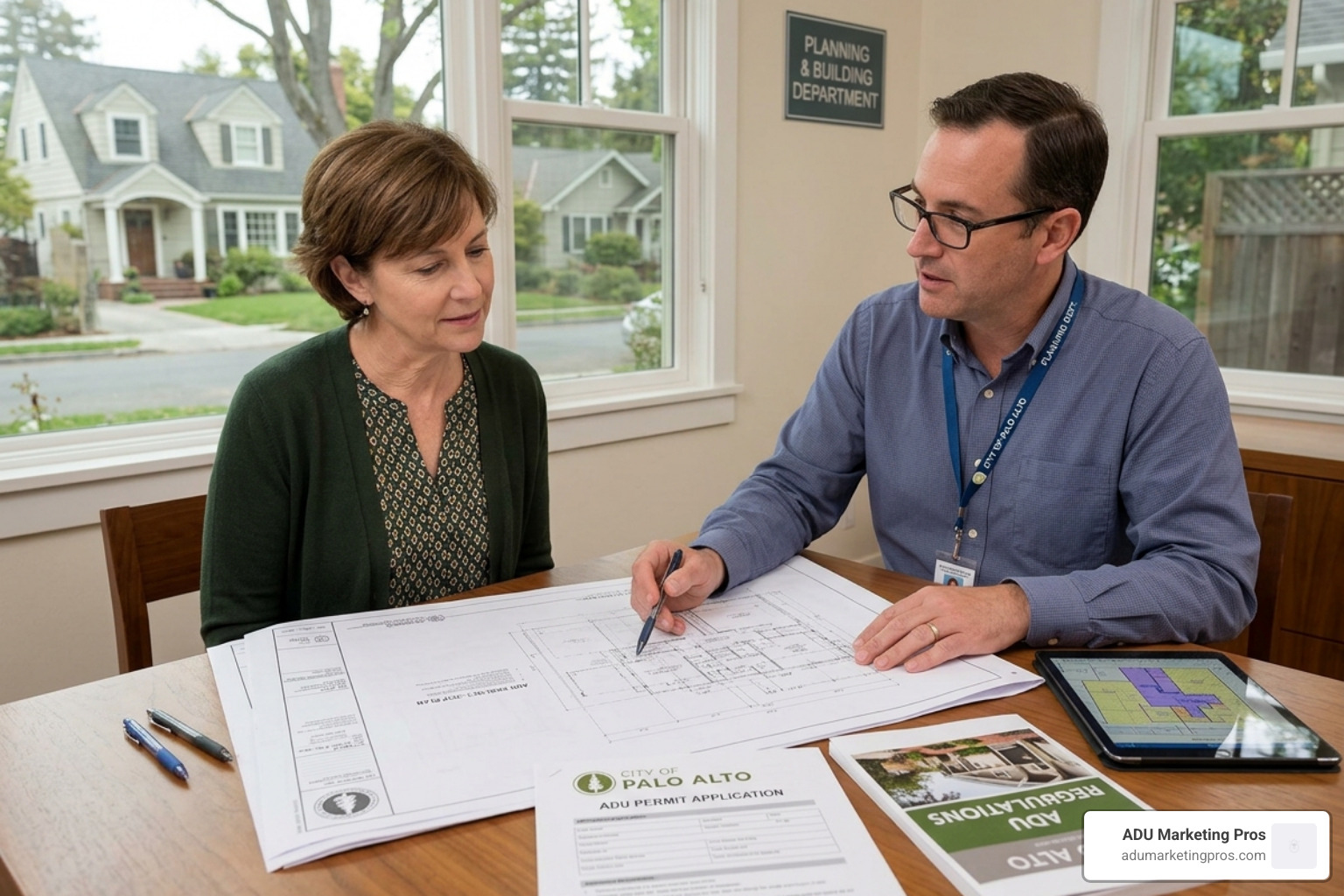
The path to obtaining palo alto adu permits has moved almost entirely online via the Accela Citizen Access (ACA) portal. While the digital shift was intended to speed things up, the complexity of the required documentation means that many applications are initially rejected for being “incomplete.” We recommend a “measure twice, cut once” approach to the paperwork.
The Preliminary Ministerial Review (PMR)
Before you spend thousands on full structural engineering, Palo Alto offers a Preliminary Ministerial Review (PMR). This is an optional but highly recommended step. You submit a basic site plan and floor plan, and the city’s planners review it to ensure you aren’t violating any major setbacks or height limits. This can save you months of redesign work later in the process.
- Preliminary Research: Use the City’s Property Information Map to check your zoning, transit proximity, and any potential flood zone issues.
- Formal Submittal: Upload your full architectural, structural, and Title 24 plans to the ACA portal. This includes your electrical, plumbing, and mechanical plans.
- Project Coordinator Assignment: Palo Alto assigns a dedicated Project Coordinator to guide your application through various departments (Planning, Building, Public Works, Utilities).
- Plan Check Iterations: Expect 2–3 rounds of “corrections.” The city will send back a list of items that need clarification or adjustment. You must respond to all of them before the 60-day clock resets.
- Permit Issuance: Once all departments sign off and fees are paid, your permit is issued.
For a deeper dive into the general workflow, visit our page on the Adu Permit Process.
Required Submittal Checklists for palo alto adu permits
To avoid the dreaded “Incomplete Application” status, your submittal must include:
- Site Plan: Showing property lines, existing structures, and the proposed ADU with exact dimensions to the inch.
- Floor Plans: Including specific kitchen details. Palo Alto is very strict here; they require a permanent 2-burner stove, an oven (or convection microwave), and specific countertop dimensions to qualify as a “full kitchen.”
- Title 24 Energy Report: Proving the unit meets California’s strict energy efficiency standards. This often requires high-efficiency HVAC systems and specific insulation R-values.
- Deed Restrictions: Required for JADUs to ensure owner-occupancy. This must be recorded with the Santa Clara County Clerk-Recorder.
- Separate Entry: Attached ADUs must have an exterior entrance independent of the main house to ensure privacy and fire safety.
Following these Adu Construction Regulations is non-negotiable for a successful permit. Even a small error in the kitchen layout can lead to a permit denial.
Timelines: From Planning to Construction
While the law says 60 days for review, the “real world” timeline in Palo Alto looks more like this:
- Planning & Design: 1–3 months (depending on how many revisions you make).
- Permit Review (including iterations): 3–6 months. The city is currently backlogged due to the high volume of applications.
- Bidding & Contractor Selection: 1–2 months.
- Construction: 6–12 months.
Total time from “napkin sketch” to “moving in” is typically 12 to 18 months. Keep an eye on New Adu Regulations California as they often introduce new ways to streamline these timelines, such as pre-approved ADU plans which Palo Alto is currently considering.
Financial Outlook: Fees, Taxes, and ROI
Building in Palo Alto isn’t cheap, but the Return on Investment (ROI) is staggering. With the average cost to build ranging between $300 and $400 per square foot, a 1,000 sq ft ADU might cost $350,000 to $400,000. While this is a significant upfront investment, the long-term financial benefits often outweigh the costs within the first decade.
The Value Proposition
- Value Boost: A well-built ADU typically increases property value by 25% to 35%. In a market like Palo Alto, where the median home price is over $3 million, adding an ADU can easily add $750,000 or more in equity.
- Rental Income: The average rent for a 1-bedroom ADU in Palo Alto is approximately $2,670 per month. High-end units in prime locations can command even more, providing a steady stream of passive income.
- Tax Shield: Under California law (specifically Prop 13 and Prop 19 rules), your primary residence is not reassessed when you build an ADU. Only the new construction is valued (usually via a cost-basis appraisal), adding a predictable and relatively small amount to your property tax bill.
For more on budgeting, check out Adu Permit Cost California.
Breakdown of Permit and Impact Fees
Fees are a major part of your soft costs and can vary wildly based on the size of your unit. In Palo Alto, expect the following:
- Building Permit Fees: $2,000 to $8,000, covering the cost of plan checks and inspections.
- School Fees: $4.79 per square foot. This only applies to units 750 sq ft or larger. If you build a 749 sq ft ADU, you save thousands in school developer fees.
- Development Impact Fees: These cover parks, community centers, and libraries. They range from $10,000 to $80,000 for larger units but are exempt for units under 750 sq ft. This is why the “749 sq ft ADU” is the most popular size in Palo Alto.
Financing and Owner-Occupancy Rules
One of the biggest wins for homeowners in recent years is the removal of owner-occupancy requirements for standard ADUs. You can live in the main house and rent the ADU, or rent both! This makes ADUs a powerful tool for multi-generational living or as a pure investment property.
The Exception: Junior ADUs (JADUs) still require the owner to live in either the main house or the JADU. Additionally, all ADUs in Palo Alto are subject to a short-term rental ban—meaning you cannot rent them out for less than 30 days (no Airbnbs). If you are looking for specialized builders who understand these financial nuances, see our list of Palo Alto Adu Builders.
Navigating Site Constraints: Trees, Floods, and History
Palo Alto is beautiful because of its history and nature, but those same elements can complicate palo alto adu permits. The city has some of the strictest environmental and historical protections in the country.
The Tree Protection Ordinance
The City’s Tree Protection Ordinance is legendary. If you have a “Regulated Tree” (like an Oak, Redwood, or Cedar of a certain size), you must provide a tree protection plan prepared by a certified arborist. While the city can’t deny an ADU just because of a tree, they can require you to use “pier and beam” foundations instead of a standard slab to protect the root zone. This can add $10,000 to $20,000 to your foundation costs.
Historic Districts and Design Review
If you live in a historic district (like Professorville or the Green Gables neighborhood), your ADU will undergo a design review. The goal is to ensure the new unit is visually compatible with the neighborhood. This often means matching the roof pitch, siding materials, and window styles of the primary home. While this adds to the design cost, it also ensures that the ADU enhances the aesthetic value of your property.
Flood Zones and Utilities
Parts of Palo Alto, particularly those near the San Francisquito Creek, are in designated flood zones. This may require elevating the ADU’s finished floor or using flood-resistant materials. Additionally, the City of Palo Alto Utilities (CPAU) is the only municipal utility in California that provides electricity, gas, water, and wastewater. They have specific requirements for where meters can be placed and may require you to upgrade your electrical transformer if the new ADU adds significant load to the grid.
Frequently Asked Questions about Palo Alto ADUs
Can I build both an ADU and a JADU on my lot?
Yes! Under state law (and Palo Alto’s current guidelines), a single-family lot is permitted to have one detached ADU and one JADU. If you convert space within your home, you can often have an attached ADU and a JADU as well, provided you meet the size and safety requirements. This allows for a total of three units on one lot.
Are fire sprinklers required for my Palo Alto ADU?
Generally, no. An ADU is only required to have fire sprinklers if the primary residence also has them. If your main house was built in the 1950s and doesn’t have sprinklers, your ADU won’t need them either, though you must still provide smoke and carbon monoxide detectors. However, if the ADU is located far from the street, the Fire Department may require a dedicated fire hydrant or specific access path.
Can I sell my ADU separately from the main house?
In most cases, no. ADUs are intended to stay on the same title as the primary home. There is a very narrow exception under AB 1033 for properties developed as tenancies-in-common or condos, but Palo Alto has not yet fully adopted this local option. For the average homeowner, the ADU must be sold with the main house.
Do I need solar panels on my ADU?
Yes, the California Building Code (Title 24) requires solar panels on all new construction detached ADUs. However, if the ADU is an addition to an existing home or a conversion of an existing structure (like a garage), solar panels are generally not required. You may also be exempt if the ADU is located in a heavily shaded area where solar is not feasible.
Conclusion
Securing palo alto adu permits is a journey that requires patience, a solid budget, and a clear understanding of the shifting regulatory landscape. While the city works to align its local ordinances with state mandates, homeowners have a unique opportunity to add significant value to their properties while contributing to the Bay Area’s housing solutions. The process may seem daunting, but the long-term rewards—both financial and functional—are immense.
Whether you are looking to house an aging parent, provide a space for a returning college student, or generate rental income to offset your mortgage, an ADU is one of the smartest investments you can make in Silicon Valley. By following the steps outlined in this guide and working with experienced professionals, you can navigate the Accela portal and the various city departments with confidence.
At ADU Marketing Pros, we specialize in helping construction and architecture firms navigate these complexities. We know that in a market as competitive as Silicon Valley, expertise is your most valuable asset. Whether you are a homeowner looking to build or a firm looking to grow, staying informed is the first step toward success. Ready to take the next step in your ADU journey? Get started with ADU Marketing Solutions today and let us help you stand out as an authority in the booming California ADU market.